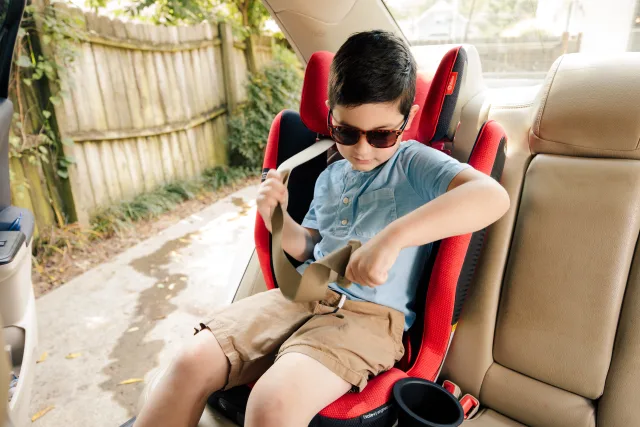

There are few things more important than keeping child passengers safe. It’s not enough for kids to simply wear seat belts and sit in the back seat, though. It’s equally as important to ensure that they ride in a properly fitting car seat.
There are actually five different types of car seats designed to keep children protected in restraint systems until around age 12. Yes, you read that right! It’s safest for kids to stay in booster seats until they’re nearly teenagers. Children should also pass the 5-step test to ensure the shoulder and lap belts fit correctly.

Of all the car seat types, parents most often move their children out of booster seats way too soon. But research shows that booster seats reduce the risk of serious injury in a crash by 45% and newer studies suggest they may be even more effective than that. Because many children move up too soon, some states have updated child passenger safety laws to clarify requirements. This isn’t just about using the right child restraint systems, it’s also about keeping our little ones safe.
In this post, we’ll look at booster seat laws by state and explain what each one requires. This is what you need to know:
Laws on Booster Seats by State: Protecting Kids Across the U.S.
Studies show that kids in states with stronger booster seat laws are over four times more likely to be in the correct seat. Even more striking, those same states have a child crash death rate about 20% lower than states without stronger requirements.
It’s easy to see why this legislation matters, but it also highlights a scary trend. Many parents don’t realize that car seat laws represent the minimum safety requirements, not best practices. In other words, just because your child meets the legal limit doesn’t mean it’s time to move them up to the next seat.
Children should remain in each type of car seat for as long as possible. (Until they reach the maximum limits listed in the car seat manual.) Here’s a general guide:
- Infant Carrier: Birth to around 12 months (this stage is optional as you can use a convertible seat rear-facing from birth)
- Rear-Facing Car Seat: Birth or 1 year to 4+ years old
- Forward-Facing Car Seat: Around 4 to 7 years old
- Booster Seat: Around 7 to 12 years old
For more information, read our post on when to transition from each car seat stage.
Is a Booster Seat Required by Law?
Yes. Every state has its own seat belt laws and child passenger safety laws that outline when a car seat or booster must be used. However, the details vary widely from state to state.
In most cases, the laws require children who outgrow a forward-facing car seat but are still too small for a regular seatbelt to use a booster. While the specific age, height, and weight requirements differ, the laws apply to all vehicles and seating positions.
Ultimately, drivers are responsible for ensuring children are properly buckled at all times. Violating these laws can lead to fines, penalties, or even points on a driver’s license record. But remember, minimal compliance isn’t the goal, we want the safest option for our kids!
Here are the booster seat laws by state:
What Are the Laws on Booster Seats?
What Are the Laws on Booster Seats in Alabama?
- Children must use a booster seat until at least age 6.
What Are the Laws on Booster Seats in Alaska?
- Children ages 4 to 8 who are under 57 inches tall and weigh 20 to 65 pounds must use a booster seat.
What Are the Laws on Booster Seats in Arizona?
- Children younger than 8 and under 57 inches tall must use a car seat or booster seat.
What Are the Laws on Booster Seats in Arkansas?
- Children younger than 6 and under 60 pounds tall must use a booster seat.
What Are the Laws on Booster Seats in California?
- Children under age 8 or under 57 inches tall must use a child restraint.
What Are the Laws on Booster Seats in Colorado?
- Children ages 4 to 9 and weighing more than 40 pounds must use a forward-facing car seat or booster seat.
What Are the Laws on Booster Seats in Connecticut?
- Children ages 5 to 8 or weighing 40 to 60 pounds must use a car seat with a five-point harness.
- From 8 years old and 60 pounds, a child may use a booster.
What Are the Laws on Booster Seats in Delaware?
- From 4 and 40 pounds, children must use a booster seat until they reach the height or weight limit set by the manufacturer.
What Are the Laws on Booster Seats in the District of Columbia?
- Children from 4-7 must use a harnessed seat or a booster.
What Are the Laws on Booster Seats in Florida?
- Children ages 4 and 5 must use a separate carrier, integrated car seat, or booster seat.
What Are the Laws on Booster Seats in Georgia?
- Children under age 8 and 4'9" must use a car seat or booster seat.
What Are the Laws on Booster Seats in Hawaii?
- Children ages 4 to 10 must use a car seat or booster seat unless they are over 57 inches tall.
What Are the Laws on Booster Seats in Idaho?
- Children age 6 or younger must use a car seat or booster seat.
What Are the Laws on Booster Seats in Illinois?
- Children age 8 or younger must use a car seat or booster seat.
What Are the Laws on Booster Seats in Indiana?
- Children under age 8 must use a car seat or booster seat.
What Are the Laws on Booster Seats in Iowa?
- Children ages 1 to 5 must use a car seat or booster seat.
What Are the Laws on Booster Seats in Kansas?
- Children ages 4 to 8 who weigh less than 80 pounds or are under 57 inches tall must use a car seat or booster seat.
What Are the Laws on Booster Seats in Kentucky?
- Children age 7 or younger and 40 to 57 inches tall must use a booster seat.
What Are the Laws on Booster Seats in Louisiana?
- Children ages 4 to 8 who have outgrown a harnessed car seat must use a booster seat until age 9 or until the seat belt fits properly.
What Are the Laws on Booster Seats in Maine?
- Children under age 8, under 80 pounds, or under 57 inches tall must use a booster seat or car seat.
What Are the Laws on Booster Seats in Maryland?
- Children under age 8 must use a car seat or booster seat unless they are 57 inches or taller.
What Are the Laws on Booster Seats in Massachusetts?
- Children age 7 or younger or under 57 inches tall must use a car seat or booster seat.
What Are the Laws on Booster Seats in Michigan?
- Children ages 2 to 5 must use a rear- or forward-facing car seat.
- Children under 8 years or 57" must use a booster seat.
What Are the Laws on Booster Seats in Minnesota?
- Children ages 4-9 who have outgrown a forward-facing car seat must use a booster seat.
What Are the Laws on Booster Seats in Mississippi?
- Children ages 4 to 7 who are under 57 inches tall or weigh less than 65 pounds must use a booster seat.
What Are the Laws on Booster Seats in Missouri?
- Children ages 4 to 8 who weigh 40-80 pounds, and are less than 57" tall, must use a car seat or booster seat.
What Are the Laws on Booster Seats in Montana?
- Children under 6 years and 60 pounds must use a forward-facing car seat or booster seat.
What Are the Laws on Booster Seats in Nebraska?
- Children up to age 8 must use a car seat or booster seat.
What Are the Laws on Booster Seats in Nevada?
- Children under age 6 or less than 57" tall must use a car seat.
What Are the Laws on Booster Seats in New Hampshire?
- Children ages 7 and under or are 57 inches tall must use a booster seat.
What Are the Laws on Booster Seats in New Jersey?
- Children ages 4+ must use a car seat or booster seat in until at least age 8 or 57 inches tall.
What Are the Laws on Booster Seats in New Mexico?
- Children ages 5 to 6 and weighing less than 60 pounds must use a car seat or booster seat.
What Are the Laws on Booster Seats in New York?
- Children ages 4-8 who weigh more than 40 pounds may use a car seat or booster seat.
What Are the Laws on Booster Seats in North Carolina?
- Children under age 8 and weighing less than 80 pounds must use a car seat or booster seat.
What Are the Laws on Booster Seats in North Dakota?
- Children under age 8 must use a car seat or booster seat unless they are at least 57 inches tall.
What Are the Laws on Booster Seats in Ohio?
- Children age 4 to 8 who weigh 40 pounds or more and are under 57 inches tall must use a booster seat or car seat.
What Are the Laws on Booster Seats in Oklahoma?
- Children ages 4 to 8 who are under 57 inches tall must use a car seat or booster seat.
What Are the Laws on Booster Seats in Oregon?
- Children under 8 or under 57 inches tall must use a car seat or booster seat.
What Are the Laws on Booster Seats in Pennsylvania?
- Children ages 4 to 8 must use a booster seat.
What Are the Laws on Booster Seats in Rhode Island?
- Children under age 8, under 57 inches tall, and under 80 pounds must use a car seat or booster seat.
What Are the Laws on Booster Seats in South Carolina?
- Children 4-8 years old, who have outgrown their harnessed seat, and are under 57", must use a booster seat.
What Are the Laws on Booster Seats in South Dakota?
- Children under age 5 or weighing less than 40 pounds must use a car seat or booster seat.
What Are the Laws on Booster Seats in Tennessee?
- Children ages 4 to 8 and under 57 inches tall must use a booster seat.
What Are the Laws on Booster Seats in Texas?
- Children age 7 or younger and under 57 inches tall must use a car seat or booster seat.
What Are the Laws on Booster Seats in Utah?
- Children age 7 or younger and under 57 inches tall must use a car seat or booster seat.
What Are the Laws on Booster Seats in Vermont?
- Children 5-7 years old must use a car seat or booster seat.
What Are the Laws on Booster Seats in Virginia?
- Children age 7 or younger must use a car seat or booster seat.
What Are the Laws on Booster Seats in Washington?
- Children ages 4+ must use a booster seat until they reach 57 inches tall.
What Are the Laws on Booster Seats in West Virginia?
- Children age 7 or younger and under 57 inches tall must use a car seat or booster seat.
What Are the Laws on Booster Seats in Wisconsin?
- Children ages 4 to 7, 40 to 80 pounds, and under 57 inches tall must use a car seat or booster seat.
What Are the Laws on Booster Seats in Wyoming?
- Children age 8 or younger must use a car seat or booster seat.
What Are the Laws on Booster Seats for Air Travel?
Booster seats can only be used in motor vehicles. They’re not FAA-approved and parents shouldn’t use them when flying in airplanes. In those situations, the aircraft lap belt is sufficient for most children over 40 lbs.
Booster seat laws are the baseline, not the gold standard. Always choose what keeps your child safest.
Making sure your child is in the right car seat for their age, height, and weight is one of the easiest ways to keep them safe on the road. Laws give the minimum requirements. However, the safest approach is to keep kids in each seat type as long as they fit. This includes boosters, which protect kids well into their tweens.
For more tips, guidance, and updates on keeping the whole family safe on the road, check out the Safe in the Seat blog. And for booster-specific guidance, read these posts next: