To be a safe driver, you need more than the ability to get from point A to point B. Driving in perfect conditions is easy - it’s what you do when something goes wrong that matters. Common roadside issues like dead batteries, low fluids, worn wiper blades, vehicle lock-outs, and flat tires will happen at some point in your driving years.
Today, we’re focusing specifically on flat tires. Even with good vehicle maintenance and cautious driving, tires can still lose air. Road debris, pothole damage, leaking valves, and even temperature changes can take a tire from full to flat.
That’s why it’s important to know exactly what to do when it happens. In this post, we’ll walk you through how to safely fill or replace a tire so you can get back on the road with confidence.
What to Do When You Have a Flat Tire: Safe Roadside Tips
Below, we’ll explain how to identify a flat tire. Then we’ll walk you through what to do next so you can handle the situation safely.
Here’s what you need to know:
Is It Safe to Drive on a Flat Tire?
No. Driving on a flat tire is not safe. For starters, it can cause major damage to your car. Even driving a short distance can harm the wheel, suspension, and alignment.
But your vehicle’s protection is not the only problem; the bigger issue is your own safety. When one tire is flat and the others are fully inflated, the uneven tread and air pressure make the car much harder to steer and control. That loss of stability dramatically increases your risk of a crash.
How to Tell If You Have a Flat Tire
Your car is difficult to steer.
A flat tire can make your vehicle pull to one side, usually toward the damaged tire. You may also notice the steering feels heavy, strained, or slow to respond.
You hear unusual sounds.
As the deflated tire hits the road and wheel well, you might hear flapping, thumping, or a rhythmic clicking sound. The noise can be faint or very loud. Ultimately, it depends on how flat the tire is and whether the rubber has started to break apart.
Your TPMS light turns on.
All vehicles made after 2007 have a Tire Pressure Monitoring System (TPMS). When the air pressure drops too low, a warning light will appear on your dashboard. Usually, the light just reads “TPMS.”

You smell burning rubber.
As a flat tire drags along the road rather than rolling on top of it, friction builds up. This is especially true at high speeds! As the material scrapes against the pavement, it can create a strong burning rubber smell.
The tire looks squished at the bottom.
From outside the car, the tire will look visibly flat. It may appear low, bulging, or sitting flatter against the ground. The shape will look noticeably different, making it easy to spot.
What to Do When You Get a Flat Tire
Step One: Carefully slow down and pull into a safe spot.
As soon as you realize your tire is flat, calmly slow down, turn on your hazards, and look for a safe place to pull over. If possible, aim for a parking lot or an off-road area with plenty of space and minimal traffic.
It’s not ideal to stop on the shoulder with cars rushing by. However, if there’s no safer option nearby, it may be your best choice. Just remember, you don’t want to drive on a flat tire any longer than necessary.
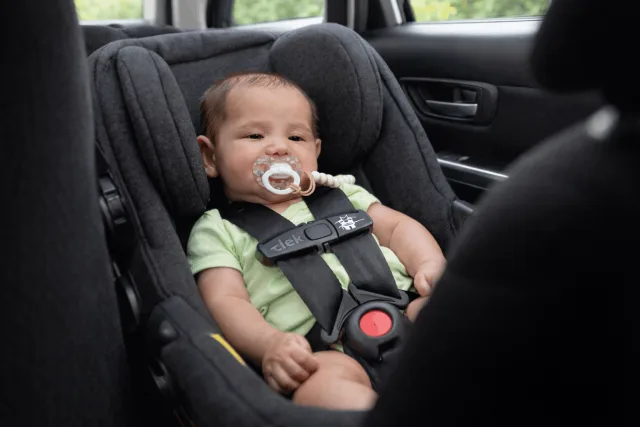
Step Two: Keep your kids and passengers in the car unless absolutely necessary.
While you’re dealing with a flat tire, it’s safest for everyone to stay inside the vehicle. This includes you, too! Until you’re ready to take a specific action, like changing the tire, remain in the car with your seat belts on. Pedestrians standing on the side of the road are at much higher risk of being involved in serious accidents. Because of this, staying inside offers far better protection.
For more on how to stay protected when pulled over, read our post on roadside safety tips.
Step Three: Turn on your hazard lights and put up other visibility markers.
Your hazards should already be on, but switch them on now if you forgot. If your car emergency kit includes cones, reflective triangles, or high-visibility flags, you can briefly exit the vehicle to set them up. Just be sure to wait until it’s truly safe, especially if you’re stopped on the shoulder of a busy road.
Step Four: Change the tire, inflate the tire, or call roadside assistance.
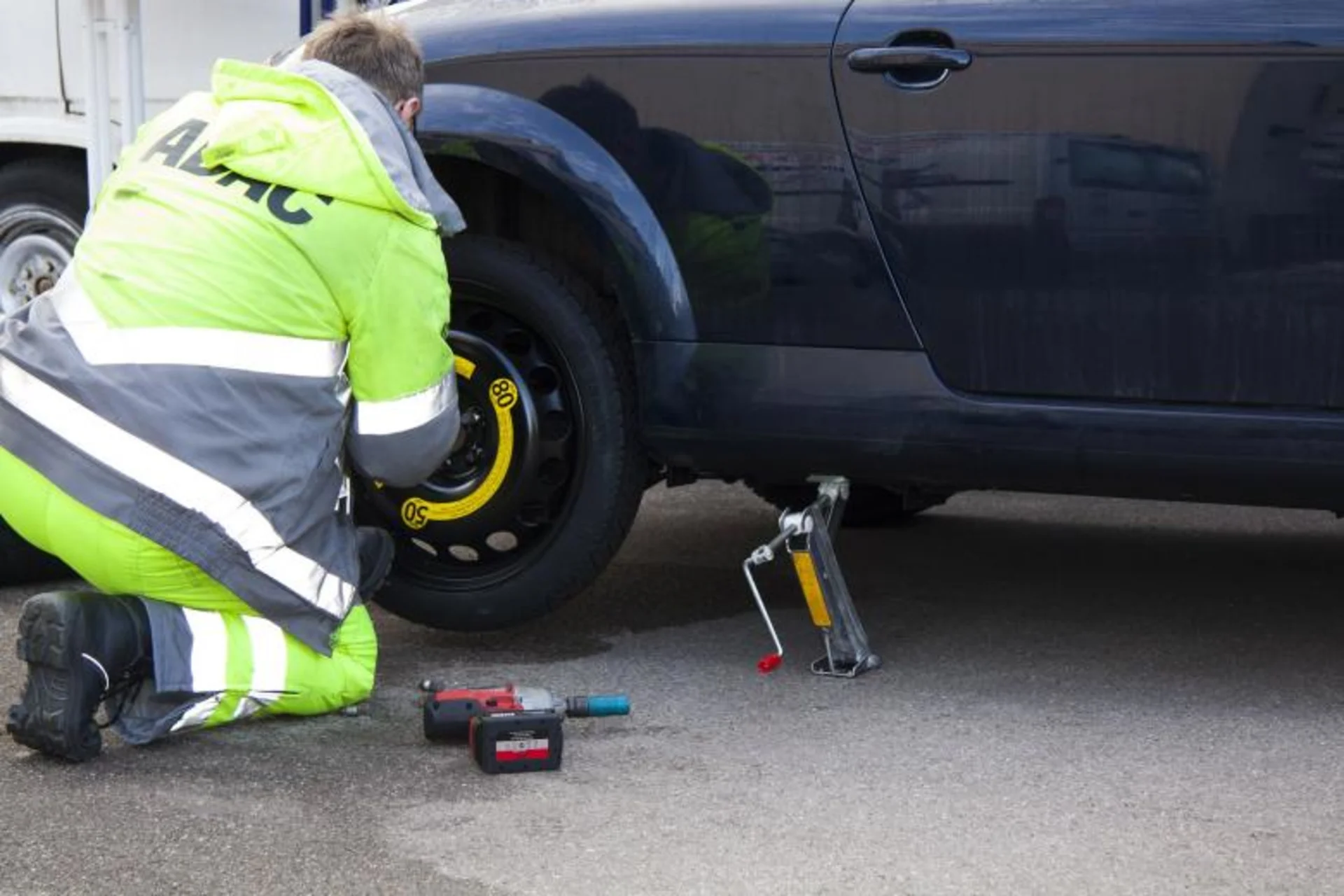
Now it’s time to decide how you’ll move forward. If you have the right equipment and know how to use it, you can change a flat tire yourself. If you don’t have a spare or the necessary tools, you’ll need another solution.
One option would be to call roadside assistance, like a towing service or auto club (if you’re a member). However, if the tire looks low but doesn’t show signs of puncture or damage, you can take a different approach. You may be able to re-inflate it with a portable air compressor or an aerosol flat tire repair product.
How to Change a Tire:
- Collect your supplies (spare tire, car jack, lug wrench, vehicle manual, gloves if you have them).
- Loosen the lug nuts slightly while the car is still on the ground.
- Position the jack at the correct lift point (your manual shows the exact spot).
- Lift the vehicle until the flat tire is off the ground.
- Remove the lug nuts completely and set them somewhere secure.
- Take off the flat tire and place it flat on the ground so it doesn’t roll.
- Mount the spare tire onto the wheel studs.
- Hand-tighten the lug nuts to hold the spare in place.
- Lower the vehicle until the spare touches the ground, but isn’t fully bearing weight.
- Tighten the lug nuts in a star pattern to ensure even pressure.
- Fully lower the car and remove the jack.
- Give the lug nuts a final tightening to make sure they’re secure.
- Stow your tools and flat tire in the trunk before driving.
Step Five: Drive slowly on the spare or inflated tire.
Once your spare is installed or your tire is fully re-inflated, take things slow. Spare tires, especially compact “donut” spares, aren’t designed for high speeds or long distances. Additionally, a re-inflated tire may not hold pressure if there’s an underlying issue.
Stick to surface streets when possible, avoid sudden acceleration or hard braking, and head straight to your destination. (Which should be home or the repair shop!) It’s important to get the tire repaired as soon as possible.
Step Six: Prioritize taking your vehicle to a tire shop for repair or replacement.
If you couldn’t take your car to a tire shop immediately, make it your first stop the next time you drive your car. You’re really not supposed to use spares as a long-term solution. And even a re-inflated tire may lose pressure again if it needs to be repaired or replaced.
A professional can inspect the damage, fix the tire safely if it’s repairable, or guide you toward a new one. This is also a great time to ask about rotating your tires! Staying on top of rotation helps tires wear evenly and reduces the risk of future flats.
Safe drivers know what to do when they’re tire goes flat.
Safe driving isn’t defined by perfect conditions, it’s defined by how you handle the unexpected. A flat tire is never convenient, but knowing how to respond keeps you calm, confident, and in control. When you understand what to do the moment something goes wrong, you’re not just getting from point A to point B… you’re keeping you and your family safe.
For more driving and vehicle safety information, browse the Safe in the Seat blog. Here’s what we recommend you read next:
- What to Check Before a Road Trip
- Benefits of Defensive Driving
- What Car Safety Features are Required by Law?
As an Amazon Associate, Safe in the Seat earns from qualifying purchases.