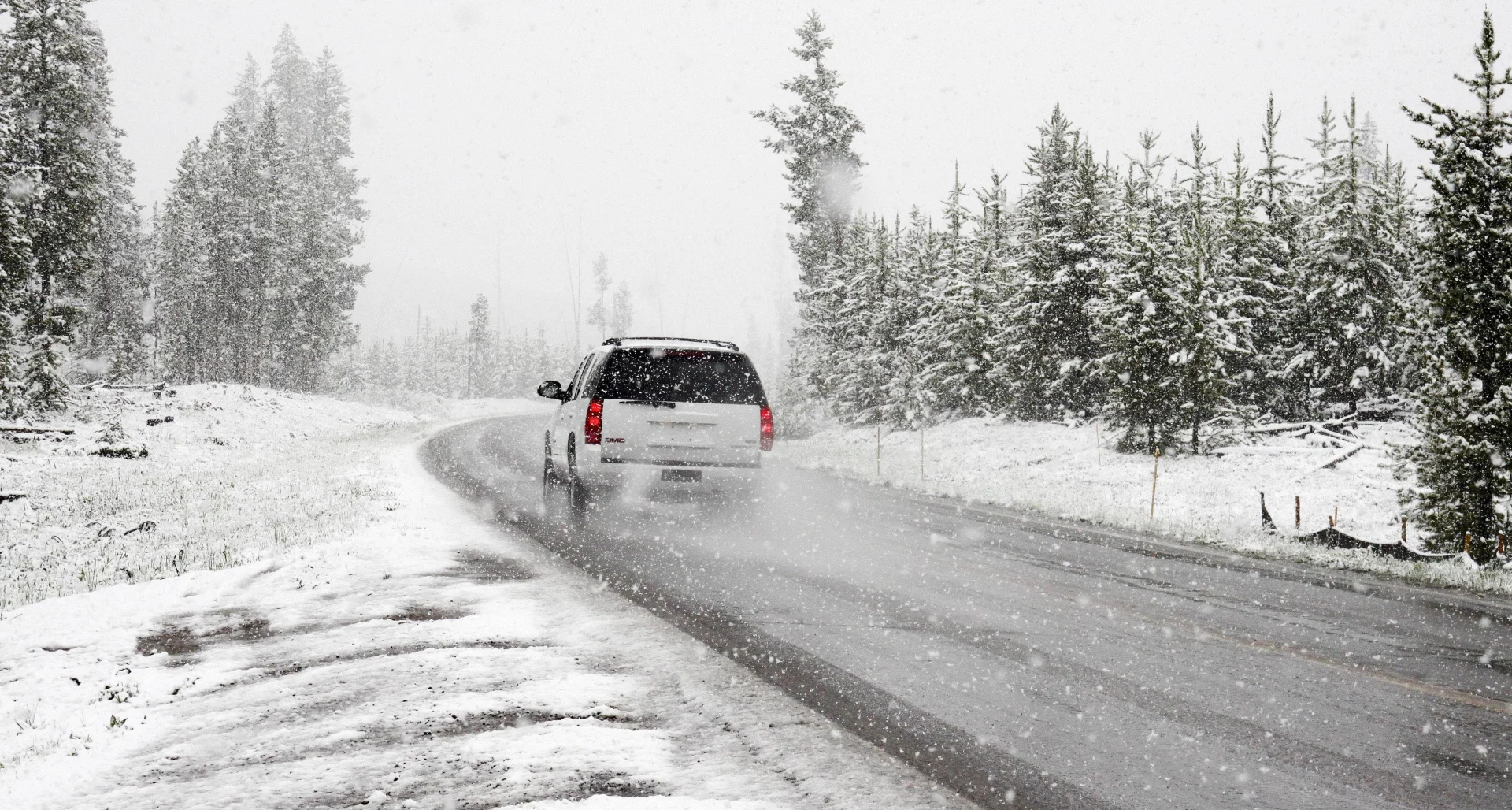
Whether you’ve lived in a cold climate your whole life or just moved to town, no one likes driving in the snow. Reduced traction, poor visibility, and unpredictable driving behavior make snow and ice extremely hazardous for drivers. And while we’d all rather stay home when the weather is frightful, sometimes we don’t have a choice but to brave the cold.
This might have you thinking about a new vehicle, or wondering which of your family cars is safest in winter conditions. Most of us know that AWD or 4WD is best for navigating icy roads, but it’s not always practical to invest in a heavy SUV or truck. That leaves the question: which other drivetrain options perform well in snowy conditions?
In this post, we’ll answer that question and share practical winter safety tips to keep you and your family safe on the road, even in the harshest winter weather.
Is Front Wheel Drive Good in the Snow? Winter Performance Guide
If we set aside four-wheel drive (4WD) and all-wheel drive (AWD), that leaves two options: front-wheel drive (FWD) and rear-wheel drive (RWD). Below, we’ll explain how these two types perform in the snow. Then, we’ll go over the specific ways you should adjust your driving to stay safe on the streets this season.
What Is Front Wheel Drive?
Front-wheel drive (FWD) is a type of drivetrain where the engine sends power only to the front wheels of the vehicle. That means the front wheels both steer the car and move it forward.
FWD is very common in cars and small SUVs because it is fuel-efficient, lightweight, and cost-effective. The design also puts the engine’s weight over the drive wheels. As a result, you can expect better traction in both wet or light, snowy road conditions.
Is Front Wheel Drive Good in the Snow?
Yes and no. Front-wheel drive (FWD) is better than rear-wheel drive (RWD) in the snow. However, it doesn’t perform as well as all-wheel drive (AWD) or four-wheel drive (4WD). It can handle light to moderate winter conditions, but it struggles on steep hills, icy roads, and deep snow.
FWD does reasonably well in the snow because the engine’s weight sits over the front wheels, where the power is sent. This provides better traction when accelerating and makes steering easier. So, for mild conditions, this is usually enough to get you where you need to go, especially if you use the right driving techniques.
However, FWD’s greatest strength can also be its weakness. Since the front wheels handle both steering and power, if they lose grip (like when buried in deep snow or on thick ice) it’s easy to get stuck or spin out. Additionally, with most of the weight concentrated in the front, the back of the car has less traction. Unfortunately, this can reduce overall stability.
Drivetrain Performance in Snow: Which Type Handles Winter Best?
- Rear-wheel drive (RWD) is generally considered the worst option in snowy conditions. Rear-wheel drive vehicles send power only to the back wheels. Because most of the car’s weight is over the front, traction can be limited, and it’s easy to oversteer.
- Front-wheel drive (FWD) is good for light to moderate snow. The front wheels pull the car, providing better traction and more predictable handling. However, it can struggle in deep snow or on steep hills.
- All-wheel drive (AWD) performs better in snow. This drivetrain automatically distributes power to any of the four wheels that need it, improving grip and stability. It’s great for driving on snowy or icy paved surfaces.
- Four-wheel drive (4WD or 4x4) is the best choice for snow. It continuously sends power to all four wheels (unlike AWD systems), providing maximum traction at all times. 4WD is ideal for deep snow, steep hills, and off-road winter conditions, though it is heavier and less fuel-efficient than AWD vehicles.
How to Drive in Snow with Front Wheel Drive
Do standard winter-weather prep.
Before driving any vehicle in the winter, there are a few essential steps to ensure it’s safe and functional. To prepare your car for any condition, here’s what you need to do:
- Make sure you have adequate tire pressure.
- Use the penny test to check your tire treads.
- Get your battery tested to ensure it can handle frigid temperatures.
- Change and fill the windshield washer fluid with a winter formula.
- Check your antifreeze levels. Fill if needed.
- Ensure your oil grade is suitable for cold temperatures.
- Keep your fuel level at least half full to prevent freezing.
- Create a cold-weather emergency kit for your car.
Switch to winter tires.
While buying four extra tires might seem expensive, it’s a small price compared to replacing your entire vehicle. A set of winter tires can dramatically improve how a front-wheel-drive car handles in snow and ice.
Made with softer rubber, deeper tread patterns, and biting edges, they’re designed to grip the road and push away snow for maximum traction. To keep your vehicle safe and performing at its best, consider switching to winter tires!
Avoid cruise control.
Cruise control is great for long, steady drives, but it should stay off in wintry conditions. On snow or ice, traction can change instantly.
Since cruise control’s only goal is to maintain your set speed, it may suddenly accelerate or brake when your tires lose grip. This can make it much harder to stay in control. You need full control of the pedals to react smoothly and prevent skidding, so keep cruise control off.
Give yourself plenty of extra time.
The last thing you want is to feel rushed when driving on snow. If you’re stressed about getting somewhere on time, you’re more likely to drive too fast or make sudden maneuvers. This can easily cause you to lose control! Give yourself extra time to reach your destination so you can drive slowly, stay calm, and think through every turn, stop, and acceleration.
Consider changing your route.
If you have to drive in less-than-ideal winter conditions, consider taking an alternative route if necessary. Stick to main roads that are well-maintained and more likely to be plowed and salted. Additionally, avoid rural or low-traffic areas, steep hills, and roads with sharp curves or switchbacks. These can be really difficult and dangerous to navigate in snow or ice.
Always ease onto the gas pedal.
When driving a front-wheel-drive car in the snow, it’s best to ease onto the gas pedal. Hitting the gas too hard can cause your front tires to spin and lose traction, making it tough to steer or stay in control. By pressing the pedal gently, your tires can grip the road better. Taking it slow and steady makes snowy roads a lot safer!
If stuck, gently alternate between drive and reverse.
If your FWD vehicle gets stuck in the snow, don’t panic, and definitely don’t just floor it. Instead, gently alternate between drive and reverse, giving the car a little push forward, then back. Repeat until you're unstuck! This controlled rocking motion helps your tires gain traction without digging them deeper into the snow.
Avoid sharp turns or corrections.
Any sudden maneuvers increase your risk of getting stuck or causing an accident. This is true in all conditions, but especially on icy or snowy roads. Be mindful of sharp turns or quick corrections. If you miss a turn or exit, stay calm and make a deliberate plan to get back on track. Your navigation app can easily guide you!
Similarly, if you encounter obstacles like stalled cars, snow piles, or debris, avoid jerking the wheel to get around them. Instead, press firmly on the brakes and carefully steer around the hazard when you’ve identified it’s safe to do so. This approach gives you the best control and keeps you safe.
Increase your following distance.
Driving in snow and ice makes stopping difficult. However, you’ll likely encounter other drivers who are stuck or struggling to maintain control, requiring you to slow down. On top of that, stopping at red lights takes much longer in these conditions, too!
Because of all this, it’s important to increase your following distance. Instead of the usual 3-second rule, aim for 6 to 9 seconds. The extra space gives you more time to react, reducing the chance of rear-ending another car or sliding through a stoplight.
Don’t pulse the brakes if you have ABS.
If your car has an ABS (anti-lock braking system), you don’t need to pump or pulse the brakes in slippery conditions. The ABS automatically prevents your wheels from locking up, allowing you to maintain steering control while braking hard. Instead of pumping, press the brake pedal firmly and let the system do its job!
Note: Federal law requires all cars manufactured after 2012 to include this safety feature.
Use a lower gear on hills, if available.
When driving on snowy or icy hills, using a lower gear can make a big difference if your car allows it. A lower gear helps your engine provide steady power to the wheels, reducing the chance of spinning or sliding.
Not only does it provide better control uphill, it can also help slow your car while coming downhill, too. And it doesn’t rely solely on the breaks! This simple adjustment can make climbing and descending hills much safer in winter conditions.
Above all else, go slow!
Of all of our winter driving tips, this one is the most important: Slow down! Speed is the biggest factor in losing control on snow and ice. Taking your time gives you more room to react, reduces the chance of skidding, and makes every maneuver much safer. In winter conditions, going slow isn’t just cautious, it’s essential.
With the right driving techniques, front-wheel-drive cars can handle snowy conditions reasonably well.
While front-wheel-drive cars aren’t as capable as AWD or 4WD in harsh winter conditions, they can handle snow and ice reasonably well when paired with the right driving techniques and precautions. By giving yourself extra time, space, and control, you can navigate snowy roads safely and confidently, even without a high-end drivetrain.
Is winter coming? Read these snowy-weather posts next:
- Winter Road Trip Safety Tips
- How to Keep Baby Warm in the Car Seat?
- How to Bundle Kids Up for Winter Weather in the Car
As an Amazon Associate, Safe in the Seat earns from qualifying purchases.