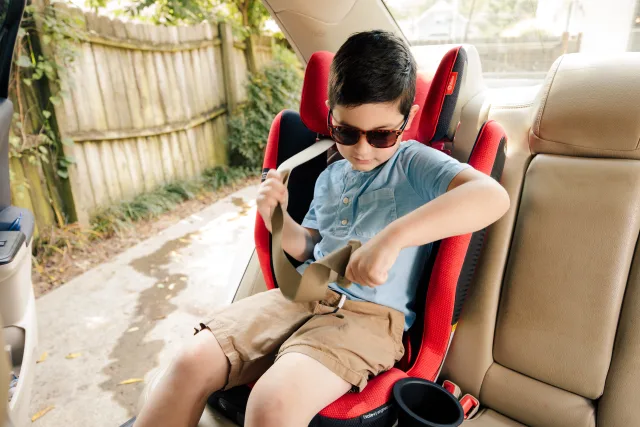
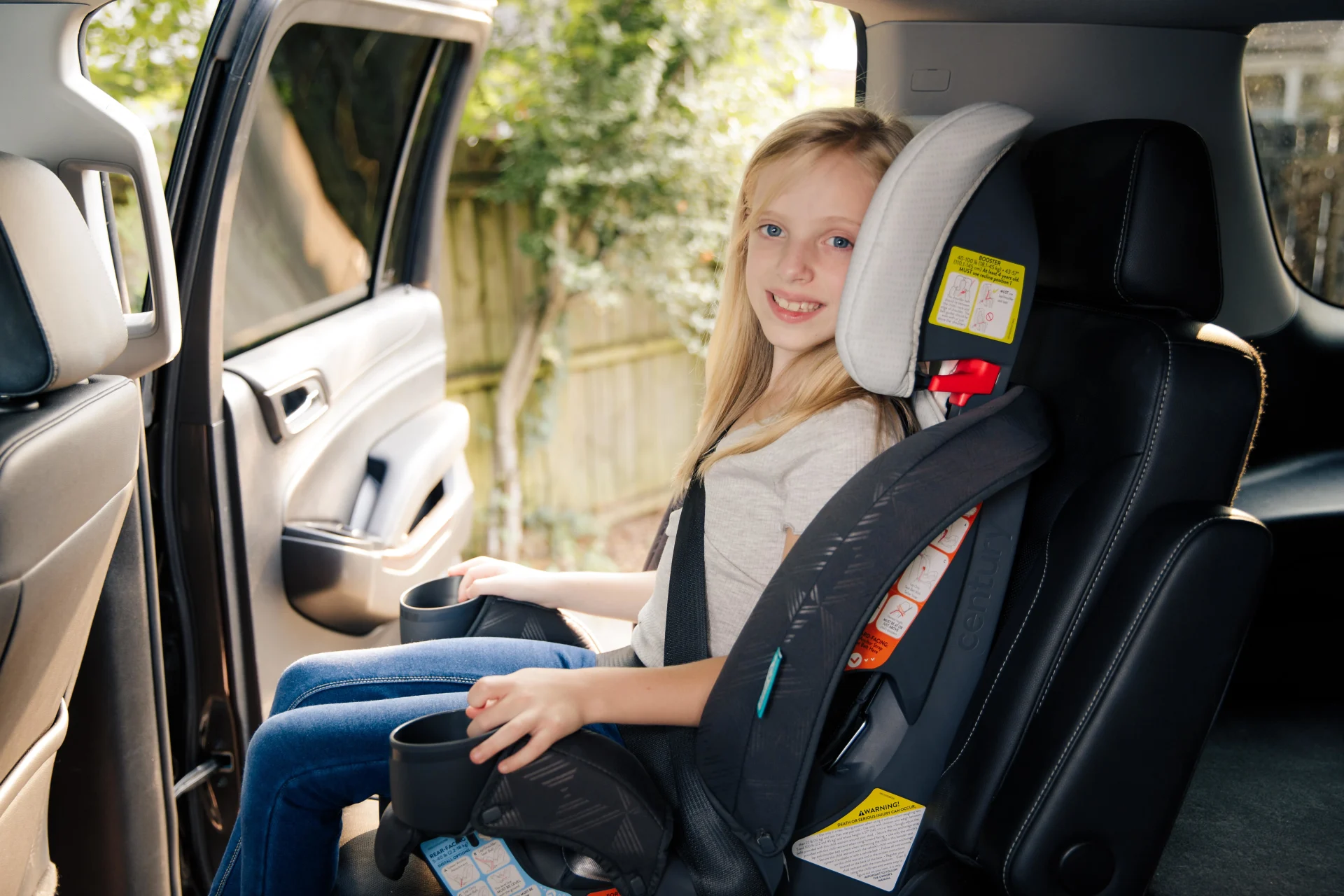
Booster seats are an incredibly important part of the car seat journey. Because so much of the conversation focuses on five-point harness seats, parents are often left guessing when it comes to booster safety. That’s a problem, especially considering booster seats can reduce the risk of injury or death in a crash by 45% in kids ages 4 to 8. They’re not a nice-to-have, they’re a necessity.
So when should you move your child from a forward-facing car seat to a booster? It’s a great question, and one that many parents are not sure how to answer. To make this step crystal clear, we put together a simple booster seat readiness guide. By the end of this post, you’ll know exactly how to choose the safest option for your child.
Here’s how to determine if your child is ready for a booster seat:
What Are the Requirements for a Booster Seat? Readiness Guide
Minimum Requirements to Move to a Booster Seat:
First, let’s go over the minimum requirements for transitioning to a booster seat. These are the baseline standards, not the safest recommendations. Think of them as the lowest level of what car seat manufacturers and state booster seat laws permit.
So, don’t even consider moving to a booster seat unless . . .
Your child is at least five years of age.
First of all, most reputable safety organizations recommend that children ride in a rear-facing car seat for as long as possible. For many kids, this means they remain rear-facing until around age 3-4.
We mention this because four years old is technically the earliest a child could move to a booster. However, at this age, most children are still much safer in a rear-facing or forward-facing car seat with a five-point harness.
Your child weighs at least 40 lbs.
Most car seat manufacturers have a minimum weight requirement of 40 lbs before using a booster seat. That said, this weight is still suitable for front-facing car seats and even most rear-facing car seats! Don’t be quick to move up just because your child has hit the lowest weight threshold.
Your child is at least 43 inches tall (depending on the seat).
Booster seats also come with height minimums, most of which require children to be at least 43 inches tall. However, some may have a higher minimum as safety data and regulations have evolved.
Still, reaching those numbers doesn’t automatically mean a child is ready. Kids at these heights can often continue to use a car seat with a harness. You should always stick with the most supportive car seat possible until your kiddo has fully outgrown it.
Additional Requirements to Move to a Booster Seat for Safety:
Next, we’re going to cover the recommended requirements. Legislation doesn’t usually enforce these recommendations (though it sometimes does, depending on your state).
Nonetheless, these guidelines are strongly supported by safety experts, including the American Academy of Pediatrics, the National Highway Traffic Safety Administration, and, of course, all of us here at Safe in the Seat!
You know your child can safely ride in a booster seat when . . .
Your child has exceeded the height or weight limit on their front-facing seat.
All child safety seats have maximum height and weight requirements. Keep your child in each car seat phase until they reach those caps. And remember, your kiddo is always safest when they’re in a rear-facing and in a five-point harness. Keep them using these safety features as long as possible!
The seat belt fits properly when your child is in a booster seat.
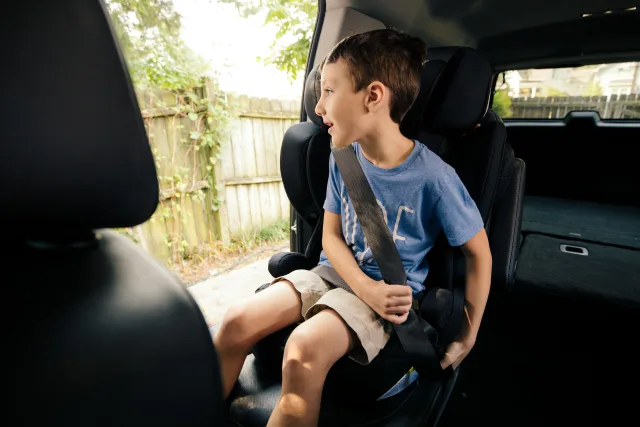
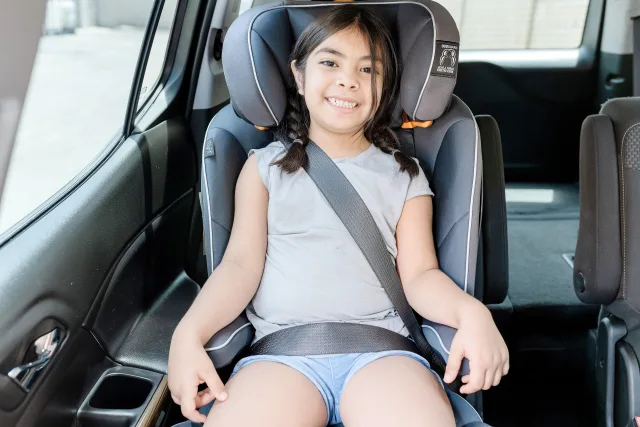
If your child has reached the height or weight limits of their forward-facing car seat, go ahead and place them in a booster seat. Once they’re seated, make sure the lap and shoulder belts fit them correctly. A booster works by lifting a child up, so the seat belt can sit where it would on an adult.
A proper seat belt fit should look like this:
- The lap belt lies snugly across the upper thighs, not riding up on the stomach.
- The shoulder belt crosses the center of the chest and sits securely on the shoulder. It doesn’t cut into the neck or slip off the arm.
If the belt doesn’t fall in the right places, that usually means the transition happened too soon. At that point, it’s time to verify they really did reach the maximum limits of their forward-facing seat. If they truly did, invest in a new forward-facing seat with higher height or weight requirements. (We recommend the Chicco MyFit.)
Your child is mature enough to sit properly in a booster.
Being in a booster seat isn’t just about size. Your child also needs the maturity to sit safely without the support of a five-point harness. In a booster, they are responsible for sitting upright and staying in the correct position. If they don’t, the seat belt can’t protect them in an emergency.
From a maturity standpoint, your child must be able to:
- Sit upright the entire ride without leaning, slouching, or sliding
- Keep their back against the vehicle seat and their bottom all the way back
- Leave the seat belt alone (no pulling, tucking under the arm, or placing it behind the back)
- Stay calm and still, even when tired or on long car rides
If your child can’t reliably do all the above, they’re not ready for a booster.
Does It Matter if You Use a High-back or Backless Booster Seat?
You’re probably wondering about the two different types of booster seats. On one hand, high-back belt-positioning boosters provide supportive side wings and a headrest. On the other hand, backless boosters simply give your child the lift they need for proper seat belt fit. And yes, the type you choose does matter.
Kids should typically start in a high-back booster. The structure of the seat helps them stay upright, supports proper posture, and may offer added protection from the booster’s shell in a crash. A child shouldn’t move to a backless booster until they’ve outgrown the height or weight limits of their high-back model.
We know this can feel like a lot to navigate, especially with so many seat options out there. That’s why we created this comprehensive transition guide to help you make the safest possible choice for your big kid. Check it out!
How to Install a Booster Seat
Usually, installing a car seat is one of the most difficult parts of the process. Luckily, that’s not the case for boosters! They’re fairly easy to install and use.
Here’s how to do it:
Step One: Decide what vehicle seat you’ll use.
Choose a location in the back seat that offers the best seat belt fit and proper head support. Most boosters fit best in outboard positions, but if your center seat has a lap and shoulder belt, that’s an acceptable option, too. Make sure the spot you pick allows the vehicle’s seat belt to lie flat and move freely through the belt path.
Step Two: Place the booster against the seat.
Set the booster flush against the vehicle seatback. If it’s a high-back booster, ensure the booster’s backrest is flush with the vehicle seat with no gapping or wobbling. For backless boosters, make sure that the vehicle seat provides head support that reaches the tops of your child’s ears.
Step Three: Buckle in the LATCH connectors (if applicable).
Many modern boosters come with LATCH connectors that prevent the seat from sliding around or becoming a projectile when your child isn’t in it. If your booster has them, attach each connector to the vehicle’s LATCH anchors until you hear a click.
Interested in this type of seat for your kids? Here are our favorite booster seats with LATCH.
Step Four: Attach the shoulder-belt guide (if applicable).
High-back boosters always have a shoulder belt guide on the headrest. This helps position the shoulder belt correctly across your child’s chest. Thread the belt through according to the manufacturer’s instructions. Make sure the belt can glide smoothly. Any snagging or friction can prevent the belt from tightening properly during a crash. Backless boosters may have a shoulder belt positioner as well.
Step Five: Route the seat belt correctly on your child.
Have your child sit all the way back, then buckle the seat belt. The lap belt should lie low across the upper thighs, not the stomach. The shoulder belt should sit centered on the collarbone and chest. It shouldn’t touch the neck, slip off the shoulder, or sit under the arm. Adjust the booster or belt guide as needed until it fits your child perfectly. Make sure to route the shoulder belt properly over the booster's armrest. Check the manual for the correct placement.
Don’t consider a booster seat until your child has exceeded the limits on their front-facing car seat.
Choosing the right time to transition from one car seat type to another is one of the most important decisions you’ll make on the road to safer travel. Every child grows differently, but most kids won’t pass the seat belt fit test until they’re nearly teenagers. This means many will need a booster seat until around 10-12 years of age, or when they are between 57-63". Seat belt geometry varies by vehicle and seating position. This means that kids may fit in one seat in a vehicle before they fit in another seating position in the same vehicle even.
We know extended booster use can feel a little taboo, but proper seat belt fit matters far more than age, appearance, or social norms. No matter which transition you’re considering, the guiding principle never changes: Stay in the safest seat possible for as long as possible.
If you’re still feeling overwhelmed by the decision to transition, we have the perfect resource to support you. Our digital resource Conquering the Car Seat Journey provides a thorough guide to each car seat and booster seat phase. And, if you do determine a booster seat is the right choice, use our Car Seat Finder Quiz to identify the best booster for your family.
As an Amazon Associate, Safe in the Seat earns from qualifying purchases.