Car stickers are incredibly common, whether you just bought a brand-new car or picked up a used vehicle. From dealership labels and bumper stickers to window decals and expired permits, most vehicles collect some type of adhesive over time. And more often than not, removing those stickers isn’t as simple as just peeling them off.
In these cases, most of us rely on quick DIY fixes. Ice scrapers, the sides of a credit card, a warm moist towel, we get creative! However, using improper methods doesn’t just lead to frustration. It can damage the paint, scratch the clear coat, or, of course, leave behind sticky residue.
Well, you’ll be happy to hear that removing stickers without damaging your car is easier than you think. In this post, we’ll lay out how to remove different types of stickers the right way. With these tips, you can ditch the sticky residue, protect your paint job, and make your car look much cleaner in the process.
How to Get Rid of Car Stickers Without Damage
For most of us, when we look at car stickers, we tend to think: “Is this even WORTH removing?” And truthfully, yes! If you’ve followed our guides on how to clean car seat stains and the best ways to keep your car interior clean, you’ve put a lot of work into keeping your vehicle fresh and functional.
That said, improperly removing stickers can lead to poor results. Residue, scratches, and chips are all pretty common. So, before you dive in and start peeling those stickers off in frustration, read this post and follow these instructions for the best results possible.
What Are Car Stickers Made Of?
Vinyl Stickers with Pressure-Sensitive Adhesive
These are the most common car decals (like bumper stickers) you’ll run into. They use a strong adhesive backing that sticks firmly to paint, glass, or metal. This is great for durability, but not ideal for easy removal.
Paper-Based Stickers with Acrylic Adhesive
Paper stickers are usually cheaper, temporary stickers like parking permits, inspection stickers, or old registration labels. The problem? They tend to tear apart during removal and leave behind annoying adhesive residue.
Reflective Vinyl Decals
Manufacturers make reflective decals with light-reflecting materials designed to improve visibility at night. You’ll commonly see these on commercial and emergency vehicles, as well as on some bumper stickers and safety decals.
Laminated Weather-Resistant Vinyl Graphics
These are high-quality, heavy-duty decal stickers built to survive heat, rain, UV exposure, and car washes without peeling. Because they’re made to be extra durable, they usually take a little more patience and heat to remove properly.
Static Cling Vinyl Decals
Static cling decals don’t use adhesive at all. Instead, they stick to windows using static electricity, which makes them way easier to remove and reposition without leaving residue behind.
Are Car Stickers Different From Regular Stickers?
Yes. Companies generally make car stickers more durable than regular stickers. Why? They have to survive heat, rain, sunlight, wind, dirt, and constant temperature changes.
Because of that, most car stickers (especially custom stickers!) use stronger adhesives and weather-resistant materials, like vinyl or laminated graphics. They’re great for longevity, but can be difficult to remove without damage or residue.
What to Use to Get Stickers Off Cars?
There are multiple ways to remove stickers from cars. What matters is the technique and the type of sticker. Below, we'll explore a few different efficient methods for getting your car back in tip-top shape:
Hair Dryer or Heat Gun
Heat is one of the easiest ways to loosen sticker adhesive without damaging your car. Warming the sticker softens the glue underneath, making it significantly easier to peel off cleanly instead of shredding into a million tiny pieces.
Adhesive Removers
Companies specifically design adhesive removers to break down stubborn sticky residue left behind after peeling off a sticker. These are especially helpful for old decals, dealership labels, or bumper stickers that refuse to let go.
Rubbing Alcohol
Rubbing alcohol helps dissolve leftover adhesive and evaporates quickly without leaving a greasy residue behind. It’s a great option for cleaning up glass, windows, and small sticky spots after sticker removal.
White Vinegar
White vinegar is a gentler, more natural option for loosening adhesive. The acidity helps break down sticky residue while still being mild enough for lighter cleaning jobs.
Baby Oil
Baby oil helps loosen adhesive while adding lubrication, which can make stubborn stickers easier to peel away. It works especially well on sticky residue left behind after the main sticker is gone, but you’re still dealing with torn strips of paper and gunk.
Dish Soap
Dish soap is great for cleaning the area before sticker removal while also helping soften certain paper-based stickers for easier peeling. Once the sticker is gone, it can help wash away leftover grease, adhesive, and residue.
Plastic Scrapers or Razor Blades
Plastic scrapers help lift stickers without scratching your paint or windows. Razor blades can also work on glass when used carefully, but we recommend sticking with plastic options. These are the least likely to damage your vehicle.
How to Remove Car Stickers
Step One: Clean the surface before starting.
Start by washing the area with warm water and a little dish soap. Use a microfiber cloth to scrub the area without scratching the pain. Then, pat the surface dry with another towel.
Step Two: Apply heat to loosen the adhesive.
Next, take a hairdryer or heat gun on low heat to soften the glue under the sticker. This will make peeling the sticker off much easier and less likely to damage your car. Just be careful not to use too much heat or hold it in one spot for too long, as excessive heat can damage paint, tint, or plastic trim.
Step Three: Lift a corner and peel slowly at a low angle.
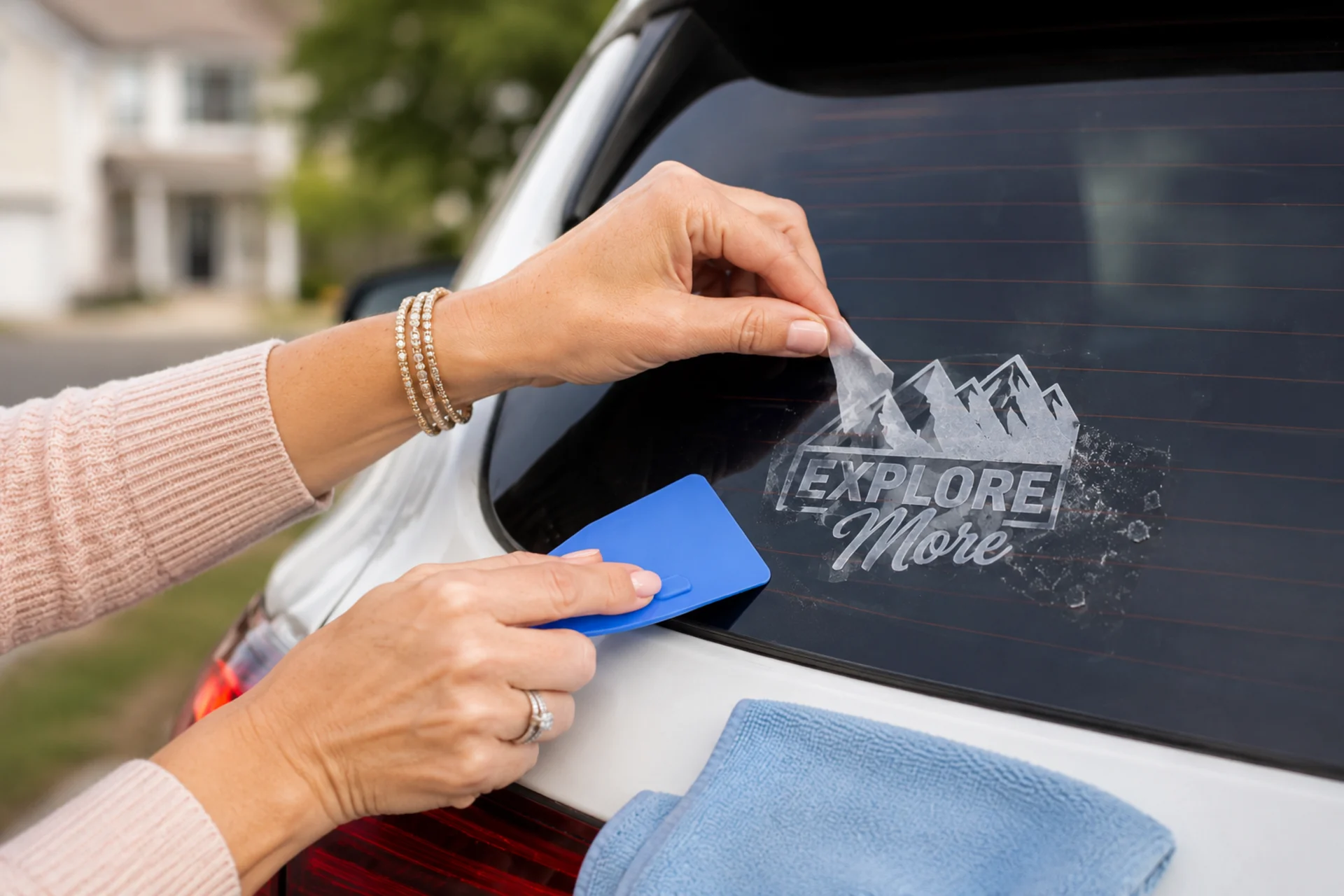
Using your fingernail or a plastic scraper, pull up one corner of the sticker. Then slowly peel the sticker back, but don’t rush. A low angle can also help give you a clean peel without any extra residue.
Step Four: Use a plastic scraper if needed.
If you do have leftover residue or stubborn sections, use the plastic scraper to gently work them loose. Don’t stress about getting every bit of adhesive off yet. Focus on removing the actual sticker first.
Step Five: Apply adhesive remover to any residue.
Spray an adhesive remover over the residue and let it sit for a minute or two. Then, take another microfiber cloth and scrub the area in small circles. Repeat this process until all the sticky texture is gone.
Step Six: Clean and protect the surface.
Once the sticker and residue are completely gone, wash the area one more time with soap and water. Then, dry it thoroughly and apply a wax or paint protectant to restore shine and help protect your car’s finish long term.
Removal Tips By Sticker Type
- Vinyl stickers: Use steady heat and peel slowly to avoid tearing or leaving behind adhesive.
- Paper-based stickers: Expect tearing - they’re notorious for it. Simply use soaking or adhesive remover to break down remaining residue.
- Static cling decals: Peel gently and clean the surface to remove any dirt or buildup.
- Reflective decals: Apply consistent heat and take your time, as they use stronger adhesives.
- Laminated graphics: Start with heat, peel in sections, then use adhesive remover to eliminate residue.
Remove old car stickers with these quick removal tips.
Removing car stickers may seem intimidating at first, but with the right tools and techniques, it’s actually pretty straightforward. Taking your time and using gentle methods can help you avoid scratches, sticky residue, and damage to your paint or windows.
Once the stickers are gone, your car will instantly look cleaner, newer, and much more like your own. For more vehicle cleaning and maintenance tips, visit the Safe in the Seat blog.
As an Amazon Associate, Safe in the Seat earns from qualifying purchases.