At first thought, taking a long road trip with your newborn may sound overwhelming. Cars, road conditions, and infants are all pretty unpredictable! But there are actually lots of reasons to hit the road with your baby. And for many families, it turns out to be less intimidating and more doable than they expected.
There are many circumstances that require you to take a road trip with your baby, like attending a family event, going to a medical appointment, or relocating to a new home. Then, there are times you may want to travel with your newborn! In fact, many families find vacationing with infants surprisingly manageable since babies are more portable, sleep frequently, and don’t yet have school or activity commitments. It can also be a sweet bonding experience, slowing down, being fully present together, and making early memories as a new family.
If you’re considering a road trip with your newborn, we’re here to help. Regardless of the reason for your travel, we’ve got a list of helpful tips to make the drive safe and stress-free for your whole crew.
15 Tips for Road Trip With Newborn: A Safety Guide
In this post, we’ll start by reviewing safety concerns related to traveling with newborn babies. It’s best if you’re fully informed about the potential risks before you get too far into the planning process. After we clear that up, we’ll dive into our best advice for a manageable and even enjoyable road trip with your infant.
Here’s what you need to know:
Can You Take a Newborn on a Road Trip?
In most cases, healthy, full-term newborns can travel safely by car. That said, if your baby was premature, has respiratory issues, low muscle tone, or other medical concerns, your pediatrician may recommend limiting or modifying travel plans.
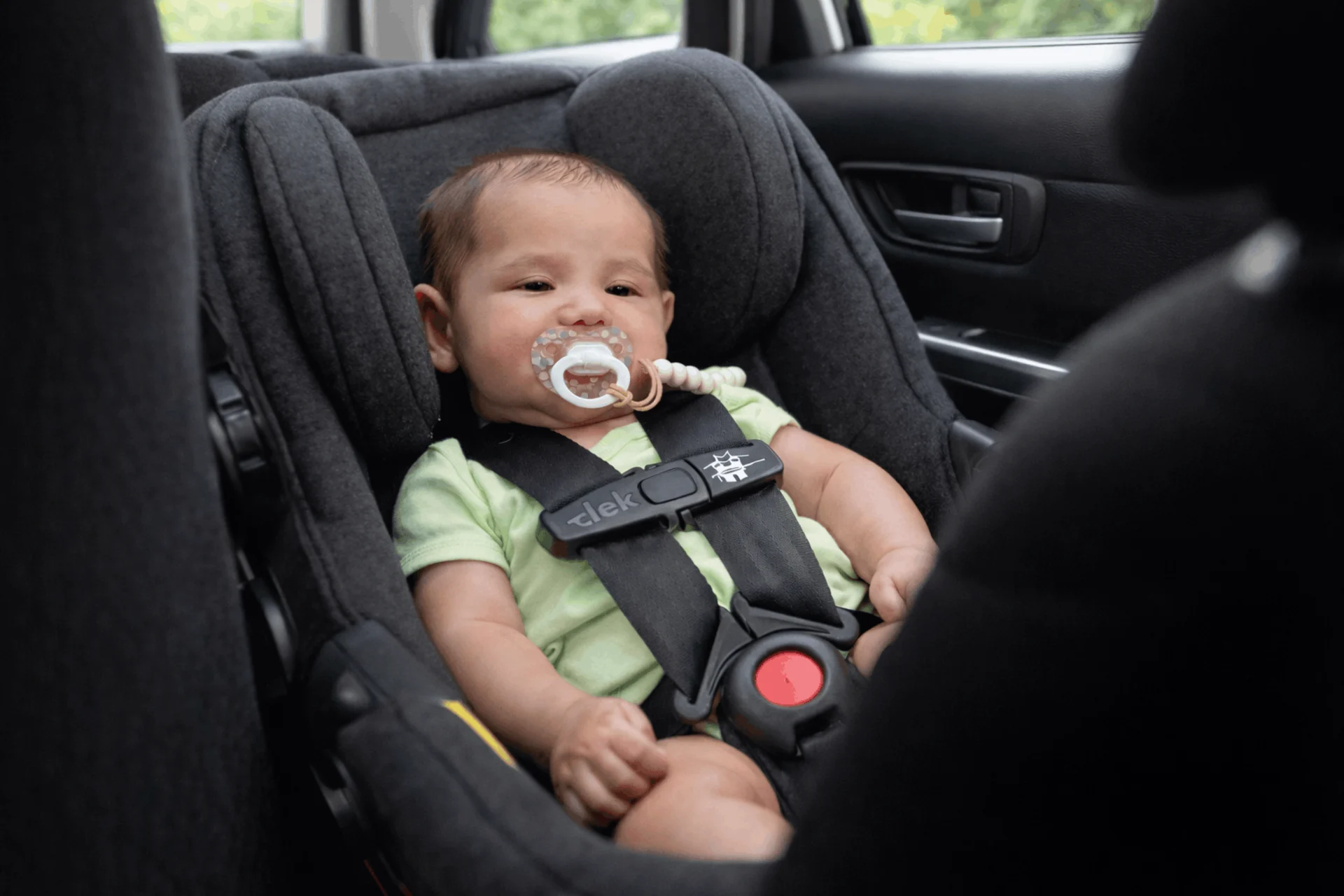
Even with medical clearance, it’s important to monitor how long your newborn sits in their car seat. Because infants have limited head and neck control, extended time in a semi-upright position can negatively affect airway positioning and oxygen levels. This is one of the reasons why families are encouraged to take breaks every 1–2 hours. It ensures that baby stays happy and healthy throughout the journey.
How to Road Trip With a Newborn
1. Talk to your pediatrician about long-distance travel.
Before making too many plans, talk to your pediatrician about the trip. With your baby’s medical history in mind, they can confirm whether long-distance travel is safe. That green light will give you peace of mind that you're making the right choice for your family.
2. Perform a full vehicle inspection before the trip.
Car breakdowns are always unwelcome on a road trip but they’re especially disruptive when traveling with a newborn. Additionally, being on the shoulder of a highway is naturally extremely dangerous. If the car’s weather controls aren’t functional, those high or low temperatures can put your infant even more at risk.
Of course, you can’t prevent every vehicle maintenance problem, but you can do a lot to reduce the risk of breakdown! Give your car a full inspection before your road trip. Check things like fluids, belts, hoses, battery health, tires, lights, wipers, the air filter, brakes, and the heating and cooling system. And, if you’re able to, it’d be a good idea to have the car inspected by a mechanic as well.
In the event something does happen, preparation is important. Here’s what to do if your car breaks down.
3. Check and restock your car’s emergency kit.
To be fully prepared for roadside emergencies, don’t forget to pack a well-stocked first-aid kit. We know many cars have limited cargo space, but when you’re road tripping with a baby, it’s not the time to be a minimalist.
A thoughtfully packed kit gives you peace of mind and helps you respond quickly when something unexpected happens. Read our full list of things to bring on a road trip so you can confidently handle situations like these:
- Messes
- Car Sickness
- Minor Injuries
- Flat Tire or Breakdown
- Dead Battery
- Diaper Bag Loss
- Submersion Event
- Bad Weather
4. Recheck your car seat fit and recline.
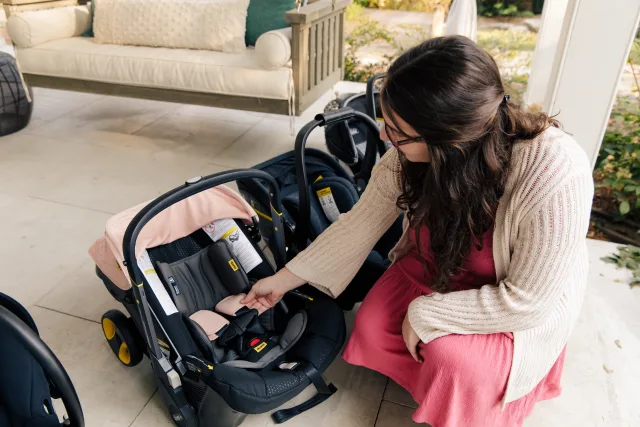
If your baby’s a newborn, chances are they’re not yet ready for a car seat adjustment. That said, infants grow rapidly, so it’s best to double-check! Ensure that you’ve installed your car seat correctly, the recline is appropriate for their size, and the harness straps are at or just below their shoulders.
Also, check for these common car seat mistakes that could put your child at risk in a crash.
5. Pack the trunk strategically and safely.
When packing for your trip, don’t just toss everything into the hatch and hope for the best. Be intentional. Keep your baby’s essentials within easy reach so you can grab the stroller, a clean outfit, or a backup blanket without unloading half the car on the shoulder of the highway.
And placement matters just as much as access. Secure hard or heavy items so they don’t become dangerous projectiles in a crash. Trunk organizers, cargo nets, bungee cords, and ratchet straps make it easy to keep things tied down. This way, your family remains safe even in the worst-case scenario.
6. Rethink tackling long drives in one day.
Depending on who you are, a 7–10 hour drive might sound completely manageable in one day. However, when you’re traveling with a newborn by car, consider splitting anything longer than 6 or 7 hours into two days. This will allow for plenty of breaks, inevitable delays, and general flexibility to keep the trip as stress-free as possible.
7. Add plenty of buffer time to your schedule.
If you have a firm time you have to be at your destination, ensure you leave plenty of buffer room. When you feel like you’re running late, you may speed, skip needed stops, and just generally drive more stressed and distracted. This, of course, increases your risk of accidents and just makes the trip generally unpleasant.
8. Avoid overdressing the baby even if it's cold.
Remember, your car has climate control. If it’s chilly outside, it’s tempting to layer your baby up to keep them warm. However, your vehicle will heat up quickly (and we recommend getting it to a comfortable temperature before you take off). If you dress your baby for the weather outside, they can quickly become too warm and uncomfortable once the cabin heats up.
Opt for a cozy sleeper or a simple long-sleeve and pants combo. Also, use a blanket or two over the harness until the car reaches the right temperature. Of course, keep warm outerwear nearby for stops, but remove bulky layers before buckling back in.
9. Learn how to safely swaddle in the car seat.
Some babies love to be swaddled. It helps them feel secure, calm, and relaxed enough to sleep. Of course, this can be super helpful on a road trip! The good news? You can swaddle safely in the car seat with the right approach.
Never place blankets or fabric underneath the harness straps. Instead, secure your baby first, making sure the harness is snug and properly positioned. Then, lay a thin blanket over their shoulders and tuck it snugly around their sides and under their arms, keeping it outside of the harness system. Used correctly, this can be a great tool for promoting comfort and longer, more peaceful stretches in the car without compromising safety.
10. Be strategic with your departure time.
Timing can make or break a road trip with a newborn. Whenever possible, plan your departure around a feeding or nap. This way, your baby is content and more likely to sleep for the first stretch of the drive. Leaving right after a full feed and diaper change can buy you valuable quiet miles.
That said, don’t sacrifice safe driving for the sake of a perfect nap window. Avoid departing when you’re overly tired, and make sure the driver is well-rested and alert. A calm, predictable start sets the tone for the entire trip and helps everyone arrive a little more regulated.
11. Have another adult sit in the back when possible.
A baby-safe car seat mirror can be helpful for monitoring your newborn, but your visibility is still limited. And if you’re in the front seat, you can’t respond to a potential issue without pulling over. If possible, have one adult sit in the backseat with your baby to monitor their needs, temperature, and overall well-being. An extra set of eyes (and hands) can provide reassurance and fix small issues before they become big ones.
12. Skip aftermarket car seat accessories.
It can be tempting to add extra inserts, strap covers, head supports, or other aftermarket products to make your baby more comfortable on a long drive. However, unless an accessory comes with your car seat or is specifically approved by the manufacturer, you shouldn’t use it.
Aftermarket products can interfere with how the harness fits and how the seat performs in a crash. They’re extremely unsafe! Instead, stick with what came in the box and follow your car seat manual closely. When it comes to crash safety, less really is more.
13. Plan breaks at least every two hours.
Newborns should not remain in their car seats for extended, uninterrupted stretches. Aim to stop at least every two hours to take your baby out of the seat, allow them to stretch, and give their body a break from the semi-upright position. As we mentioned earlier, staying in a car seat too long can strain a newborn’s airway and affect breathing. As a result, this can potentially increase the risk of positional asphyxia.
These stops are also the perfect time for diaper changes, feedings, and quick resets for everyone in the car. And, yes, even if your baby is sleeping, prioritize regular breaks over pushing through. We know it’s not fun, but it’s the safest thing to do!
14. Be mindful of where you plan your stops.
Yes, stops are essential but don’t just pull over anywhere. Look for well-lit, populated areas with clean bathrooms, space to walk safely away from traffic, and access to water or basic supplies if needed. Large gas stations, travel centers, and busy rest areas are typically better choices than isolated pull-offs. A safe, comfortable stop makes breaks far less stressful and much more productive.
Here’s more on how to plan stops on a road trip with kids.
15. Never feed your baby while they’re in the car seat.
It may feel efficient to offer a bottle while driving, but feeding in a moving vehicle is not safe. If your baby begins to choke, spit up excessively, or struggle, you may not be able to respond quickly enough to prevent injury. Always pull over, remove your baby from the car seat, and feed them in a safe, upright position outside the vehicle. Feeding breaks may take more time, but safety always comes first. This also applies to breastfeeding. Leaning over to feed your baby while thecar is moving is dangerous for both of you in the event of a crash. Your seat belt will not be correctly on your body and you will be in the baby's space. You will both be at risk of serious injury or death.
Travel safely with your newborn using these tips.
Road tripping with a newborn doesn’t have to be chaotic or scary. However, to make the trip safe and smooth, you’ll need to be strategic and intentional about every detail. When you prioritize safety over speed and preparation over convenience, the entire experience feels more manageable! With the right mindset and a solid plan, you can protect your baby, reduce stress, and even enjoy those early miles together as a family.
For more travel and vehicle safety information and advice, browse the rest of the Safe in the Seat blog.