
As parents, one of our greatest blessings is getting to experience all the “firsts” in our children’s lives. From their first words to their first jump off the high dive, there are so many incredible milestones to cherish and celebrate. The first flight is no different!
Air travel with kids is exciting, but it can also be super stressful. Gone are the days of traveling across the country with nothing but a backpack and a destination. With kids, you need patience, planning, and a few tried-and-true strategies to make the journey smooth, enjoyable, and memorable for the whole family.
Wondering what some of those expert travel tips and tricks are? That’s what we’re sharing today!
Kids' First Flight: What to Expect and How to Plan
In this post, we’ll talk about what to expect when kids take their first flight and how to set them up for success. As intimidating as it may be, it doesn’t have to be complicated. With a few thoughtful strategies, you can help your little ones stay engaged, comfortable, and happy from takeoff to landing.
What to Expect from Kids’ First Plane Ride
Everything is going to take longer.
If you’re a frequent flyer, you know how long things usually take. With kids, take that timeline and double it. Everything from driving to the airport to boarding the plane will take much longer with little ones. Even the most well-behaved kids will be curious, easily distracted, and maybe a little overwhelmed.
They’ll have extra energy.
The novelty and excitement of flying mixed with a bit of stress and anticipation will likely have your kids wound up. All those big feelings have to go somewhere, and often they come out as extra movement, chatter, or restlessness. It’s completely normal for them to have extra energy before, during, and even after the flight.
You’ll notice changes in behavior.
That mix of emotions can have a big impact on your child’s behavior. Sometimes, the excitement and anticipation can feel overwhelming, leaving them quieter or more withdrawn. Other times, they may be on high alert: curious, fidgety, and full of energy. Their reactions can change from moment to moment, so be ready for anything.
Getting good naps might be a challenge.
Don’t expect kids to stick to their usual sleep schedule while traveling. It’s worth keeping in mind, but they may have trouble napping or sleeping at the airport or on the plane itself. Hope for the best, but plan for the worst.
You’ll have to do lots of entertaining.
Entertainment is key to keeping kids happy while traveling. Don’t expect much downtime to read or relax when it comes to little ones or yourself. On the flight, you will be more like a circus ringmaster, making sure everyone stays calm, controlled and entertained. Make sure to check out our post “How to Entertain a Toddler on a Plane” if you need some inspiration!
Usual snack and screen time limits are out the window.
Your snack and screen time rules are probably sacred at home. However, there is no shame in throwing usual limits out the window while traveling. If unlimited Goldfish and Ms. Rachel are what it takes to keep your kids occupied, just embrace it and enjoy the flight.
There will be more bathroom breaks.
When you travel solo, you might be able to skip the airplane lavatory. With kids, however, you’ll probably find yourself squeezing into that tiny bathroom at least once. It’s inevitable. Don’t fight it just plan accordingly!
It may trigger ear or stomach discomfort.
If your child has never flown, you don’t know how their little bodies will handle it. Their ears or stomachs may not tolerate the changes in cabin pressure. That could mean earaches, motion sickness, and just general discomfort. It’s not fun, but it’s a reality for some kids!
Messes will be made.
Of course, you’ll already be doing everything you can to avoid little ones from making messes. But our tried-and-true tips? Bring toys without small pieces. Choose snacks that aren’t sticky, crumbly, or likely to spill. Consider putting toddlers in pull-ups even if they are potty-trained. The point is, you can prepare all you want, but kids will still make messes so just be ready for it.
Some passengers may be intolerant.
Unfortunately, not everyone you encounter will be patient with your children. You might get some side-eye, snide remarks, or heavy sighs from fellow travelers. Don’t let it rattle you. Focus on enjoying the journey with your family. You have as much right to fly as anyone else on the plane!

How to Fly with Kids for the First Time
Choose the right flight for your family.
When choosing a flight, there’s more to consider than just price. If you’re traveling with young children, think about these factors, too:
- Timing: Try to book a flight during nap time, bedtime, or during a typically calm time of day. It depends on your family, but many parents like overnight flights so kids can sleep through most of the trip.
- Layovers: Getting kids on and off planes is a hassle. Opt for flights with fewer and shorter layovers whenever possible.
- Baggage: Not all airline tickets include a carry-on allowance, but you’ll probably want one when traveling with kids. Make sure you can bring what you need on board.
- Gear: Check airline policies for car seats, strollers, and other equipment your family wants to bring.
Strategically purchase seats for everyone (even kids under 2).
Yes, kids can technically sit on your lap for free during a flight, which might seem like a great way to save on travel expenses. However, it’s not safe. Your arms alone aren’t enough to protect them during a rough landing or sudden turbulence.
The FAA and the American Academy of Pediatrics both recommend securing your child in a car seat on the plane. Therefore, if you’re bringing a car seat, your child will need their own seat. That means buying a ticket for everyone, regardless of age.
Get the necessary identification way in advance.
If you’re flying domestically, identification usually isn’t an issue. Children traveling with their parents don’t need any ID. You can bring a birth certificate just in case, but it’s not required.
If you’re flying internationally, however, your child will need a passport. The process can take 6-8 weeks, not including the appointment itself and the mailing process. There are options to expedite a passport for an additional fee, but it’s best to get your child’s passport well in advance.
Make a comprehensive packing list and check it twice.
As an adult, you can often go without most of your belongings - it’s easy enough to replace a toothbrush or a pack of socks. With kids, though, forgetting something can derail your whole trip. Whether it’s a favorite comfort item, specialty formula, or the sound machine they need for a good night’s sleep, traveling with children comes with a lot more essentials.
To stay organized, make a comprehensive packing list and review it carefully. Once you’ve packed, check and double-check that everything made it into your bag. To make things easier, here are a few helpful packing lists you can use as a starting point:
Practice parts of the journey with your littles.
To reduce stress and confusion while traveling, roleplay parts of the journey with your kids. Practice going through security, navigating the airport, boarding the plane, and even waiting in lines. It’s also a good idea to review airport safety tips with the whole family so everyone is on the same page the day of your trip.
Check your luggage, but not your car seat or stroller.
When you arrive at the check-in counter, check as much luggage as you can, especially if you are not traveling with another adult. We recommend just taking a backpack with essentials, along with your car seat and possibly a stroller through security. Unless you are traveling internationally with an airline that does not allow car seats, we do not recommend checking your seat. If you have to check the seat, pack it in a box with some padding.
Once you reach the gate, try to keep both your stroller and car seat with you. If your stroller fits in the overhead bin, bring it on the plane. If it doesn’t, you’ll have to gate-check it.
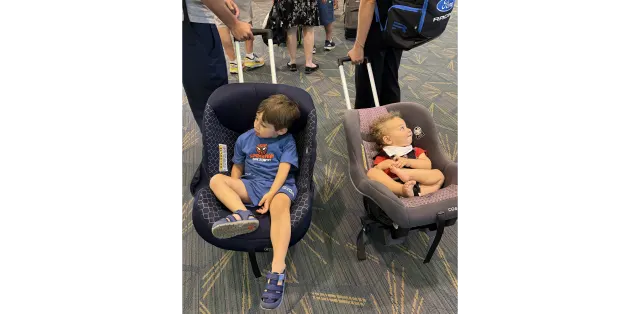
The car seat should always be used on the plane. If you don’t want to bring your everyday car seat, consider a dedicated travel car seat that’s FAA-approved. These tend to be the more lightweight options. Here are some of the best car seats for airplane travel.
You might be wondering: can I take a booster seat on an airplane? The answer is yes and no. You can’t install a booster seat on the plane. Children using boosters can safely use the plane’s seat belt. However, you can (and should) store it in the overhead bin inside the airplane.
Of course, always check your airline’s carry-on allowances and policies, as items like strollers and boosters may count as your carry-on. We know this can feel overwhelming, so check out our tips for bringing a car seat on an airplane to make the process as stress-free as possible.
Pack for everything in your carry-ons.
A lot can happen after you check your bag - spills, blowouts, bloody noses, temper tantrums, and of course, the all-important snack time. The best way to be ready for anything is to pack for every possibility in your carry-on. This is definitely not the time to pack light.
BYOS (Bring your own snacks).
We all know airport snacks are expensive! And snacks on the plane are also pricey and not very kid-friendly. Plus, depending on the weather or the length of the trip, the flight attendants may not come by with the snack cart. So, pack your own. Pretzels, animal crackers, bananas, apple slices, string cheese, mini muffins, granola bars, and even pre-made sandwiches are all perfect airport snacks.
Arrive plenty early for the flight.
There’s a lot of debate about how early you really need to arrive for your flight. The truth is, it depends on the size of the airport, how much baggage you’re checking, and the time of your flight. When traveling with kids, give yourself plenty of extra time to keep the day relaxed. Aim to arrive at least two hours early, if not three.
Let them run around the airport.
Having your kids sit quietly at the gate might seem like the most socially acceptable approach while waiting for the flight. But remember they’ll be sitting for hours once on the plane! Instead of forcing them to stay put, let them burn off some energy by exploring the airport. Of course, be respectful of other passengers and stay safe, but let them get all their wiggles out before takeoff!
Have everyone go to the bathroom before boarding.
Make sure your potty-trained kids use the bathroom before boarding the plane. While there is a lavatory on board, it’s usually not available during boarding and takeoff. It could be an hour or more before it’s officially open, so empty bladders beforehand to avoid potty emergencies at the most inconvenient times.
Take advantage of family boarding.
Most airlines offer pre-boarding for families. If you’re traveling with a partner, stagger your boarding to make things easier. One parent can pre-board to get the car seats and luggage settled, while the kids burn off a little more energy. Then, the other parent can then board with the kids, arriving to installed car seats that are all ready for your little ones. This way, the kids spend less time sitting on the plane before takeoff.
Install the car seat on the plane.
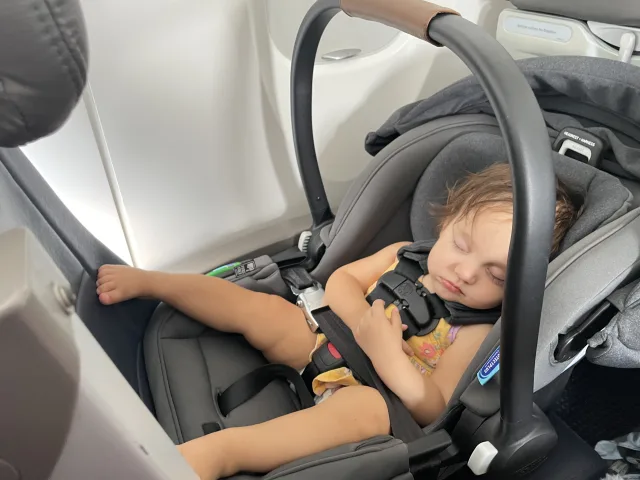
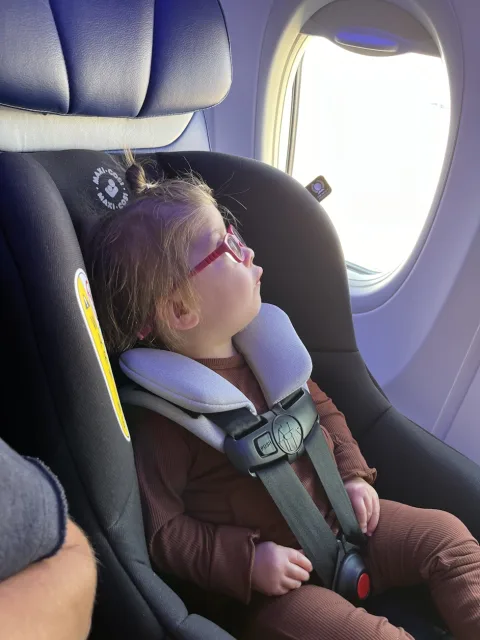
As we mentioned, install the car seat on the plane. It might seem intimidating, but the process is usually easier than you think. The seat should face the same direction as it does in your vehicle. If you are installing the seat rear-facing, it may need to be more upright than allowed in a vehicle. This is fine as long as the child can sit unassisted. Rear-facing seats must go by the window, and in most cases the forward-facing seat would need to be there too. Check your car seat manual for instructions, and use our guide to installing car seats on an airplane.
Eat or drink during takeoff and landing.
To help prevent earaches during pressure changes, have your older children eat or drink during takeoff and landing. This helps their ears pop to reduce any potential discomfort. Give kids sips from partially open bottles, because cabin pressure changes can cause sealed bottles to expand or spray. No one wants to start their flight with a surprise airplane water fountain! For infants, you can give them a pacifier or let them suck on your finger since they should be seated safely in their car seats for take-off and landing.
Keep everyone buckled during the flight.
Whenever possible, keep your children buckled in their seats. Turbulence can strike unexpectedly. So, unless you’re taking them to the bathroom or breastfeeding, it’s safest to keep them secured. They’re used to traveling in their car seats anyway, so don’t expect any extra discomfort. In fact, they’ll probably be more comfortable in their familiar seats!
Be mindful of how you deliver entertainment.
Bringing plenty of activities for kids to do on the plane ride is smart. However, don’t just hand them a bag of games, toys, and crafts. They’ll blow through all of it in 30 minutes! Instead, give them a curated activity in planned intervals. This way, you can stretch activities across the entire flight, keeping them engaged and content.

Watch out for signs of discomfort or sickness.
Kids don’t always have the body awareness or communication skills to explain when they’re not feeling well. Queasiness isn’t uncommon on flights, so watch for signs of motion sickness and have a plan in place if nausea strikes. Check out this post on how to handle motion sickness to help you prepare for the worst.
Take your time to exit - there’s no reason to rush.
When it’s time to exit the plane, don’t rush. Instead of squeezing your kids between passengers scrambling for their bags, wait until most people have left. Then gather your children, car seats, and carry-ons at a calmer pace. You’ll avoid the chaos and make the exit much more peaceful.
Have a plan for safe transportation to your accommodations.
Plan ahead for how you’ll get to your hotel, resort, or Airbnb. Confirm that your children’s car seats can be safely installed in the vehicle you’ll be using, whether it’s a car, shuttle, or taxi. It’s also important to note that while it may be legal to ride without a car seat in a taxi, it’s not safe, and we don’t recommend it.
Make the first flight one to remember with these tips!
When traveling with kids, expect the unexpected, stay flexible, and focus on keeping your young children comfortable and engaged. With preparation and a calm mindset, your kid’s first flight can be smooth, fun, and totally worth cherishing. Take lots of pictures for the scrapbook, and don’t forget the flight is just the beginning of the journey!
For more travel tips and car seat safety education, read the Safe in the Seat blog! It’s full of essential, helpful information that every parent needs to know.
As an Amazon Associate, Safe in the Seat earns from qualifying purchases.