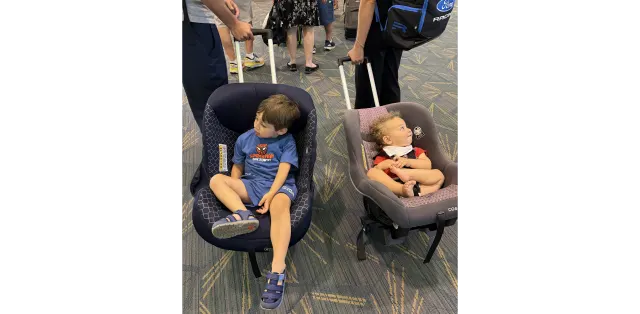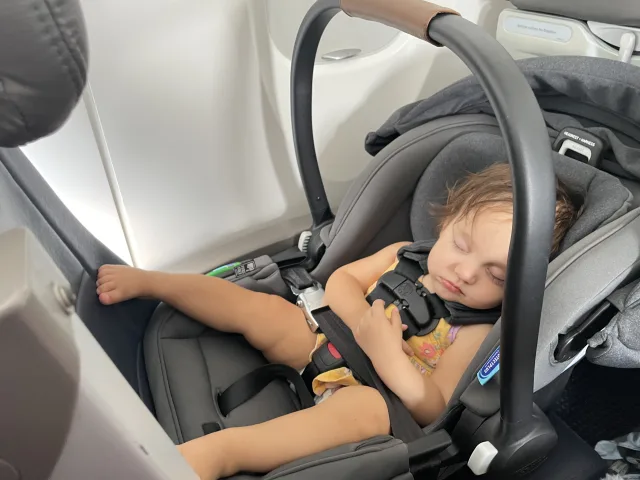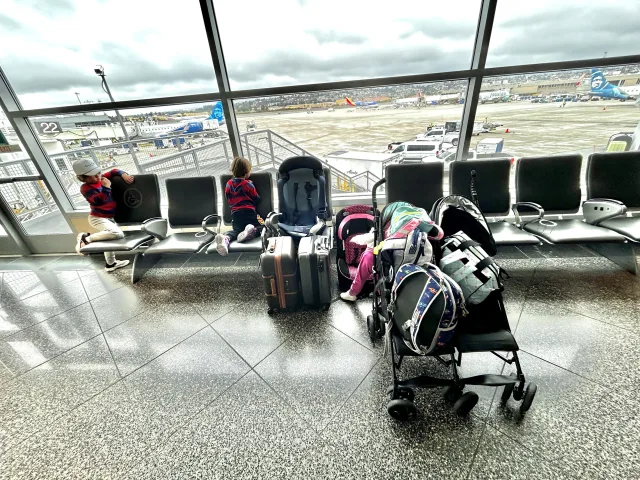

Most US harnessed car seats are FAA-approved. Look for red text on the label that says 'This restraint is certified for use in motor vehicles and aircraft.' Boosters and travel vests can't be used during the flight.
FAA-approved infant car seats:
FAA-approved convertible car seats:
See our full recommended list of FAA-Approved Car Seats
There’s a lot to consider when flying with a child! Everything from packing and snacks to entertainment and safety all require lots of planning and thought. Of course, the most important of these is safety! Many people don’t realize the risks of air travel, and opt to have their child sit on the airplane seat with no restraint system, or they even have their child sit on their lap! Baby carriers are also prohibited during take-off or landing.
Both the Federal Aviation Administration (FAA) and the American Academy of Pediatrics (AAP) strongly recommend that children use their child restraint system (CRS) while flying. Why? Because the lap seat belts (or your arms, if they’re in your lap) aren’t sufficient for keeping your small child safe in extreme turbulence or a rough landing. When booking your flight, consider reserving a window seat for your child. The FAA doesn’t assign car seats to a specific row or seat. Its rule is that the car seat has to be secured to a forward-facing airplane seat, though the car seat itself can still face the rear. Airlines add their own limits on top of that. They don’t allow car seats in exit rows, and the car seat can’t block another passenger’s way out in an emergency. That usually means a window seat, but policies vary by airline, so check yours before you book.
Beyond safe airplane travel, there are other benefits to bringing your car seat on the airplane as well! Sending your car seat through the airline’s bag-checking process can end up with it being damaged or lost, so it’s best to keep it with you at all times. Plus, your child will likely be most comfortable sleeping, playing, and snacking in their own seat. You won’t have to wrestle your kids to sit the whole flight either!
If you're planning to fly with your child soon, our Flying with a Car Seat Guide walks you through exactly what to bring, how to install the seat on the plane, and how to make travel much easier.
All around, bringing a car seat for your child on a flight is the best choice for safety and convenience. But what car seats are FAA-approved? That’s what we’re going to dive into today! Here’s what you need to know about FAA-approved car seats.
What Car Seats Are FAA-approved?
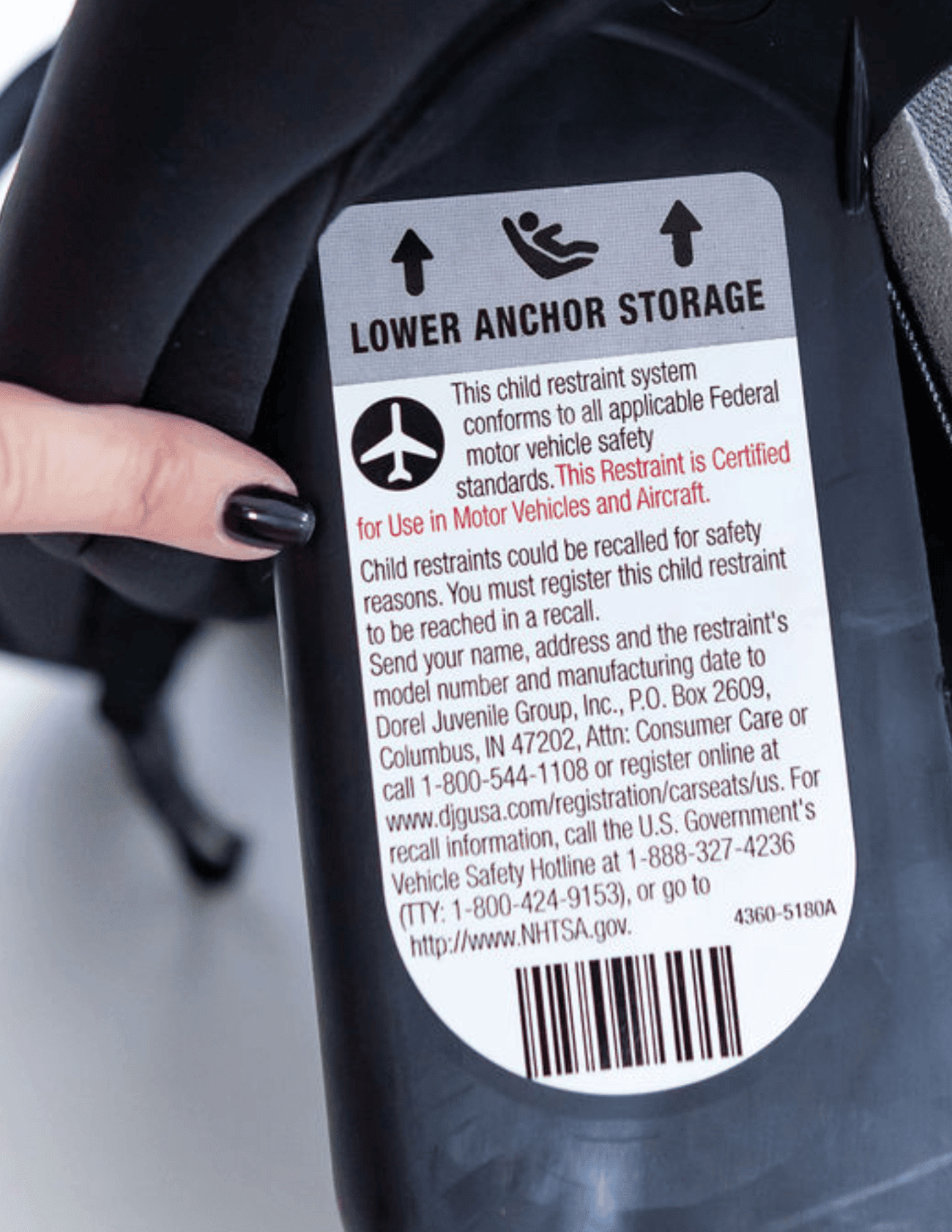
Most, but not all, car seats have approval for aircraft use! To see if your car seat has FAA approval, locate the label on your seat that reads, in red lettering: “THIS RESTRAINT IS CERTIFIED FOR USE IN MOTOR VEHICLES AND AIRCRAFT.” You can also find this information in the manual!
The FAA strongly recommends parents should buckle small children into their car seats that are installed on their own airline seats. However, if your child is normally in a booster seat, the FAA notes they should be in their own airplane seat with a lap belt. Here’s how to install a car seat on a plane if you need it! Flight attendants are responsible for enforcing safety rules on aircraft, and while they are knowledgeable about the regulations, they don't typically receive hands-on training to install them.
Another option is the Child Aviation Restraint System (CARES) device that positions the airplane seat belt to suit children up to 40 inches tall and between 22 and 44 pounds. However, we don’t recommend this because once you arrive at your destination, you’ll need your own child safety seat anyway since trusting rentals isn’t a wise choice.
Here's our link to the full collection of FAA-Approved Car Seats.
Is a Booster or Harness Vest Allowed on a Plane?
No. Federal rules list booster seats and vest- and harness-type restraints as not approved for use on an aircraft during taxi, takeoff and landing. Keep using them in the car on the way to and from the airport, and plan on a different setup for the flight.
Are There FAA-approved Booster Seats?
No. Boosters are the right seat for an older child in the car, but they can't be used on a plane. A booster lifts your child so the car's lap-and-shoulder belt fits across their hips and chest. Airplane seats only have a lap belt, so a booster has no shoulder belt to position. That's why the federal regulation lists boosters as not approved for aircraft.
What your child uses on the flight depends on their size:
- Still in a harnessed car seat: Bring it if it has the red FAA label. A harnessed seat installed on the airplane seat is the safest way for them to fly.
- 22 to 44 pounds and up to 40 inches tall: The CARES harness is FAA-approved for this size and works with the airplane lap belt. It only works on the plane, so you'll still need a car seat at your destination.
- Riding in a booster: Your child sits in their own airplane seat with the lap belt snug across their hips.
At the gate: Since the booster can't be used in flight, decide before you leave whether to carry it on or check it. A backless booster fits in a carry-on or under the seat in front of you, and some folding high-back boosters fit in the overhead bin. Carrying it on keeps it from getting lost or damaged in checked bags, and you'll need it for the drive at the other end. Most airlines will also check a booster, often for free, but check your airline's policy.
Are RideSafer Travel Vests FAA-approved?
No. The RideSafer Vest does not have aircraft approval. Pack it in the overhead for use later. If you have kids in RideSafer vests, they should be sitting in their own airplane seat with the lap belt fastened.
Where is the FAA label on a car seat?
Look for this label on the side of your car seat:
What Counts as a Federally Approved Car Seat?
A federally approved car seat and an FAA-approved car seat are two different approvals, and many seats have both.
A federally approved car seat meets Federal Motor Vehicle Safety Standard 213 (FMVSS 213), the National Highway Traffic Safety Administration's standard for car seats used in motor vehicles. It covers how the seat performs in a crash, along with requirements like buckle strength and labeling. NHTSA doesn't test each seat before it's sold. Manufacturers certify that their seats meet the standard, and every car seat and booster sold in the US has to. So your booster is federally approved even though it can't be FAA-approved.
FAA approval is an extra step. A seat certified for aircraft has passed additional testing for airplane use and carries a second statement on its label.
How to tell which approval your label shows: US car seats made on or after February 26, 1985 that are approved for both carry two statements.
- "This child restraint system conforms to all applicable Federal motor vehicle safety standards." This is the federal approval for use in a car.
- "THIS RESTRAINT IS CERTIFIED FOR USE IN MOTOR VEHICLES AND AIRCRAFT," printed in red. This is the line that makes a seat FAA-approved.
If your seat only has the first statement, it's approved for the car but not the plane. Boosters fall into this group. Seats approved by a foreign government or made to United Nations standards carry their own markings, and the FAA accepts those too.
Flying with a car seat soon?
Traveling with kids and car seats can feel overwhelming. From choosing the right seat to navigating the airport and installing it on the plane, there’s a lot parents don’t realize until they’re already traveling.
Grab our free guide to flying with a car seat to learn exactly how to travel safely and confidently with your child.
Created by Certified Child Passenger Safety Technicians
Below, we’ve got a bunch of car seats for travel! There are lots more than what’s on this list, as far as FAA approval goes. However, we’ll give you some of our favorite car seats for travel:
FAA-approved Car Seats
Best FAA-Approved Rear-Facing Car Seats
Doona
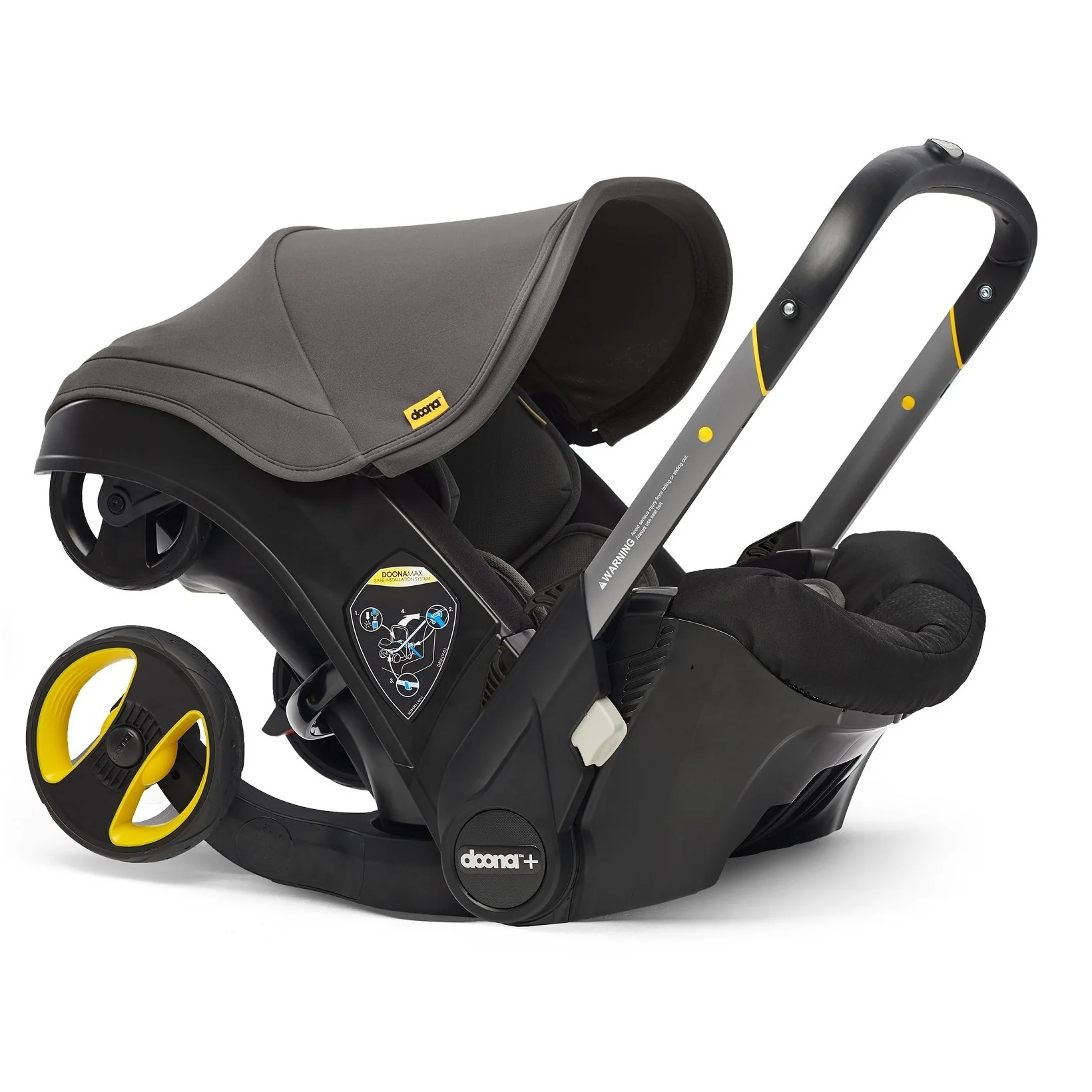
Doona is an incredible infant car seat that folds out into a handy stroller, making it one of the best choices for a travel car seat! The dual features make the car seat a tad heavy, but you’ll love only having to bring one piece of gear that functions as a car seat and a stroller. However, if you plan to use this seat outside the U.S. or Canada, you’ll need to bring a locking clip, which you can get from the manufacturer for free.
Evenflo Shyft DualRide
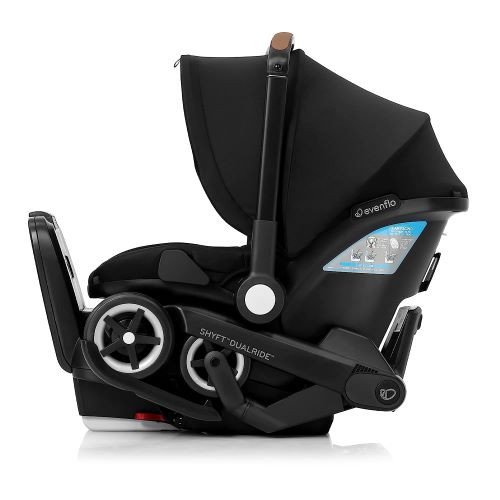
Here’s another stroller/car seat combo! The Evenflo Shyft DualRide is a better choice than the Doona if you have a very small baby since it gives a better fit. Like the Doona, it’s pretty heavy and will require a locking clip if used outside of the U.S. or Canada. Other standout features of the Shyft include the removable stroller base and the SensorSafe chest clip!
Nuna PIPA urbn
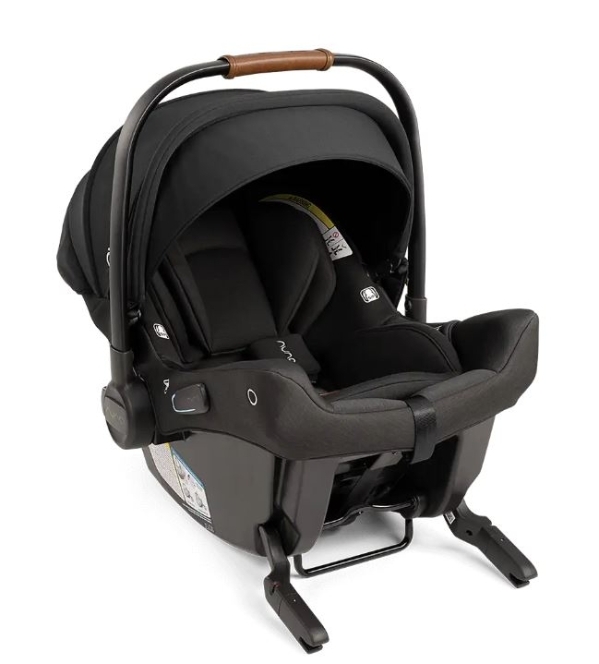
The Nuna PIPA urbn is a great choice for travel because it’s compact, easy to install, and it’s suitable for small babies. It has rigid lower anchors attached to the seat, which is one of our favorite safety features! You can also install the seat using a European baseless routing method that makes the seat particularly international travel-friendly! Plus, if you’re looking for a non-toxic car seat option, the Nuna PIPA urbn uses flame-retardant-free Merino wool fabric!
Graco GoMax Baseless

The Graco GoMax Baseless infant car seat also has rigid lower anchors attached to it. But unlike the Nuna Pipa Urbn, which is only available as a travel system, it's available separately. It has flame-retardant-free fabric as well.
Planning to travel soon? Our Flying with a Car Seat Guide covers everything parents should know before bringing a car seat on a plane.
Best FAA-Approved Rear and Forward-Facing Car Seats
Cosco Scenera Extend
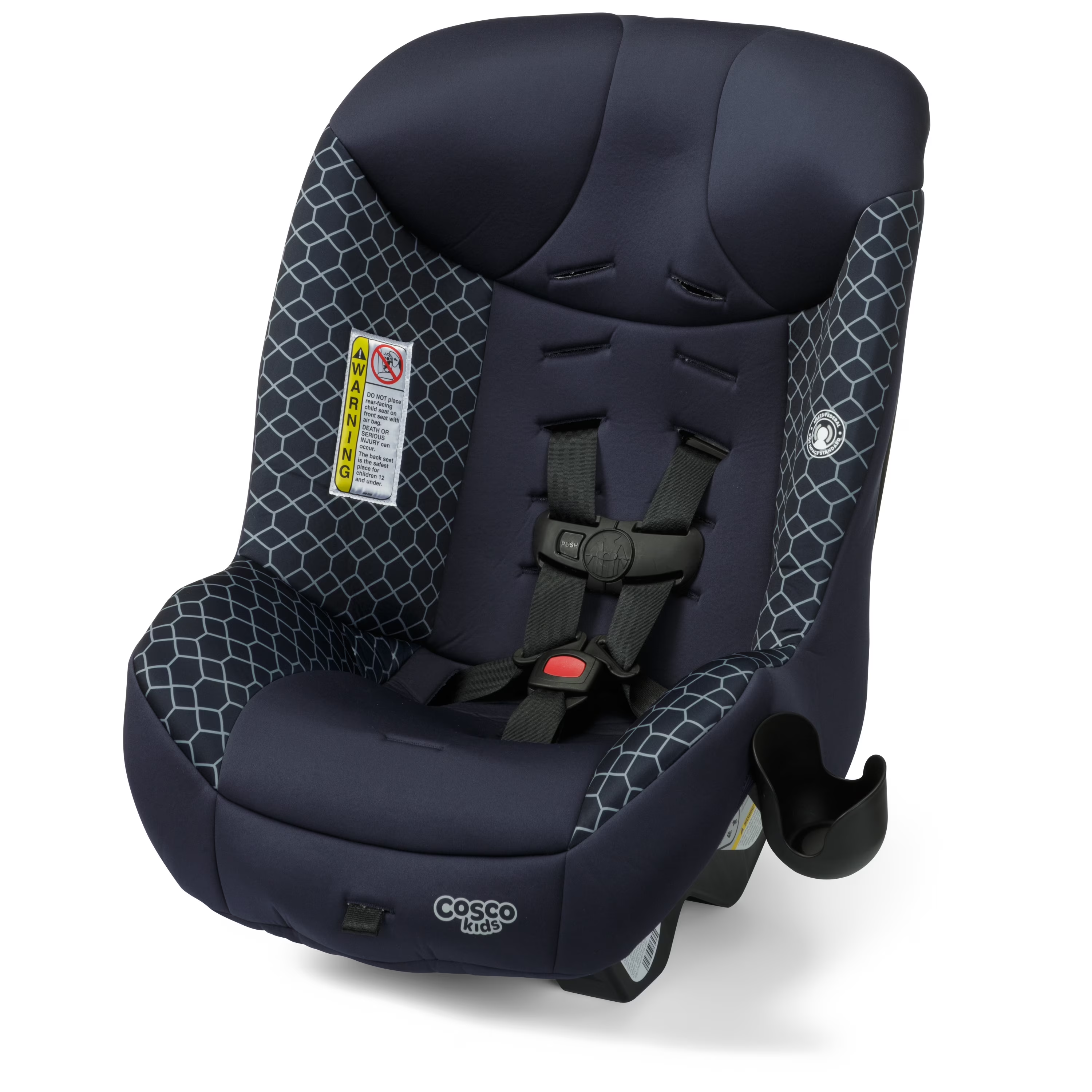
If you’re hunting for a second car seat to use when traveling, the Cosco Scenera Extend is the perfect option because not only is it airline-friendly, but it’s also very inexpensive! It’s extremely lightweight, and fits most kids from birth to around 2.5-3 years of age. Though it has a forward-facing option, by the time your child maxes out the rear-facing seat limits, they’ll probably have outgrown the forward-facing limits, too.
Maxi-Cosi Romi
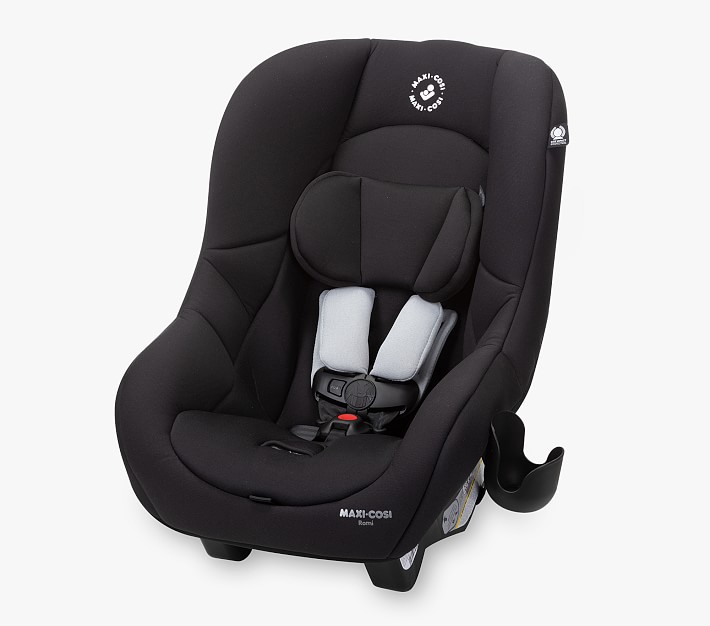
The Maxi-Cosi Romi is a compact convertible car seat. It’s affordable and lightweight, making it a smart choice for a dedicated travel seat. The fabric is flame-retardant-free, too, which is impressive when considering the low price. If you have a tall child, they’ll likely grow out of this car seat sooner than you’d like. This seat is identical to the Cosco Scenera Extend. But it has flame-retardant-free fabric, harness covers, and premium lower anchors!
Safety 1st Ellaris
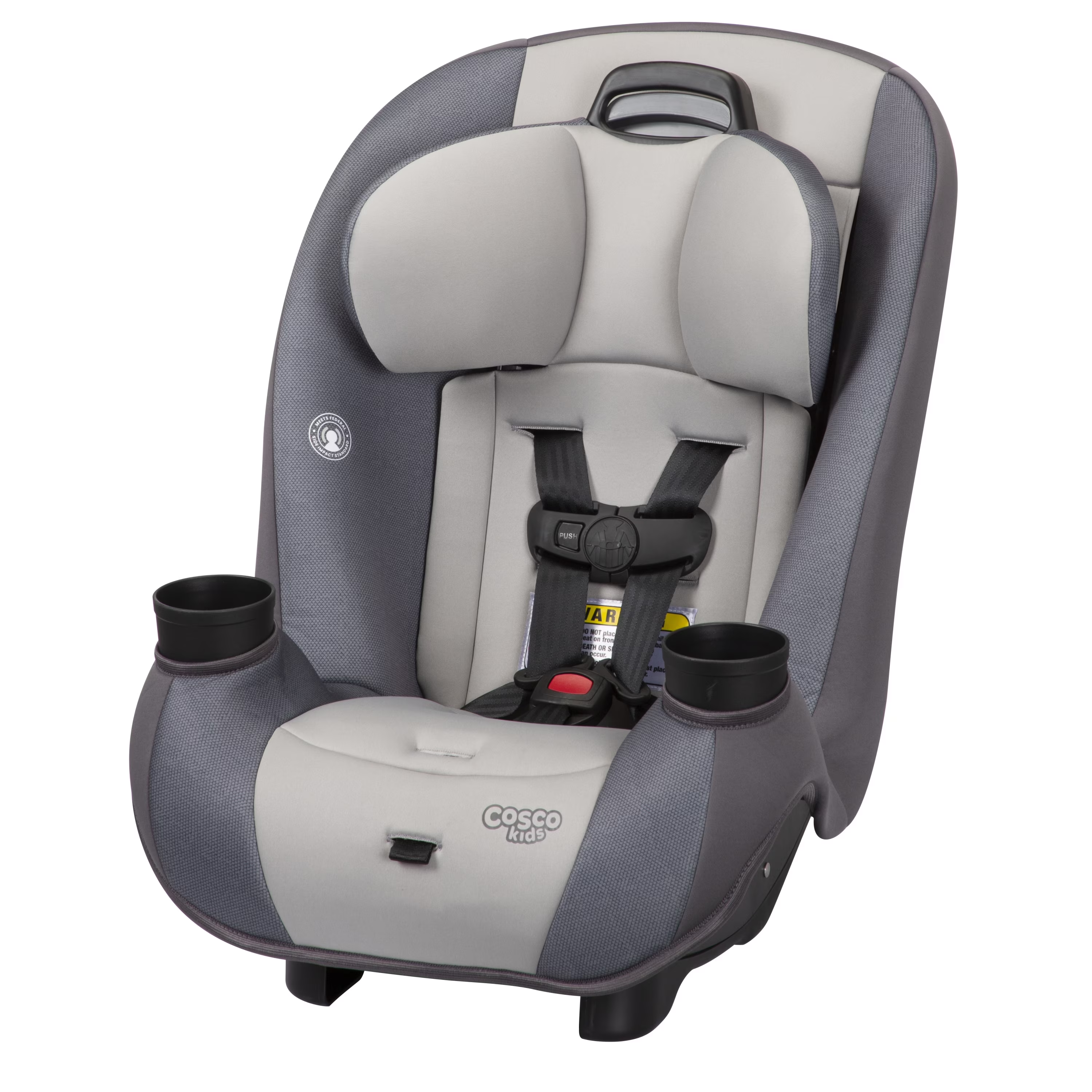
The Safety 1st Ellaris is the replacement for our old favorite, the Safety 1st Jive. It is another affordable travel convertible car seat option that actually fits up to 65 lbs! It weighs 12 pounds, and the seat is pretty compact, which makes it perfect for flying! It has a no-rethread harness and two cup holders!
Most car seats are FAA-approved, but check yours to make sure!
Want to feel fully prepared before your flight?
Flying with a car seat is one of the safest ways for your child to travel, but most parents have questions about boarding, installation, seat placement, and navigating the airport.
Our Flying with a Car Seat Guide walks you through the entire process step by step.
If you’re planning on traveling with your car seat, let us first give you a pat on the back! You’re making the safe choice for your little flier. Before you take off, make sure you have an FAA-approved car seat. Even if your car seat is FAA-approved, but you don’t like how heavy or bulky it is, grab one of the car seats listed above or check out our full list of the best car seats for air travel.
If you still need help finding the best seat and navigating the chaos of air travel with kids, take our Safe in the Sky: Airplane Course! It gives you EVERYTHING you need to know about flying with a car seat. For more information, you can find additional safety information and car seat advice on the Safe in the Seat blog! Here are just a few articles that’ll make your trip a breeze:
- Activities for Kids on a Plane
- How to Travel with a Car Seat
- International Guide to Traveling with a Car Seat
- Hacks for Travel with Kids
- Airport Safety for Families
As an Amazon Associate, Safe in the Seat earns from qualifying purchases.