When planning a trip, everyone gets excited about the destination. Whether you’re renting a beach house on the Gulf, spending the week at Disney World, or learning to ski in the Alps, the anticipation alone is half the fun. But before you start planning excursions and booking accommodations, you need to figure out how you’re going to get there.
The United States is the third-largest country in the world. This is a huge blessing because there’s so much to explore without ever leaving home. However, it also means some vacation spots can be pretty far away. From coast to coast, the continental U.S. stretches nearly 3,000 miles! Luckily, there are lots of practical travel options to reach your getaway. But how do you choose one?
Of course, everyone loves a good ol’-fashioned road trip. But air travel is much faster! And what about a scenic train ride? The truth is, choosing how to travel is about more than what feels practical, nostalgic, or picturesque. The most important factor is safety. So that begs the question… Which modes of transportation are actually safest for vacationing families?
Safe Ways to Travel: A Practical Guide for Domestic Vacations
In this post, we’re going to lay out the safest form of travel for your family. Then, we’ll offer some tips for safe travel with your family, no matter what transportation method you choose!
Let’s get into it:
Is Traveling Dangerous?
There’s risk any time you’re on the road, whether driving to work or taking a cross-country trip. Travel itself isn’t inherently dangerous, but some modes of transportation are riskier than others. The reality is that most travel-related accidents happen on the road, making air travel statistically the safest mode of transportation.
Here’s the data on injuries and fatalities with each mode of transportation according to the Department of Transportation and the National Safety Council:
- Motor Vehicle Fatality Rate: 1.33 deaths per 100 million miles traveled by car
- RV and Campervan Fatality Rate: 0.44 deaths per 100 million miles traveled by motorhome
- Bus Fatality Rate: 0.1 deaths per 100 million miles traveled by bus
- Locomotive Fatality Rate: 0.043 deaths per 100 million miles traveled by train
- Air Travel Fatality Rate: 0.003 deaths per 100 million miles traveled by plane
What Are the Safest Ways to Travel?
Highest Risk: RV
RVs are one of the most dangerous forms of transportation for several reasons. Unlike cars, trucks, buses, or planes, most RVs aren’t built with robust crash-safety features. They offer virtually no protection for passengers, and there’s often no safe, crash-tested place to install a car seat.
It’s also important to consider their large size, long stopping distances, high rollover risk, limited driver visibility, and the fact that they require no specialized licensing. With this in mind, it’s clear why RVs are one of the most dangerous ways for families to travel.
So while fewer RVs are on the road, which keeps national fatality numbers lower than those of a standard car, the danger inside an RV during a crash is significantly higher. That’s why RVs earn the “highest risk” rating for families, especially those traveling with children in car seats. Unlike the other forms of travel on this list, we don’t recommend RV travel in any circumstance.
Here’s a post further exploring whether RVs are safe for families.
Pros of Traveling by RV:
- Combines lodging and transportation
- Flexible schedule
- Bathroom, kitchen, and nap space available when parked
- Lots of room for luggage and gear
Cons of Traveling by RV:
- Highest safety risk; poor crash protection
- Not safe for car seats or young children
- Hard to maneuver; long stopping distances
- High rollover risk
- Requires confident, skilled driving
- Limited practicality for most families
Higher Risk: Car
Cars are the most common way families travel. They’re practical, efficient, and usually less expensive than flying. However, traveling by car comes with a higher crash risk. This is simply because of how many cars are on the road compared to other modes of transportation. In addition to this, most car accidents happen because of driver behavior. Think: speeding, distracted driving, fatigue, or poor response to changing road conditions.
That said, cars do offer federally regulated, crash-tested safety features, proper seat belts, airbags, and safe installation options for car seats. With correct restraint use and focused driving, cars can still be a reasonably safe option for families. But compared to buses, trains, and airplanes, the risk of a serious crash remains higher.
Pros of Traveling by Car:
- Widely available and typically affordable
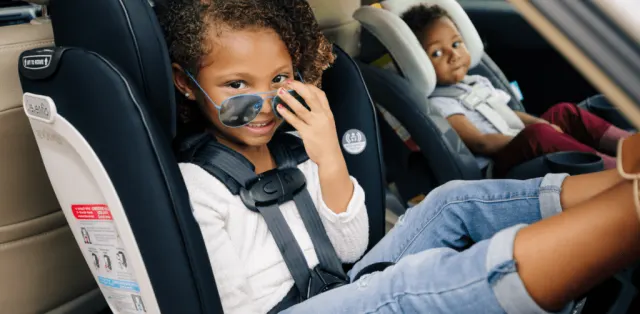
- Fully compatible with car seats and boosters
- Kids can safely nap in their car seats
- Easy to stop for bathrooms, feeding, diaper changes, or breaks
- Flexible schedule with door-to-door travel
- Easy to pack essentials within reach
Cons of Traveling by Car:
- Higher crash risk than buses, trains, and planes
- Long drives can be tiring for kids and drivers
- Fuel, tolls, and maintenance costs add up
- Weather, traffic, and road conditions can cause delays
- Kids may get restless and need entertainment or frequent breaks
If you’re preparing for an upcoming trip and are traveling by car, choosing the right car seat, and installing it correctly, are so important. Check out our posts, “How to Select Infant Car Seat” and “Safest Infant Car Seats” for trustworthy, parent-friendly breakdowns.
Lower Risk: Bus
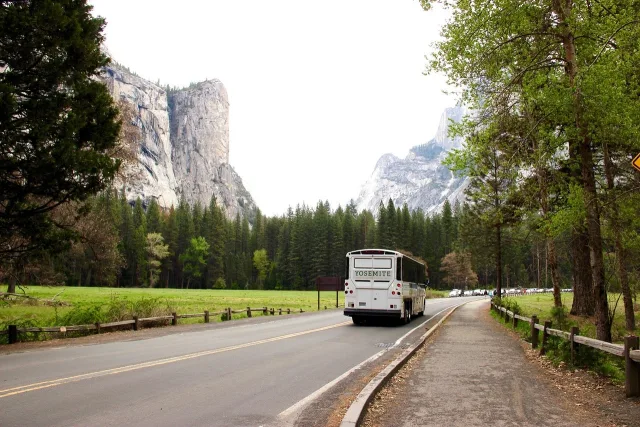
Long-distance buses, think Greyhound, Megabus, or coach-style charters—are statistically much safer than riding in personal vehicles. No, they’re not constructed with the same advanced safety features as a school bus, but they are pretty safe.
To begin with, professionals operate these vehicles and follow regulated, safer routes. Additionally, everyone on board benefits from a heavier, reinforced structure that absorbs crash forces better than standard passenger vehicles. Plus, their elevated seating and controlled driving environment further reduce the likelihood and severity of injuries.
However, these buses don’t always have lap and shoulder belts or car-seat compatible seats. We only recommend that families use long-distance buses with seat belts and that allow for car seat use. That said, it’s important to do your research before booking. Here’s more on safe bus travel.
Pros of Traveling by Bus:
- Lower crash risk than personal vehicles
- Professional drivers
- Affordable long-distance option
- Onboard bathroom
- Kids can nap in their seats when lap-shoulder belts are available
- No driving, navigating, or parking required
Cons of Traveling by Bus:
- Not all buses have lap-shoulder belts
- Car seats sometimes can’t be installed
- Crowded environments can be stressful with little kids
- Limited storage for strollers and baby gear
- Fixed schedules and routes
- No ability to stop for breaks
- Feeding, changing, and soothing can be difficult in tight spaces
Low Risk: Train
Train accidents are exceptionally rare! This is thanks to controlled tracks, professional operators, and strict safety regulations. Beyond that, they naturally avoid most of the issues that cause crashes like weather, traffic, and driver error. However, trains don’t offer car-seat-friendly seats, which can put children at risk in the rare event of a crash or derailment. But, at the end of the day, trains remain one of the safest forms of transportation!
Pros of Traveling by Train:
- Very low crash rate
- Spacious seating and room to move
- Easy bathroom access
- Dining cars and snack options
- Smooth ride makes naps easier
- No driving, navigation, or parking required
Cons of Traveling by Train:
- Limited routes in much of the U.S.
- Not car-seat friendly
- Longer travel times than flying
- Delays can extend trips
- Managing luggage, strollers, and kids on platforms is challenging
- Transfers may interrupt naps and routines
Lowest Risk: Airplane
Airplanes are by far the safest mode of transportation available. Commercial aviation operates under some of the strictest safety standards in the world. It has highly trained pilots, advanced technology, and multiple layers of fail-safe systems backing every single flight.
Turbulence might make your stomach drop, but it injures passengers who remain properly buckled. And for children, using an FAA-approved car seat adds an extra layer of protection. Overall, the risk of a fatal aviation incident is extraordinarily low. Flying consistently ranks as the safest option for families—especially when children ride in the correct restraint for their age and size.
For tips on flying with your family, read our post on safe airplane travel!
Pros of Traveling by Airplane:
- Safest mode of transportation
- Fastest long-distance option
- Kids can nap safely in an FAA-approved car seat
- Bathrooms onboard
- Predictable routes and schedules
- No driving or navigation required
- Professional crew and advanced safety systems
Cons of Traveling by Airplane:
- Can be expensive for families
- Security, boarding, and tight aisles can be stressful
- Limited movement during the flight
- Feeding, changing, and soothing can be cramped
- Luggage restrictions and fees
- Turbulence can interrupt naps
- Not all seats suit car seats

Additional, Less Common Methods of Transportation
While most families stick to more traditional methods of travel, some still choose alternative modes—like boating travel. Or, on motorcycles! While these options may seem fun and memorable, they naturally come with higher injury risks.
For instance, the last few years have seen an average of about 4,000 recreational boating accidents each year. And for motorcycle riders, injuries average around the 80,000s—per year! Ultimately, here’s the truth: car seats are only tested for use in passenger vehicles and airplanes. Not boats, motorcycles, ATVs, or, as we mentioned earlier, RVs.
Because these modes aren’t built for car seats or crash-tested restraints, they simply can’t offer the same level of protection. White they may be part of your family fun down the road, they’re definitely not ideal for safely transporting little ones. Choosing travel methods that support proper safety is the easiest way to make travel fun for everyone!
How to Avoid Travel Accidents
- Choose a safe and practical mode of travel.
- Use proper restraints for every passenger.
- Pack and store all items securely.
- Follow all relevant safety procedures.
- Keep an eye on the weather and the road conditions.
- Avoid distractions and stay off your phone.
- Keep emergency essentials accessible, not in luggage.
- Allow plenty of time for your trip.
- Make a safety plan with your family.
Travel is the safest when parents understand the risks and take simple steps to keep their family safe.
A safe trip comes down to mindful choices and smart preparation. When you choose the right mode of transportation, use proper restraints, and plan ahead, you can have peace of mind with every mile. That way, you can get back to the best part of any trip: looking forward to the memories you’ll make together.
If you want even more guidance on car seats, vehicle safety, or family travel, visit the Safe in the Seat blog. We have everything you need to prepare for your next adventure.