We all know that car maintenance and repairs are inevitable. Anything you use every day will need attention eventually. That said, vehicles have a way of breaking down at the worst possible times. And when that check engine light turns on while driving, our immediate response is to panic! But the most important first step in any emergency is to stay calm and think through your next steps.
To make that easier, we’ve created a simple guide to the most common breakdown scenarios. No, we can’t tell you how to replace a timing belt or where the nearest gas station is. However, we can help you make the right decisions to stay safe, find help, and get back on the road fast.
What to Do if Your Car Breaks Down: Tips for Every Situation
In this post, we’ll cover some of the most common reasons cars break down. Afterwards, we’ll provide guidance for managing a range of roadside scenarios.
In many of these situations, you may need roadside assistance, a tow company, or even a rental car. If you’re not familiar with the emergency services your car insurance company provides, now is the perfect time to review them. That way, if something does happen, you’ll be prepared to respond quickly and confidently.
Once you’re acquainted with those resources, here’s what you need to know about staying safe in any roadside situation:
Why Do Cars Break Down?
Minor (Easy Fixes Most Drivers Can Manage)
- Running out of gas
- Flat tire from a small puncture
- Blown fuse
- Loose or corroded battery connections
Moderate Issues (Often Repairable on the Road or Soon After)
- Weak or dying battery
- Faulty alternator or starter
- Tire blowout
- Low or leaking coolant
- Low or dirty engine oil
- Clogged air or fuel filters
- Faulty sensors
Serious Mechanical Problems (Likely Requires Towing)
- Brake system failure
- Exhaust or catalytic converter issues
- Fuel pump failure
- Transmission slipping, overheating, or failing
- Broken serpentine belt
- Timing belt or timing chain failure
- Electrical system failure
- Severe engine damage from overheating or no oil
What to Do When Your Car Breaks Down
What to Do if Your Car Breaks Down on the Highway/Freeway
Your car breaking down on the highway is one of the most dangerous roadside situations possible. People are driving fast, there’s limited space, and, if it happens at night, you’re dealing with low visibility.
The scenario could be even worse if your car can’t be moved to the shoulder or you’re on a bridge. But, here’s what you should do to stay as safe as possible:
- Turn your hazards on as soon as you know something is wrong.
- If you’re able, pull your car over to the side of the road. Get over as far as you possibly can.
- Set your parking brake and keep the hazards on.
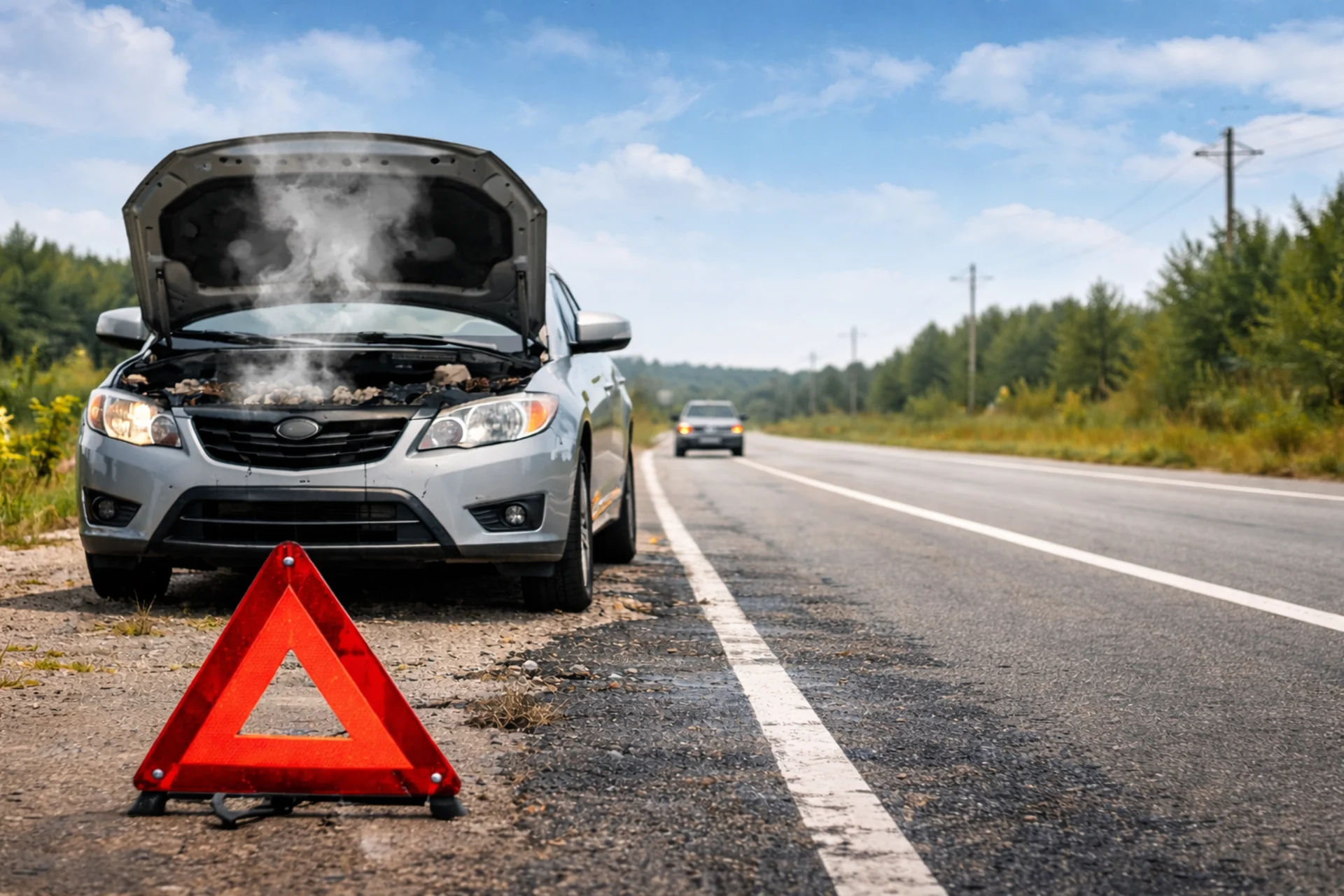
- Exit your car briefly (if it’s safe to do so) to place reflective triangles, flags, or flares and assess the situation. See if you can diagnose the problem.
- If you don’t have reflective emergency items and can’t diagnose the issue, stay in your car with the doors locked.
- If you’re aware of the problem and know you can fix it, wait for a safe moment and perform the repair. It’s best to do so while wearing a reflective vest, if you have one!
- Even if you can fix the issue, weigh the risks. If there’s too much traffic, you couldn’t pull over far enough, or the weather is poor, stay inside your vehicle. Your safety is worth waiting for!
- Call roadside assistance, a towing service, or even highway patrol if you’re unable to diagnose the problem or make the repair.
- Note: If there’s smoke, fire, or other signs of immediate danger, only then should you exit the car with your family. If that’s the case, get far away from the vehicle and the road to call for help.
For more, visit “Roadside Safety Tips for Highway Emergencies.”
What to Do if Your Car Breaks Down in the Middle of an Intersection
Breaking down in the middle of an intersection is one of the most stressful roadside situations, since traffic is approaching from multiple directions. The first goal is to stay visible to protect your family and to stop the flow of traffic. Here’s what to do:
- Turn on your hazard lights. If it seems like oncoming drivers aren’t noticing you, give a few honks to draw attention.
- Call 911 so they can help manage traffic. Never attempt to direct traffic yourself.
- While you wait, keep everyone inside the car and securely buckled in their seats.
- Call roadside assistance or a tow truck, so help is already on the way.
- Once officers arrive, follow their instructions and let them know you’ve already contacted assistance.
What to Do if Your Car Breaks Down With No Cell Service
Not having cell service during a breakdown can feel scary and isolating, but it’s important to stay calm. You still have reliable ways to get help and keep your family safe. Here’s what to do:
- Turn on your hazard lights as soon as you notice a problem. Then, pull over as far as you can. Rural areas may not have wide shoulders, so it’s okay to use a turnout, gravel patch, or grassy area if needed.
- Stay inside the vehicle with the kids buckled unless there is immediate danger. Even on quiet roads, you’re most protected when you remain in the car.
- If the vehicle will still move, try repositioning it a few feet forward or backward to regain signal. Never leave your vehicle to search for service; you can easily get lost or step into the path of a car.
- If calls aren’t going through, try sending a text. Texts often send automatically once your phone reconnects, even if it’s only briefly.
- If your vehicle has a built-in SOS button (like OnStar), use it.
- When other solutions fail, you can try flagging down another driver. Stay inside your vehicle, roll down your window, and gently wave a reflective item. If someone stops, ask them to call 911 when they reach service to report your situation.
- If your phone won’t connect, no cars are passing, and it seems unlikely anyone will find you soon, only then consider exiting the vehicle. Never leave if it’s dark, the weather is bad, or conditions feel unsafe. Walk for help only if you can clearly see an occupied location from your car. It’s always easier for rescuers to find a vehicle than a person on foot. Plus, if you have children with you, staying close is essential. Help will come.
What to Do if Your Car Breaks Down on a Road Trip
When you’re far from home, in an unfamiliar area, and have an exciting destination in mind, vehicle breakdowns can be particularly frustrating and stressful. The good news is, you’ve probably packed your car with plenty of essentials for the trip ahead. Plus, help is likely just around the corner. Here’s what to do:
- Turn on your hazard lights as soon as the car acts differently.
- Look for the safest place to pull over. This might be a rest stop, scenic overlook, wide turnout, or even the parking lot of a nearby business. Distance from traffic is your top priority. If the shoulder is your only option, however, pull off there.
- Set your parking brake and keep the hazards on so other drivers can clearly see you.
- If the area feels safe, step out briefly to set up reflective triangles or flares and take a quick look at the vehicle. Sometimes road-trip issues (like overheating or flat tires on long drives) can be spotted right away!
- If the shoulder is narrow, the area feels unfamiliar, or you don’t feel comfortable looking under the hood, stay inside the car with your kids buckled.
- If you know what the issue is and it’s something simple to fix, wait for a calm moment before addressing it. Only attempt the repair if you can work safely away from traffic.
- Call your roadside assistance provider, tow service, or your car’s SOS system. Share mile markers, exit numbers, or nearby attractions to help them locate you quickly.
- During this time, research a repair shop you’d like your vehicle to be taken to.
- Note: If you see smoke, fire, or leaking fluid, or if you sense immediate danger, get your family out of the vehicle. Move far away from both the car and the roadway before calling for help.
What to Do if Your Car Breaks Down in Bad Weather
In most weather conditions, the same basic safety steps still apply. You’ll turn on your hazards, pull over as far as possible, set your parking brake, stay inside the vehicle, and only exit if absolutely necessary. But bad weather adds extra challenges, so consider these additional precautions:
Rain or Fog
- Turn your headlights on to improve visibility for other drivers.
- Avoid standing outside the vehicle even briefly. Hydroplaning cars and poor visibility make exiting the car really dangerous.
- If you have to exit, make sure you exit on the passenger side to avoid slipping near traffic.
Here are additional tips for driving in the fog.
Thunderstorms, Lightning, or High Winds
- Do not leave the vehicle to place reflective items. You’re much safer from lightning and flying debris inside.
- If there’s flooding or rising water, get everyone out of the vehicle and find higher ground. To prepare for the worst-case scenario, learn how to escape a sinking car.
Snow, Extreme Cold, or Ice
- When you exit your vehicle to put up your reflective items, take a minute to clear the exhaust pipe. A blocked tailpipe can cause carbon monoxide buildup inside the car, and carbon monoxide poisoning is deadly.
- Don’t attempt repairs. Icy roads mean cars could slide toward you unexpectedly.
- Use blankets, coats, and other items in your winter weather emergency kit to stay warm. Continue running the heater in your car unless you’re low on fuel. If you are, use it sparingly to conserve power until help arrives.
- Avoid opening the vehicle doors.
Extreme Heat
- Create shade by draping a blanket or similar item over the window.
- Keep everyone drinking water and use items from your emergency kit to keep everyone cool.
- Look out for signs of overheating in the car seat.
Being prepared is the key to staying safe during any roadside emergency.
Roadside emergencies can shake even the most confident drivers, especially when little ones are in the backseat. But knowing what to do gives you clarity in moments that would otherwise feel overwhelming. So, take time now to restock your emergency kit, review your insurance benefits, and get your vehicle up to date on its regular maintenance. Small steps today can make a huge difference on the road tomorrow.
If you want to feel even more confident during unexpected moments on the road, browse the Safe in the Seat blog. We’re here with practical tips and family-focused advice to keep every ride as safe as possible. We recommend these posts next:
As an Amazon Associate, Safe in the Seat earns from qualifying purchases.