If you have a car seat that’s been sitting in your garage for forever, you’re far from the only parent that doesn’t know what to do with it. Car seats aren’t something you want to pass along when they’re no longer safe to use, but throwing an entire seat into the trash doesn’t feel like the best option, either.
As CPSTs, we hear this question with families all the time: “What can I do with a car seat that I don’t use anymore?” Fortunately, that’s where car seat recycling programs can be super helpful. Depending on the program, they may take expired, damaged, or otherwise unusable seats and recycle at least some of their materials. This is a much better alternative to sending an entire seat to the landfill!
We’re dedicating this guide to the car seat recycling programs worth considering. We’ll talk about what each one accepts and whether you need to do anything before sending off your seat. Most importantly, we’ll cover when a car seat needs to be retired in the first place, so you know when recycling is the right next step.
6 Car Seat Recycling Programs Every Parent Can Use
Car seat recycling programs give families a way to dispose of seats that are expired, damaged, or otherwise no longer safe to use without throwing the whole seat into the trash. But because car seats are made from so many different materials, simply putting one in your curbside recycling bin isn’t an option.
Instead, you have to take the seat apart so that recycled materials, like plastics and foams, are separated from the pieces that have to be discarded.
This is why you’ll find dedicated recycling options through retailers, car seat manufacturers, and speciality recycling programs. They help keep unusable seats from being passed along to another family while giving recyclable parts a chance to stay out of the landfill.
Can You Recycle Car Seats?
Yes, car seats can be recycled! But you usually can’t just toss it in your own recycling bin. Like we mentioned above, car seats are made up of several different materials, and it typically needs to be taken apart before any recyclable pieces can be processed.
What actually gets recycled depends on the program. Generally, many programs will happily accept the plastic shell and metal components. It’s the other parts, like the cover, harness, padding, and certain types of foams, that may need to be removed and thrown away.
Before taking your seat apart yourself, check the requirements for the recycling program you plan to use. Each one has its own set of rules about what they need/want removed and what you can leave attached.
Why Most Curbside Programs Reject Car Seats
Unfortunately, you usually can’t put an old car seat in your curbside recycling bin. Remember: car seats are made of a mix of plastic, metal, foam, fabric, and other materials that need to be separated before they’re able to be recycled.
Most curbside recycling facilities simply can’t take apart an entire car seat and sort through all of the individual pieces and parts. Aside from this, discarded seats can sometimes be picked up and re-used by other families, posing a serious safety risk. That’s why you’ll need to find a recycling program that specifically accepts car seats rather than leaving the whole seat at the curb.
What Happens to Car Seats That Cannot Be Recycled?
If you don’t have a car seat recycling program available near you, you may need to dispose of the seat instead. Depending on where you live, you may still be able to recycle some of the individual materials, like the metal or hard plastic, once the seat is taken apart.
Anything that can’t be recycled will need to go into the trash. The important thing is this: make sure an expired or damaged seat can’t be picked up and used by another family. We’ll walk you through how to safely dispose of a car seat below, including what to remove or damage before putting it out with your trash:
Where to Recycle Car Seats
There are several ways to recycle an old car seat, and some options are easier than you may expect! Depending on the program, you may be able to bring in the entire seat without taking anything apart first.
We’ll start with the programs that require the least prep, then move into options that may ask you to disassemble some or all of the seat. Just keep in mind that availability and requirements can vary by location, so it’s always worth checking the programs’ current guidelines before you decide on one.
Target Car Seat Trade-In Events
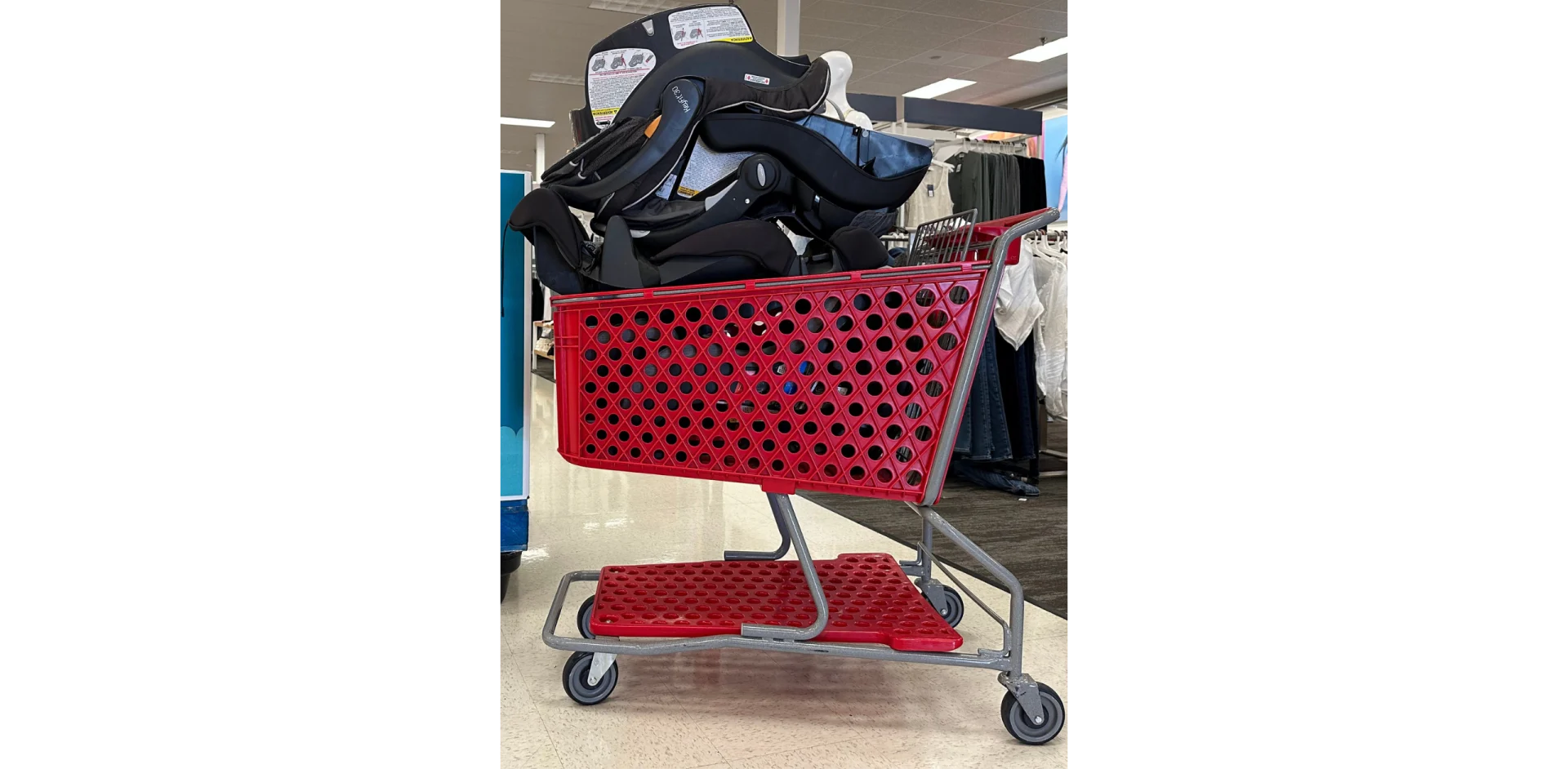
If there’s a Target Car Seat Trade-In event happening near you, this is one of the simplest ways to get an old seat out of your garage. Target typically holds the event twice a year at participating stores and accepts old car seats, bases, and boosters for recycling.
You don’t need to clean or take apart the seat first. Bring it to a participating Target during the event and look for the designated drop-off box near Guest Services. From there, you can scan the QR code in the Target app to receive a 20% off Target Circle bonus toward eligible baby gear.
You’ll need a free Target Circle account to claim the bonus, so it’s definitely worth setting that up before you go. Dates and offer details can change from one event to the next, so make sure to check out our complete guide to the Target Car Seat Trade-In for everything you need to know before bringing in your seat.
Walmart and Major Retail Recycling Programs
Target isn’t the only major retailer that has offered car seat recycling events! Walmart, for example, partnered with TerraCycle for a Car Seat Recycling Event in 2019. Families could bring an old car seat to participating Walmart locations for recycling and receive a $30 Walmart gift card. The event collected more than one million car seats before ending early.
Walmart’s program is unfortunately no longer active, so it isn’t an option you can use whenever you need it. However, it’s still worth watching for recycling or trade-in events from major retailers in your area. These programs may only be offered for a limited time, so always check the current details before loading up the car and heading to the store.
Manufacturer Take-Back or Recycling Programs
Before you throw out an old seat, check with the manufacturer. Some car seat brands offer their own recycling or take-back programs, although what they accept and how the programs work can vary.
Clek, for example, offers a recycling program for car seats for Clek seats. You purchase a recycling kit and ship the seat using the instructions provided by Clek. It’s as easy as it sounds!
These programs can change, so start with the manufacturer of your car seat and see what’s currently available. Pay attention to whether the program accepts your specific seat, whether there’s a fee, and whether you’ll need to do any prep before sending it in.
Local Waste Management and Municipal Recycling Centers
Don’t forget to check close to home. Depending on where you live, your city, county, or local recycling center may accept car seats or some of the material from a disassembled seat.
There isn’t one set of rules for local recycling programs, though. One facility may accept the plastic shell but ask you to remove the fabric, harness, and padding first, while another may not accept car seats at all. Check your local government or waste management website or call the facility directly before making the trip.
Also, ask specifically whether they accept car seats and whether you need to take anything apart beforehand. Some areas have programs specifically for car seat recycling, so it’s worth checking what’s available locally before paying to ship your seat somewhere else.
Specialty or Hard-to-Recycle Programs
If you’ve struck out with retailers, manufacturers, and local recycling facilities, there are speciality recycling programs designed for items that aren’t easy to recycle through your usual options.
TerraCycle offers recycling options for baby gear and other hand-to-recycle items, although the programs available and their costs vary.
These options can be helpful if you don’t have a free program nearby, but check the cost before committing. Recycling something as large as a car seat isn’t always cheap (or practical), so we recommend checking free local and retail options first.
How to Prepare a Car Seat for Recycling
Before you pull out the scissors and screwdriver, check the instructions for the program you’re using. Some programs, including retail trade-ins, may want the car seat exactly as it is. Others require you to remove certain parts before they’ll accept it.
If your recycling program asks you to disassemble the seat, here’s what that process may look like:
Step One: Remove the Cover and Padding
Start by removing the fabric cover and any padding your recycling program doesn’t accept. Depending on the program, you may also need to remove other non-recyclable components. Check the program’s instructions before throwing anything away. Requirements vary, and there’s no reason to take apart more of the seat than you need to.
Step Two: Cut the Harness Straps
If the seat is expired, damaged, or otherwise unsafe to use, cut the harness straps before disposing of it. This helps make it clear that the seat should not be picked up and used for another child. If you’re participating in a recycling or trade-in program, however, follow its instructions first. Some programs accept complete seats and don’t require you to cut or remove anything.
Step Three: Mark the Seat as Unsafe
If you’re disposing of an unusable seat rather than handing it directly to a recycling program, grab a permanent marker and write “DO NOT USE” or “EXPIRED” somewhere clearly visible on the shell. This is another simple way to make sure that someone doesn’t see a car seat sitting by the trash and assume it’s still safe to use.
Step Four: Separate Accepted Material
If your recycling facility requires the seat to be disassembled, separate the materials according to its instructions. You may be asked to remove metal components from the plastic shell or bring different materials to separate drop-off locations.
This is one area where you really don’t want to guess. What belongs in a recycling bin in one community may not be accepted in another, so follow the instructions from your local facility or recycling program.
Need more help figuring out what to do with a car seat you can’t use anymore? Our guide, “What to Do With Expired Car Seats” walks you through your options, including how to dispose of a seat safely if recycling isn’t an option.
When Should You Recycle a Car Seat?
Not every old car seat needs to head straight to recycling. But once a seat has expired, is damaged beyond safe use, or needs to be replaced after a crash, it’s time to retire it.
Start by checking the expiration date. You can usually find it printed on a label or stamped somewhere on the seat itself. If your seat lists a manufacturer date instead, check the manual for the manufacturer’s stated usable life. Don’t assume every car seat lasts the same number of years.
Crash replacement works a little differently. NHTSA recommends replacing car seats after a moderate or severe crash but says replacement isn’t automatically necessary after a minor crash if all of its criteria are met. Your car seat manufacturer may have different requirements, though, and those are the rules you need to follow for your specific seat.
Once you know your car seat is no longer safe, don’t donate, sell, or pass it along to another family. And if you’re in the market for another seat, our free Car Seat Finder quiz can help narrow down your options based on your child, vehicle, and family.
Know Where to Recycle Your Cat Seat With These Tips
Here's the part we never soften: an expired, damaged, or crashed seat should never be reused or resold. That's the whole reason these car seats expire and the whole reason recycling programs exist, so an unsafe seat comes out of circulation for good.
When it's finally time to move on to a fresh seat, we're right here to help you choose one that fits your child, your vehicle, and your real life. Join our newsletter for clear, judgment-free car seat guidance, and explore our Convertible Buying Kit when you're ready for confident, CPST-informed help picking your next seat.
You've got this, and we've got you.
This post contains affiliate links. If you shop through them, Safe in the Seat may earn a small commission at no extra cost to you. We only ever point you toward products and programs we genuinely believe help keep kids safe.