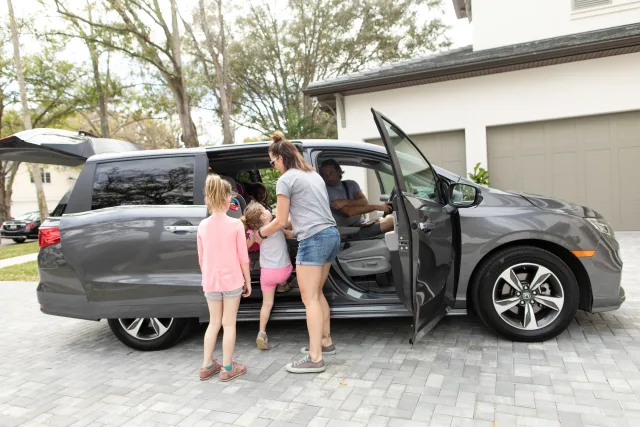

Finding the ideal car for a family of 5 can be surprisingly difficult. Once you have three kids sitting across the back seat, things like rear seat width, headrest design, cup holder quantity, and cargo room suddenly become a huge deal.
What once felt like a spacious SUV can quickly feel cramped once you add car seats, boosters, strollers, and all the random things families haul around every day. And if your family loves road trips? Forget it. Cargo space disappears FAST.
The reality is that not every five-seat vehicle is actually comfortable for a family of five. Some vehicles technically fit everyone, but daily life inside them feels chaotic and cramped. That’s why today, we’re breaking down some of the best SUVs and minivans for families of five.
Ideal Car for Family of 5: A Practical Buying Guide
A lot of parents assume any five-passenger vehicle will automatically work for their family. But car seats and boosters can be bulky, and manufacturers don’t always design a car with parents and kids in mind. Ultimately, it’s not just about having enough room. The best family vehicles are easy to live with every day, from quick pick-ups and drop-offs, to grocery runs and vacations.
Investing in the right family vehicle from the start can save you years of discomfort, frustration, and expensive upgrades later on. So, if you're shopping for a car, you’re in the right place. Not only are we sharing our recommendations, but we’re also guiding you through the whole selection process.
Looking for additional help maintaining car safety as a family of five? Be sure to also check out our guides on cars that can fit three car seats and whether bigger cars are safer than smaller cars! These resources can help you make more confident decisions based on your family’s specific safety and space needs.
What Makes a Good Family Car?
Rear Seat Space and Third-Row Seating
A good family car has plenty of rear seat space (whether second or third row) to seat everyone in the family. That means there should be enough space to safely install and use each car seat or booster. Beyond this, it’s just as important that every adult and child is comfortable in their designated spot.
Car Seat Compatibility
Not all car seats fit every vehicle. Non-removable headrests, overlapping seatbelts, lack of lower anchors, and more can prevent you from properly installing your seats. A good family vehicle fits every car seat and provides multiple seating options.
If you’re not sure whether it’s a smart choice for car seats, look at things like the vehicle’s full LATCH seat system, available rear-row hip width, and seat depth.
Cargo Space and Interior Storage
As parents, we lug a lot of stuff around in our cars. Whether it’s the latest Costco haul or our four-seater Wonderfold Wagon, most families need as much cargo space as possible. The vehicle you choose should easily carry all your everyday gear without constantly feeling overloaded.
Comfort and Convenience Features
There are definitely must-have features and nice-to-have features. Your ideal vehicle should help make some aspects of daily life easier. Whether that’s sliding seats, built-in sunshades, or extra charging ports, small convenience features can go a long way.
Safety Ratings and Advanced Safety Features
You should feel confident that your vehicle can keep your family safe. Though all vehicles sold in the United States must meet federal safety standards, some vehicles go above and beyond requirements. And many include driver-assistance features like blind-spot monitoring, lane-keep assist, adaptive cruise control, and automatic emergency braking, which can make driving even safer.
To understand a vehicle’s safety performance, check crash test ratings from the Insurance Institute for Highway Safety. This organization evaluates crash protection, safety technology, and overall vehicle performance.
Fuel Economy and Ownership Costs
The cost of owning a vehicle goes far beyond the monthly payment. Fuel costs, insurance, maintenance, repairs, and tire replacements can all add up quickly over time. A good vehicle for families should realistically fit your long-term budget, not just your upfront price range.
How to Choose a Family Car
Step One: Consider your children’s ages and stages.
When you start shopping for a vehicle, first think about your family’s current car seat situation. If multiple children are still in car seats or boosters, you’ll need to make sure the vehicle can actually accommodate all those restraint systems comfortably.
Step Two: Compare two-row and three-row options.
Decide if you want a two-row or three-row vehicle. There are plenty of two-row options that can accommodate 3-across car seat configurations. Plus, many even improve gas mileage! However, your family will definitely be tighter on space. A three-row option is less fuel efficient and has a larger footprint, but it’ll provide more flexibility and breathing room for your family.
Step Three: Decide whether a minivan or SUV fits your lifestyle better.
You’ll also need to compare minivans and SUVs. SUVs often have four-wheel drive, more ground clearance, and a more elevated feel. On the other hand, minivans have the advantage of being significantly more spacious. The third row is usually more comfortable, offers better car seat compatibility, and doesn’t sacrifice as much cargo space.
Vans also have sliding doors, which can be a game-changer with multiple kids. (No more door dings or squeezing between cars in a parking lot.) That said, minivans often have less clearance and may not be ideal in certain climates or driving conditions.
Step Four: Set a realistic budget before you shop.
You can get vehicles at all price points, SUVs and minivans included. More specifically, there are plenty of reliable used vehicles, as well as worthwhile new options. Before you start shopping, decide on a realistic budget. Then, compare vehicles online to get an idea of what years, mileage, and features fit within your price range.
Step Five: Think about your family’s daily routine and driving habits.
With your vehicle type and budget in mind, think about how your family actually drives day to day. If you frequently deal with rough roads, snow, or unpredictable weather, AWD/FWD and extra ground clearance may be important to you.
However, if most of your driving is school drop-offs, errands, and commuting around town, fuel economy, easy parking, and sliding doors may be more important than off-road capability.
Not sure what you need? Read our drivetrain performance guide.
Step Six: Assess safety ratings and driver assistance features.
All vehicles sold in the United States have to meet the same federal safety standards. So, you definitely don’t need the most expensive vehicle on the market to drive something safe. However, some vehicles do offer additional safety features and driver-assistance tools. These can make everyday driving feel safer and easier for busy families.
If you’re wondering, here are the car safety features that are required by law.
Step Seven: Test car seat fit and rear seat accessibility.
Though it may seem unorthodox, make sure you bring your car seats with you when shopping for a new vehicle. When you’ve narrowed down your options, try installing your car seats in the SUV or minivan. Not every seat fits every car, and it’s best to know what you’re getting into before the vehicle finds its way into your driveway.
Step Eight: Make sure the vehicle has enough cargo space.
Next, ask yourself how much cargo space you need. Think about all the things you may put back there: wagons, strollers, sports equipment, groceries, bikes and scooters, dog crates, luggage, diaper bags, you get the idea. Once you’ve taken inventory of everything, measure out your chosen vehicle to ensure it’ll actually work for your family’s needs.
Step Nine: Consider fuel economy and long-term ownership costs.
The cost of owning a vehicle goes beyond the monthly payment. You’ll also need to think about gas, insurance, maintenance, repairs, and tire replacements over time. A vehicle with slightly better fuel economy or reliability may save your family a lot more money in the long run.
Step Ten: Take the whole family on the test drive.
If possible, bring the whole family along for the test drive. Test how easy it is to load kids into the vehicle, access the third row, buckle car seats, and move around comfortably. Sometimes a vehicle looks perfect online but feels completely different once your actual family is inside it.
What Cars Are Best For a Family of 5?
Best SUVs for a Family of 5
VW Atlas (6 and 7 Seater)
The VW Atlas is one of the most popular midsize SUVs for families of 5 because it offers a roomy interior without feeling overwhelmingly large to drive. Parents really love that there are so many car seat setup possibilities.
Key Features:
- Spacious second- and third-row seating
- Good 3-across potential in several configurations
- Large cargo space, even with the third row in use
- Easy third-row access compared to many midsize SUVs
- Multiple USB ports and family-friendly storage throughout the cabin
VW Atlas Cross Sport
The Atlas Cross Sport offers many of the same family-friendly features as the standard Atlas model, but in a sportier two-row design. It’s a good fit for families of five who don’t necessarily need a third row.
Key Features:
- Wide second-row seating with good car seat compatibility
- Easier to park and maneuver than larger SUVs
- Generous cargo space for a two-row vehicle
- Comfortable rear seating for older kids and boosters
- Lower lift-over cargo height for easier gear loading
Ford Expedition
The Ford Expedition is a full-size SUV that works especially well for larger families needing lots of passenger and cargo space. It also tends to perform well for families who drive in snow or rougher conditions.
Key Features:
- Top tethers and lower anchors in every rear seating position
- Massive cargo space and interior room
- Comfortable third-row seating for older kids and adults
- Strong towing capacity for campers, boats, or travel trailers
Note: Non-removable third-row headrests may create compatibility issues with some forward-facing seats and high-back boosters.
Honda Pilot
The Honda Pilot is a reliable, well-rounded midsize SUV that offers flexible seating and strong family functionality. It’s often a favorite among families looking for a third row without stepping up to a full-size SUV.
Key Features:
- Great overall car seat compatibility
- Spacious second-row seating
- Easy third-row access
- Available CabinTalk in-car PA system
Note: Third-row center seat is extremely small and not practical for any passengers.
Toyota Grand Highlander
The Toyota Grand Highlander became popular quickly because it finally gave families a Toyota SUV with a truly usable third row and better cargo space. It’s a strong option for families wanting extra room without going full minivan.
Key Features:
- Spacious third-row seating compared to the standard Highlander
- Good cargo space behind the third row
- Plenty of cupholders and charging ports throughout the cabin
Honda CR-V (2024 and Newer)
The redesigned Honda CR-V improved many of the family functionality issues seen in prior model years. It’s a great compact SUV option for families wanting something practical and fuel-efficient.
Key Features:
- Improved rear seat functionality in newer models
- Excellent fuel economy
- Easier to drive and park than larger SUVs
- Wide rear doors that make car seat loading easier
Note: Prior years had overlapping seatbelts and were not 3-across friendly.
Audi Q7
The Audi Q7 is a luxury SUV that still manages to function surprisingly well for families with car seats. It’s especially popular among parents wanting a smaller luxury SUV with decent family usability.
Key Features:
- Great second-row seating that can accommodate 3-across scenarios
- Smooth and comfortable ride quality
- Easier to drive and park than larger luxury SUVs
Note: Very small third-row seating best suited for occasional use.
Lincoln Navigator
The Lincoln Navigator is a luxury full-size SUV known for its massive interior space and comfortable seating. It’s a great fit for larger families wanting premium comfort and lots of room.
Key Features:
- Extremely spacious third-row seating
- Large cargo space
- Comfortable ride quality for long road trips
- Great option for taller parents and older kids
Note: Non-removable third-row headrests may create compatibility issues with some forward-facing seats and high-back boosters.
Volvo XC90 (Bench Seat Version)
The Volvo XC90 is known for its strong safety reputation and sleek design, but it can also work well for families needing flexible seating. The bench seat version is the most practical for car seats, so we definitely recommend you look into that option.
Key Features:
- Can fit 3-across in certain configurations
- Third-row seating can fit kids in boosters or adults
- Strong safety reputation
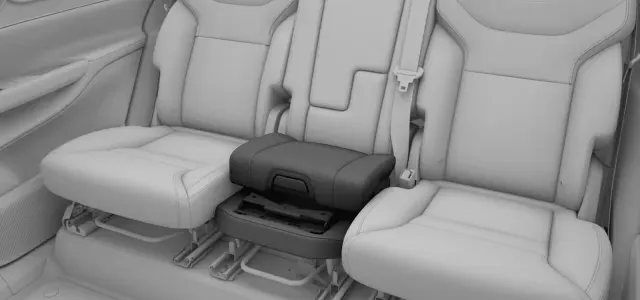
- Built-in booster seat available in some trims
Note: Non-removable headrests limit many car seat options.
Best Minivans for a Family of 5
Honda Odyssey
Parents consider the Honda Odyssey the gold standard of family vehicles. Honda actually designed it specifically with parents and car seat users in mind. It’s spacious, practical, and extremely functional for daily family life.
Key Features:
- Magic Slide seats make car seat configurations easier
- Huge cargo space
- Sliding doors make loading kids and navigating parking lots much easier
- Available CabinWatch rear-seat camera
- Excellent third-row seating and accessibility
- Tons of hidden storage compartments for snacks, toys, and travel gear
Toyota Sienna
If you like the practicality of a Honda Odyssey, but need AWD for your climate, the Toyota Sienna is a great pick. It has the functionality and fuel economy of a van, but can handle winter weather. For many parents, it checks almost every box.
Key Features:
- Standard hybrid powertrain with excellent fuel economy
- Available AWD
- Excellent car seat compatibility
- Available Driver Easy Speak in-car PA system
- Huge cargo space and interior storage
For more recommendations, here are our top cars for families with children.
A Few Popular SUVs and Minivans We Do Not Recommend:
- Chrysler Pacifica: Non-removable headrests mean many front-facing car seats and boosters are incompatible with this vehicle.
- Kia Telluride: The third row is too small for any type of car seat. It's very challenging to fit 3 across in the 2nd row bench.
- Hyundai Palisades: The third row is too small for any type of car seat. It's very challenging to fit 3 across in the 2nd row bench.
- Nissan Pathfinder: Overlapping seatbelt placement makes it impossible to fit three car seats or boosters in one vehicle.
- GMC Yukon, Cadillac Escalade, Chevrolet Tahoe: The center seats do not have headrests, which means they should only be used by kids in a harnessed seat or high back booster.
If you want further information, make sure to visit our guide: “Non-Removable Headrests: How to Choose the Right Car Seat.”
A family of five needs a vehicle that’s convenient, safe, and spacious.
Choosing the right family vehicle can make everyday life so much easier. The best cars for families of five give you enough room for car seats, cargo, growing kids, and all the chaos that comes with family life. All without feeling cramped and overcrowded every time you leave the house!
Whether your family needs a spacious minivan, a practical midsize SUV, or a full-size option with maximum room, investing in the right vehicle now can save you a lot of stress, frustration, and money later.