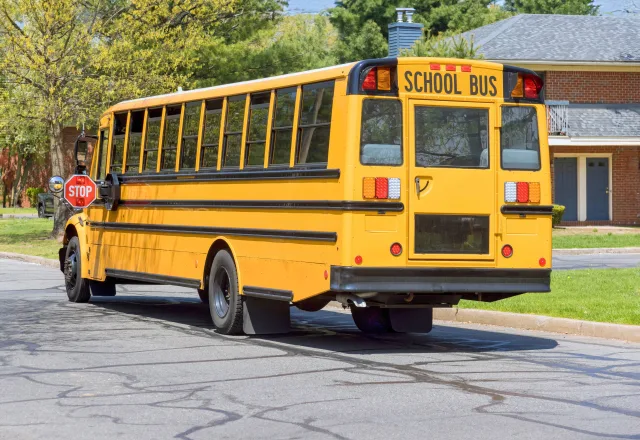

Putting your child on the school bus for the first time is a big milestone. After years of buckling them into the car yourself, it can feel strange to suddenly hand that responsibility over to someone else. If you're wondering how to prepare your child for riding the bus safely, you're not alone. It's one of the most common back-to-school questions we hear. The good news is that while school buses are one of the safest ways for kids to get to school, there are a few simple habits that can make riding the bus even safer.
School buses are designed to protect children during crashes. They are designed to be safe whether traveling on neighborhood roads or the highway.
Putting your child on a bus for the first time is a big step! Of course, buses are actually the safest mode of transportation to get your child to school, but it’s still difficult to let go and allow your child to do something that requires a lot of independence and responsibility. It’s a big milestone, so fears about safety are normal! However, with a little education, you can prepare your child for a successful school year on the bus (and you can take a much-needed break from being your kid’s taxi driver!)
We’ve shared tips on back to school safety before, but today we’re focused on bus safety! Below, we’ll share some safety facts about buses and give you a list of safety principles to teach your child.
Here’s what you need to know:
Bus Safety For Kids: Everything You Need to Know
According to the National Safety Council, children are 70% more likely to get to school safely on a school bus than in their parent’s vehicle or other passenger vehicles (yes, even without seatbelts). This is because of a bus’s unique construction, a bus driver’s training, bus traffic regulations, and a bus’s conspicuous design, which makes them much less likely to be involved in a serious traffic accident.
That means buses are naturally safer and the best vehicle to protect children on their way to school . . . so, then why is it important to teach your child bus safety?
Why is Bus Safety Important?
Despite how safe buses are, accidents do still happen. Plus, with any vehicle there are safety risks in the vehicle and out of the vehicle. This is why we teach kids things like parking lot safety! So, it’s important to teach your kids school bus safety, so they’re best protected while at the bus stop, while boarding the bus, while riding the bus, while exiting the bus, and while walking away from the bus. Each phase of the bus riding journey is new for children, so it’s best to educate them on basic safety rules to keep them safe.
Just like you might practice the kindergarten carline before school starts, it's worth practicing the bus routine too. Walk to the bus stop together, talk through what they'll do, and let them ask questions before the first morning arrives.
Bus Safety Tips for Kids
Riding the school bus is a safe choice for most children. Teaching them how to wait, board, ride, and exit safely makes that experience even safer.
Rule 1: Always stay 3 giant steps away from the curb.
This isn't something most kids naturally know. They're excited, talking to friends, and watching for the bus. Practicing exactly where to stand before the first day can help make it second nature.
A bus stop is really the only time a child is drawn close to a street in their day-to-day life. Outside of that, we tell them to stay far away from the road. Because of this, some kids may not naturally know where to stand when waiting for the bus!
Explain to your child that they should take three big steps back from the curb to find a good waiting spot. That way, they’re close enough for the bus driver to see them, but far enough away that they’ll be out of the reach of traffic.
Rule 2: Don’t play or run at the bus stop.
It only takes one game of tag or one dropped backpack for a child to end up closer to traffic than they intended. The bus stop is, of course, a place where several children will congregate. Naturally, the kids may want to play and burn off some energy before school. Make it clear to your child that the bus stop is no place to play, since it’s so close to the road. Have them stay alert at the bus stop. Don't accept rides or talk with strangers while waiting. Give them some phrases and strategies to deal with other kids who may pressure them to get rambunctious.
Rule 3: Wait for the driver to tell you when it’s safe to board.
Remind your child that the driver is in charge. Waiting for their signal helps make sure they can see every child before anyone starts crossing. When your child sees the school bus, they may get a little eager and jump up to the curb or towards the doors before it’s safe. Yellow flashing lights mean the bus is preparing to stop to load or unload children. Red lights flashing mean the bus has stopped and children are currently getting on or off.
Explain to your child that they need to wait for the bus to come to a complete stop and that they should see the yellow flashing lights turn to red lights as the stop sign comes out. Still, they should wait until the bus driver opens the door and gives them permission to board.
Rule 4: Stay in your seat for the whole ride.
Many kids have never ridden on a bus before. Don't assume they know what's expected. Walking through the routine ahead of time helps build confidence before the first day. The bus doesn’t feel the same as your family car. It’s not directly clear to your child what they’re supposed to do since there are likely no shoulder belts, assigned seats, or car seats! Explain to your child they need to quickly find an open seat and sit down before the bus begins moving. They should stay out of the aisles. Ensure they know they need to stay seated for the whole ride, even as the bus is preparing to stop. When the bus finally stops, the door opens, and the driver gives the go-ahead, that’s when it’s time for passengers to exit the bus.
Rule 5: Don’t stick your hands, arms, and head out the windows.
Bus windows are often easy for kids to open on their own. Gently explain to your child the dangers of hanging their hands, arms, or head out the window while the bus is moving. Their back should remain on the back of the seat for the whole ride while they safely face forward.
Rule 6: When you leave the bus, remember to look both ways.
Don’t forget there is danger when a child leaves the bus, too! Teach your child to use caution around the bus, especially when crossing the street. Your kids probably remember the basics of traffic safety like look both ways. Ensure that your child remembers that looking both ways is still important when they cross the street, even if they’re getting off the bus, are in school zones, the bus has extended stop arms, and/or cars seem to be safely waiting. People unfortunately break traffic laws all the time and may proceed anyway!
Rule 7: If you have to walk in front of the bus, make sure the driver can see you.
When exiting the bus, your child may need to walk in front of the bus. This can be dangerous, because the bus driver’s visibility is limited directly in front of the bus. Because of this, many buses now have crossing arms that force the child to walk a few feet in front of the bus before crossing. You can call the school district to see if your child’s school bus is equipped with these arms, but either way explain to your child that they should be a few feet in front of the bus and able to make eye contact with the driver as they cross.
Every child is new to the bus at some point. A little preparation before the first day can go a long way toward helping them feel confident and ready.
You don't have to teach everything at once. Start with the basics, practice the routine together, and build from there. That's often all it takes to help the first week feel a little less overwhelming. Read more school bus safety from the NHTSA here.
If your child is nervous, or you're nervous, that's okay. We get it! You don't have to send them off with complete independence on day one. Walking them to the bus stop, waiting with them after school, and reviewing the routine together for the first week can help build confidence for both of you.
The goal isn't to make your child memorize seven rules. The goal is to help them know what to expect. Kids are often more confident when the routine feels familiar.
Wondering where else you can or can’t use your child’s car seat? From airplanes and rideshares to RVs and rental cars, we break it all down in our blog post: Where Can You Use a Car Seat?. It’s the go-to guide for knowing when your seat can legally and safely be used and when it can’t.
For more essential traffic safety tips and car seat education, head over to the Safe in the Seat blog and follow us on Instagram!