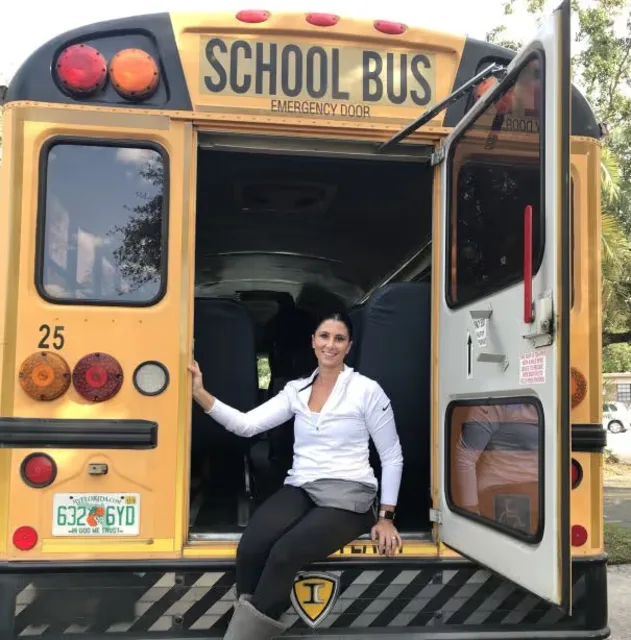
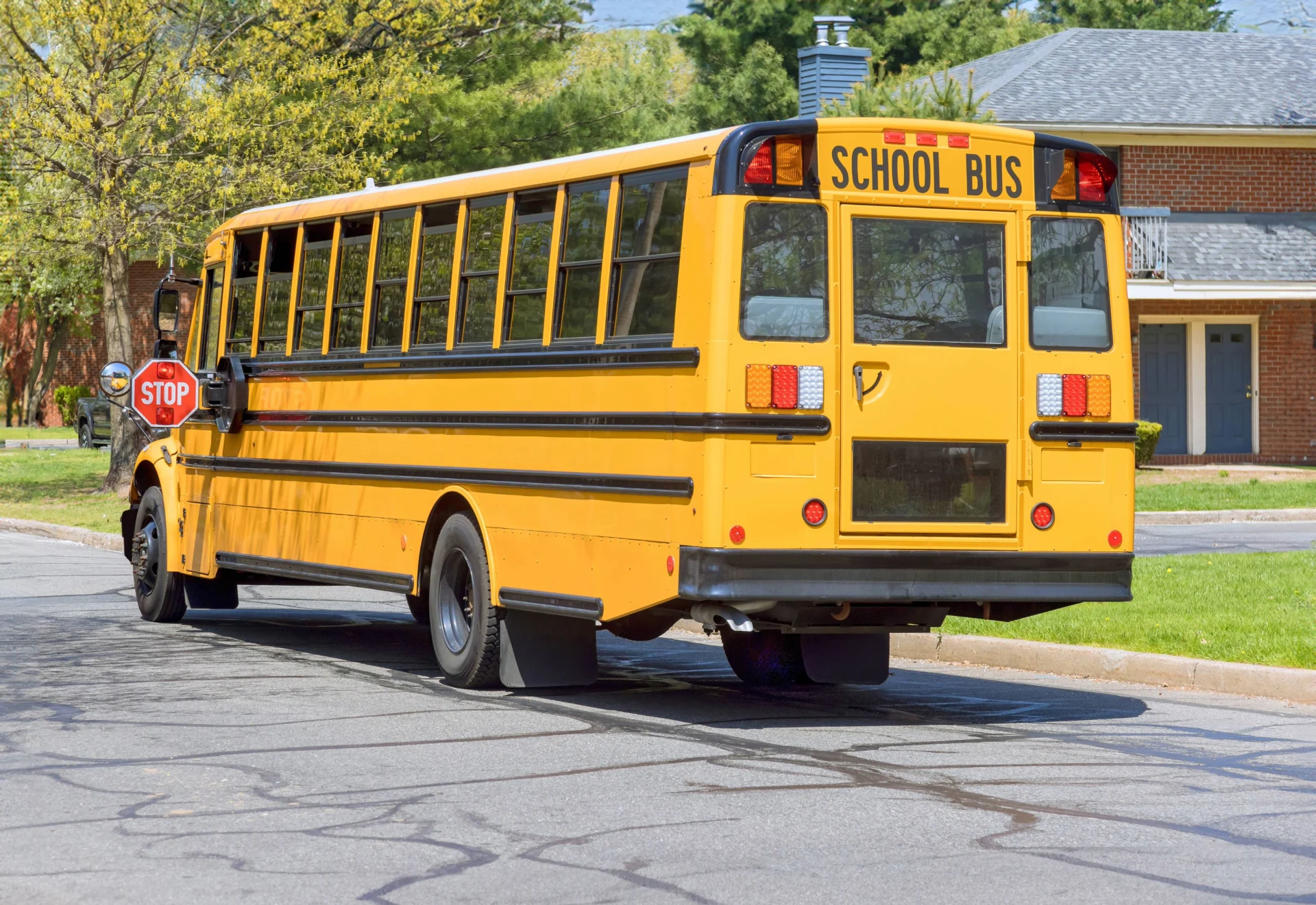
We often get DMs from caregivers asking if their kids are really safe on school buses without car seats. You may have heard that kids don't need car seats or seat belts on school buses, and for older kids (K-12th graders) riding a traditional larger school bus, that's true! These buses are designed with compartmentalization in mind. The bus seats have to be spaced a certain distance apart and the seats are made of energy absorbing materials. For more information about school bus safety for this age group, check out this blog post.
But preschool age children need to be secured in an appropriate child safety restraint system when riding on the bus. Also, any children using smaller buses need a restraint as well, regardless of age.
The National Highway Traffic Safety Administration (NHTSA) recommends that preschool-age children riding on school buses should be transported in a child restraint that is appropriate for their age and size and that can be properly secured on the bus.
I Thought Car Seats Weren't Allowed On Buses?
They can be used on buses. There is a whole training about transporting children in child safety restraint system on buses in fact!
However, not all buses are equipped to be used with traditional car seats. Depending on the bus, there are several types of child restraints available:
- your typical everyday rear-facing or forward-facing car seat (if the bus has seat belts or lower anchors)
- school bus specific child restraints
- safety vests with school bus specific mounts
- integrated harnessed seats built into the bus seat
While your school may not let you bring your child's everyday car seat onto the bus, they should have an appropriate restraint system and a plan for safely transporting younger children.
Why Do Preschoolers Need Car Seats?
This is because compartmentalization was not designed with small children in mind. Federal standards regulate the spacing between the bus seats and the characteristics of the seat backs. This system works very well for school-age children, but preschoolers are much smaller. This is why the recommendation changes when we are talking about kids riding the bus before they are in Kindergarten.
What Kind of Car Seat Does a Preschooler Use On the Bus?
.jpg)
As mentioned previously, this will depend on what kind of seats the bus is equipped with. Some bus seats have lower anchors or seat belts that can be used to install traditional car seats. For rear-facing children, it can be quite challenging to fit a car seat. The bus will need to have either lower anchors or seat belts. You will need a very compact seat. If the child is an infant seat, you can try installing the car seat without the base as it will take up less space that way. If the child is in a convertible car seat, you may have luck with a Britax Poplar or a Graco Extend2Fit.
Forward-facing children have more options. If the bus seat has lower anchors or seat belts, you may be able to use that method of installation with your current car seat. If it does not, and their are no bus seats with integrated harnessed seats, there are child restraints built specifically for buses such as the SafeGuard SuperSTAR. It's important to choose a restraint that is appropriate for both the child and the bus.
What if the Bus Doesn't Have Seat Belts or Lower Anchors?
A bus does not need seat belts or lower anchors to provide an appropriate child restraint for a forward-facing child.
There are bus-specific restraints that use a cam wrap. A cam wrap uses strong webbing that wraps vertically around the bus seatback. This has been developed specifically for school bus seats that have been reinforced.
School buses can even be ordered with seats that have built-in harnesses.
School bus seats can often be changed out if needed. The school would need to reach out to the bus manufacturer to find out.
What If The School Says They Don't Allow Car Seats?
States and school districts establish transportation policies. Ask to speak directly with the transportation director or pupil transportation department rather than relying on information from the classroom or front office staff.
What Can I Share With My Child's School?
The strongest starting point is NHTSA's Guideline for the Safe Transportation of Preschool Age Children in School Buses.
The Child Passenger Safety Board has school bus training available.
And Safe Ride News has a best-practice chart that breaks down recommendations by the child's age and size.
The Bottom Line
School buses are very safe vehicles, but preschoolers are not the right size to use them as is.