Most drivers don’t think twice about getting behind the wheel when it’s raining. However, slick roads are one of the most common causes of crashes. In fact, according to the Federal Highway Administration, around 75% of weather-related accidents happen on wet pavement.
The danger doesn’t come from moisture alone. It also comes from driver overconfidence and a lack of preparation for changing road conditions. When it’s raining, tires lose grip, stopping distances increase, and visibility can drop quickly due to glare and water spray. Even a thin layer of standing water can cause your tires to lose contact with the pavement, leading to hydroplaning.
These risks make one thing clear: rainy conditions require a careful, strategic, and defensive approach to driving. Are you prepared? To help ensure you’re ready for unavoidable wet weather, we’re sharing our top tips for driving safely in the rain.
How to Drive in the Rain and Avoid Hydroplaning
In this post, we’re breaking down best practices for driving in the rain and answering important safety questions. We’ve previously shared safety tips for driving in fog and preparation guides for winter travel to help you prepare for all weather conditions. So, it only makes sense to talk about rain, too.
Today, we’re focusing specifically on how rain affects the road and what you can do to stay in control, whether it’s a light drizzle or a heavy downpour.
Here’s what you need to know:
Is It Safe to Drive in the Rain?
Driving in light to moderate rain is generally safe, as long as you adjust your habits for changing road conditions. You’ll need to account for reduced traction, longer stopping distances, and limited visibility. But with extra caution and thoughtful driving, you should be able to reach your destination safely.
That said, if you encounter heavy rain or severe thunderstorms, it may be safer to pullover or delay travel altogether. In these conditions, visibility can drop dramatically, and the risk of flash flooding can turn an already hazardous situation into a dangerous one.
The key isn’t avoiding rain entirely. It’s understanding how rain changes the road and adjusting your speed, following distance, awareness, and even your travel plans accordingly.
How to Drive Safely in the Rain
1. Ensure your tires are in good condition.
To fully prepare for wet weather, ensure your tires are in good condition. When pavement is wet, you’re not just dealing with slick conditions from water. The moisture can also lift oil and grease from the cement or asphalt, making the roads even more slippery. That means traction is crucial when driving in the rain.
Your tires are the only part of your vehicle that touches the road, so tread depth matters. When your tires are worn down, water can’t disperse effectively. This reduces traction and increases your risk of hydroplaning.
So, you need to assess the condition of your tires regularly. If you’re looking for a simple, convenient way to do this, perform the penny test monthly to check your tire tread. If your tires don’t pass, replace them as soon as possible to stay safe in wet conditions.
2. Replace your windshield wiper blades if needed.
Wiper blades probably don’t seem like a critical part of your vehicle. They’re simple, inexpensive, and normally not in use. However, when you do need your wipers, you suddenly realize how important they really are.
Damaged wiper blades can make visibility in rainy conditions much worse. Instead of clearing your view, they may leave streaks, miss entire sections of the windshield, or smear water rather than clear it. So, long before you encounter a rainstorm, check your wiper blades and replace them immediately if they’re not in good working order.
3. Keep your windshield clean and use your defrost.
A dirty windshield isn’t just a problem because it makes your car feel less clean. Dust, pollen, and road film on your windshield can actually cause serious visibility issues—even if you normally can’t even tell it’s there.
When you add rain to a dirty windshield, the water droplets reflect and amplify glare from headlights and streetlights. This can slow your reaction time and make it much harder to see upcoming hazards or road signs. So, keep your windshield clean inside and outside to give yourself the best view possible.
And what about defrost? We know to use it when it’s frosty, but it’s important to use it when it’s raining too. When warm air from inside your vehicle meets the cooler glass of the windshield, condensation forms. In just minutes, it can become difficult to see through a foggy windshield.
To prevent this, turn on your defrost setting and use the air conditioning to help remove moisture from the air. Adjust the temperature gradually so the glass clears without creating additional condensation.
4. Slow down long before you need to.
On a wet road, it’s going to take longer for your car to come to a complete stop. Even if your tires are in perfect condition, it’s more difficult to get a grip on a moist surface. Because of that, allow yourself plenty of time to stop. Start slowing down long before you normally would in dry conditions.
5. Increase your following distance.
Since you need more stopping time when it’s raining, increase your following distance too. This allows you more time to respond if the person in front of you suddenly stops, turns, or performs an unexpected maneuver. It’s also a good idea to increase your following distance because visibility decreases when it’s raining, meaning you may not see turn signals or brake lights as quickly as usual. By leaving more following distance, you’re allowing yourself more reaction time.
6. Don’t use your cruise control.
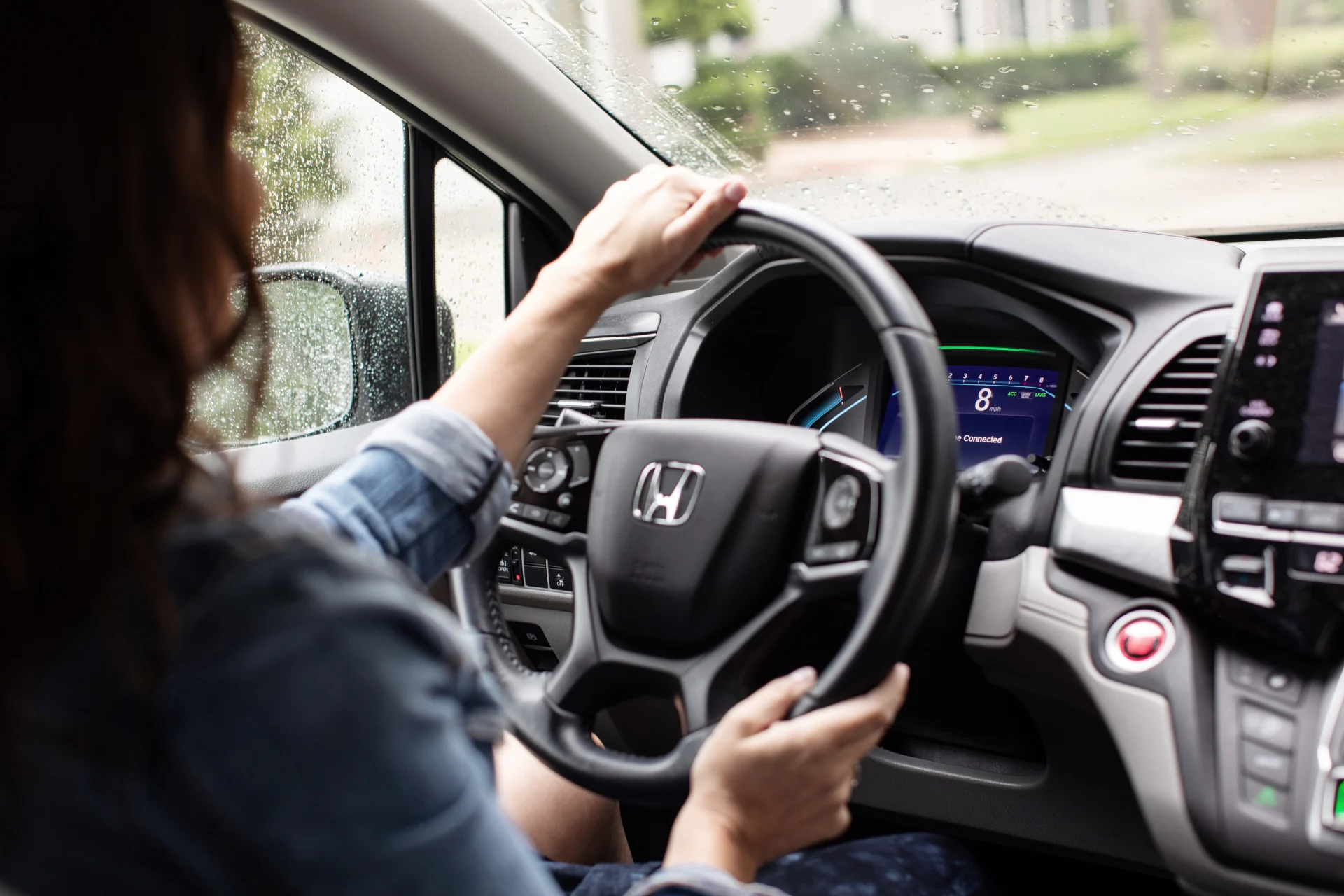
Never use your cruise control on wet pavement. It’s only meant to be used in predictable conditions when:
- Roads are dry
- Weather conditions are clear
- Traffic is light and steady
- You’re driving on long, straight highway stretches
You should not use your cruise control when it’s wet, icy, or snowy. Manufacturers designed cruise control to maintain a consistent speed. With this in mind, if you’re driving on moist roads with cruise engaged, it may accelerate even when it’s not safe to do so. This could increase the risk of hydroplaning and losing control of your vehicle. Keep it off and maintain control of your acceleration and braking until the rain has passed.
7. Avoid any sudden maneuvers.
When driving in the rain, avoid hard braking, sharp turns, or abrupt acceleration. All these actions can make it much easier to skid or hydroplane. Your tires need time to maintain grip on the road, so keep your movements smooth and controlled.
8. Stay out of standing water (even if it looks shallow).
Standing water may not look dangerous, but even shallow puddles can cause hydroplaning. Water can also hide potholes or debris and potentially damage your engine if it’s deeper than it appears. If you can’t clearly see the road surface beneath the water, avoid driving through it whenever possible.
9. Use your low beam lights.
Even if you’re driving during the day, turn on your headlights if it’s raining. This allows other drivers to see you more easily and, to many people’s surprise, it’s actually the law in most states.
Of course, if you’re driving in the rain after the sun goes down, it’s even more important to use those headlights. Just ensure you’re using low-beam lights to increase visibility. High beams will reduce contrast, increase glare, and actually make it harder to see.
10. Know what to do if you hydroplane.
Even with careful, defensive driving, hydroplaning can still happen in heavy rain. If it does, knowing how to respond can prevent a brief loss of traction from turning into something more serious. You know you’re hydroplaning if you're:
- Steering feels light and loose
- Tires spin without traction, and your engine revs if you press on the gas
- The car starts to drift or glide slightly
- Driving over standing water at speeds above 35 mph
If this happens, stay calm. Immediately ease your foot off the accelerator and avoid slamming on the brakes. Also, keep the steering wheel steady and pointed in the direction you want the vehicle to travel. Do not make sudden corrections. As your speed decreases, your tires will regain contact with the pavement, and traction will return. Once you feel full control restored, gently adjust your speed to better match the wet road conditions.
11. Pull over if conditions worsen.
If you lose the ability to see or maneuver your car safely because of worsening conditions, find a safe place to pull over as quickly as possible. Preferably, a parking lot or rest area is better to ensure you’re far away from other drivers.
However, if you don’t have another option, pull over as far as you can on the side of the road. Then, turn on your hazard lights, and stay in your vehicle with your seat belt on until the storm passes or lightens up.
Reduce your risk of a rainy day accident by following these safe driving tips.
Rain doesn’t have to mean danger. Most wet-weather crashes happen because drivers don’t adjust for changing conditions. Slow down, give yourself extra space, and make sure your vehicle is ready for the road. A few small changes in how you drive can make a big difference in keeping you and everyone around you safe when it rains.
For more driving tips and vehicle safety information, visit the Safe in the Seat blog. It’s our mission to help you reduce risk and keep your family protected every time you hit the road.