Possible vs. Probable: The Truth About Stroller “Projectiles,” Third-Row SUVs, and What Actually Keeps Your Kids Safe
Table of Contents
I think we are starting to confuse possible with probable.
There’s been a lot of conversation lately about projectile risk in family vehicles, specifically what happens when you have to fold down part of your third row to fit a stroller while your child or another passenger is sitting next to it. And I want to offer a different perspective.
Because here’s the thing. If you’re shopping for a three-row SUV, it’s probably because you actually need all three rows. You need space for your kids. You need space for your stroller. You need space for groceries, sports gear, diaper bags, and everything else that comes with raising a family. That’s not a luxury. That’s just real life.
As a CPST, the question I’m always asking is: what are the risks? And as a mom, I’m asking: how do I keep my family as safe as possible while still actually living my real, everyday life?
Those two questions guide every recommendation I make. Because risk isn’t just about asking, “Can this happen?” It’s also asking, “How likely is it to happen, what does the evidence tell us, and what should I prioritize first?”
And I think this stroller conversation is a really good example of why that distinction matters.
.jpg)
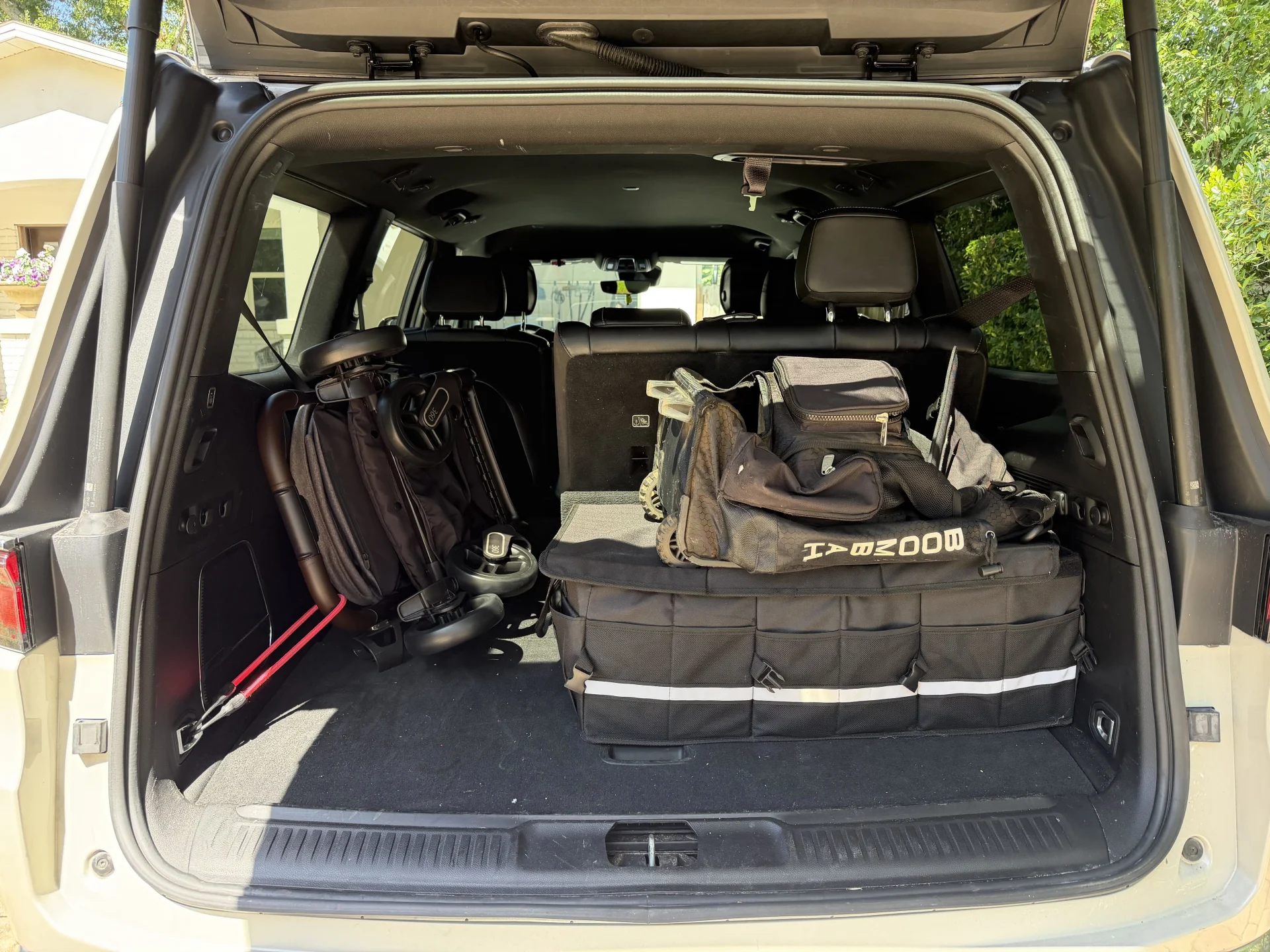
Here’s the scenario that’s been getting a lot of attention: a stroller resting on a folded-down portion of the third row, right next to a child or another passenger. Could that stroller move during a crash? Could it potentially injure the child sitting beside it?
Maybe. It depends.
There are a lot of variables that determine how objects move around a vehicle during a crash, including the type and severity of the crash, where the object is positioned, how much room it has to move, and where the passengers are sitting.
And that context matters. Because “this is physically possible” and “this is likely enough that you shouldn’t use that seating position” are two very different conclusions.
So let’s look at what the data actually tells us.
First, let me be clear about something, because I never want to be the person who tells you loose objects don’t matter. They do.
Physics is real. In a crash, unsecured objects can continue moving through the vehicle until something stops them. That’s why child passenger safety educators talk about securing loose objects in the first place.
Water bottles. Laptops. Groceries. Hard toys. An unoccupied booster seat. Your diaper bag. And yes, your stroller.
So securing what’s in your car is genuinely important.
But here’s what I want you to notice: we don’t have crash data showing that a stroller resting on a folded portion of a third-row seat next to an occupied seating position is a meaningful cause of child injury. The projectile research and guidance we found addresses loose, unsecured objects in general rather than identifying this specific stroller setup as a reason not to use the adjacent seat.
And I think that distinction matters.
“Secure your cargo” is a behavior you can control on every drive.
“You can’t use that seat” or “don’t buy that vehicle” is a much bigger recommendation, and I don’t think the evidence we have supports making that blanket statement.
That doesn’t mean ignore projectile risk. It means keep the risk in proportion.
This is the part I don’t want to get lost: we can’t evaluate one risk in a vacuum.
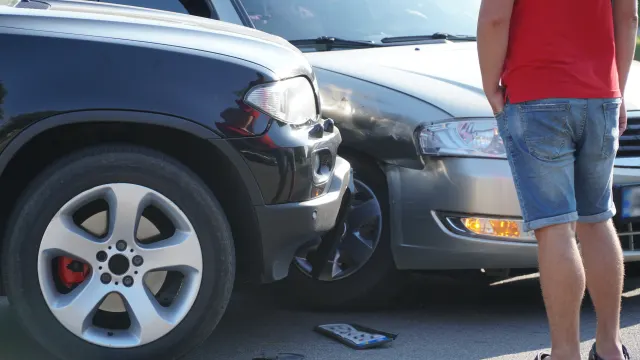
If we’re going to worry about a stroller on a folded seat, we also have to be willing to line that concern up next to the other risks riding in the car with us every single day, especially the ones we have much more control over.
Are you looking at your phone while driving? Distracted driving killed 3,208 people and injured 315,167 in 2024 alone according to the NHTSA data included in our research. Sending or reading a text takes your eyes off the road for about five seconds. At 55 mph, that’s about the length of a football field.
Is everyone actually buckled? Is your car seat installed correctly? Is your child harnessed correctly? Is your child riding in the right stage? Are you speeding, drowsy, impaired, or following too closely?
These aren’t hypothetical concerns. We have real-world data showing us that these things are happening and that they affect outcomes.
None of that means loose objects don’t matter. It means projectile risk is one part of a much bigger safety picture.
And if I have a limited amount of your attention, I want to make sure we’re spending it on the things that are most likely to make a meaningful difference for your child.
.png)
I would not spend the first four talking about projectiles.
I’d start with the things we know parents struggle with every single day.
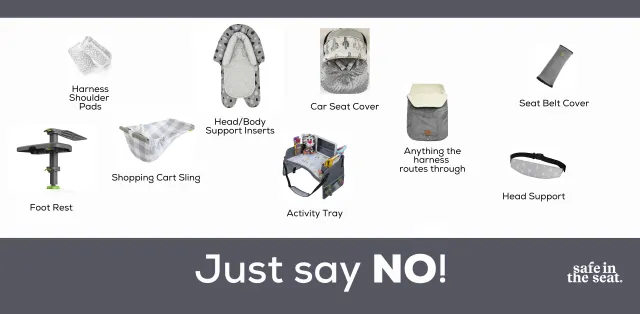
Is your car seat installed correctly? According to the data already included in our research, car seat misuse is incredibly common.
Is your child actually fitted correctly in the seat? According to data collected by the National Digital Check Form, 55% of children were not harnessed properly, and 59% of seat belt installations were incorrect.
Is your child riding in the right stage? Rear-facing. Forward-facing. Booster. Seat belt. Moving to the next stage shouldn’t only be about asking, “Can they?” I also want you asking, “Should they?”
These are the everyday decisions that I want taking up space in your brain because they’re things you can actually control.
That’s where I want your energy.
I’m not saying throw your stroller in the back and forget about it.
Secure what you reasonably can.
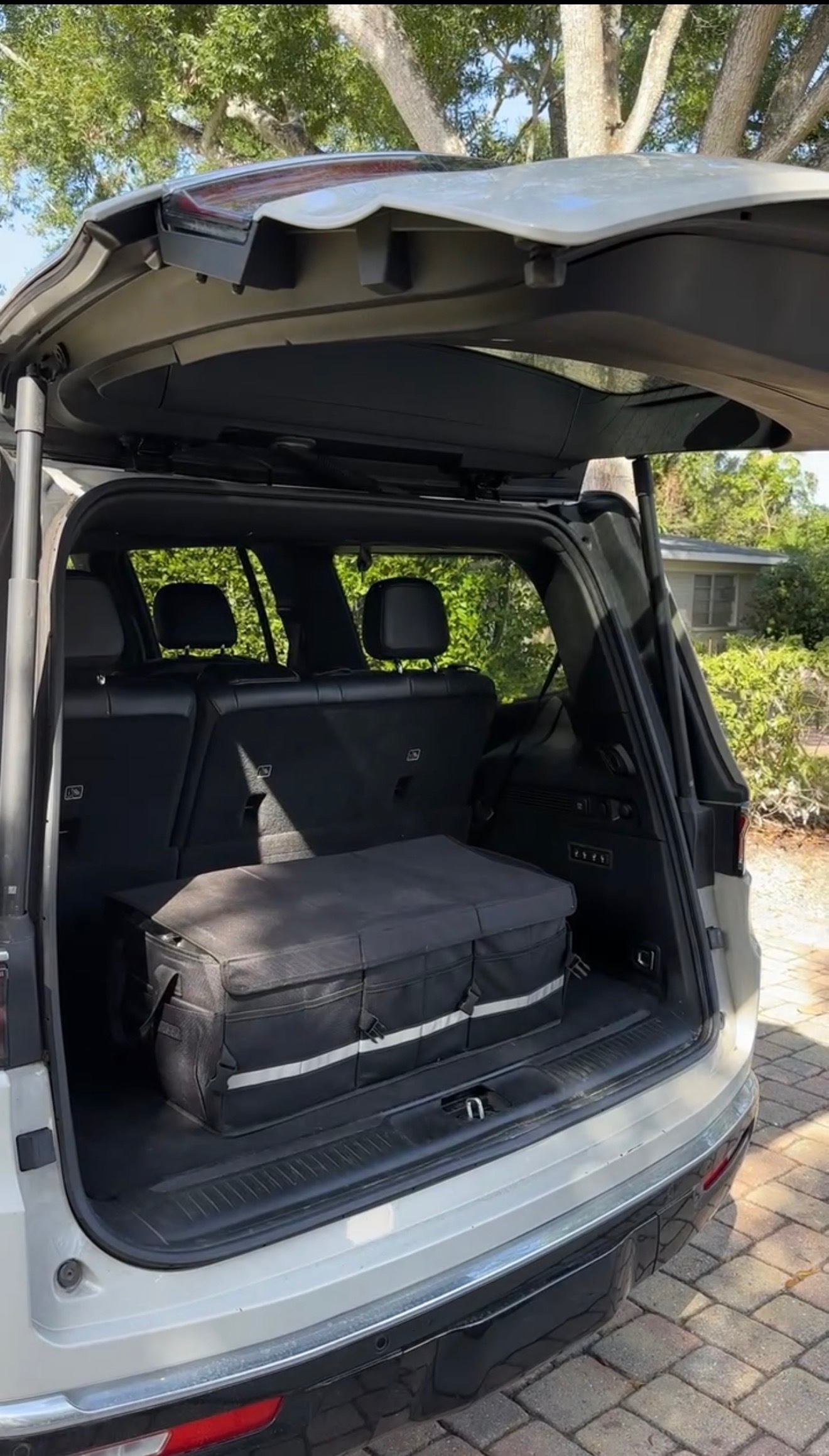
When you have the space, keep heavier gear in the cargo area behind your last upright row. Keeping heavier items lower in the vehicle and securing them appropriately can help limit how much they can move.
If you do need to fold part of the third row for your stroller or other gear, be thoughtful about how you pack. Don’t pile heavy items up high next to your child. Use the cargo-management features approved for your vehicle when appropriate. And look around the passenger cabin too. Water bottles, tablets, hard toys, bags, and all the other random things our kids collect can become loose objects too.
Basically, I want you thinking about the stuff in your car.
I just don’t want you terrified of the stuff in your car.
Real families have three kids. Real families need strollers. Real families choose captain’s chairs, like I did, because they make life genuinely easier. They can make it easier to get to the third row, easier to load kids, and easier to make the vehicle work for your particular combination of kids and car seats.
Personally, this projectile scenario is not something that would stop me from buying a certain type of vehicle.
If I’m shopping for a vehicle, I’m much more interested in whether it works for my actual family.
- Can I correctly install the car seats I need?
- Can I buckle everyone easily?
- Can my kids safely access their seats?
- Can I use the third row the way I need to?
- Can I fit the stroller and the other things my family regularly carries?
I’d rather you choose a vehicle that fits your real life, learn how to manage your cargo well, and nail the fundamentals of car seat safety than talk yourself out of the space or configuration your family actually needs based on a risk we don’t have evidence showing should drive that decision.
So if you’re vehicle shopping, bring your car seats. Install them. Put your kids in them. Try the third row. Put your stroller in. Actually test the way your family lives before you buy the car.
Because the best family vehicle isn’t just the one that checks boxes on paper. It has to work for your actual family in real life.
There will always be another “could.”
Could something happen in a crash? Of course. Driving comes with risk, and I’m never going to pretend we can eliminate all of it.
But my job isn’t to give you an endless list of everything that could possibly happen to your child in the car. My job is to help you understand what the evidence tells us, what you can control, and what deserves your attention first.
So when you hear about a new risk that suddenly makes you question your car, your car seat, or something you’ve been doing every day, I want you to ask a few questions.
- Can this happen?
- How likely is it to happen?
- What does the evidence actually tell us?
- What can I control?
- And where should this fall on the list of things I’m worrying about?
That’s how I think about child passenger safety as a CPST, and it’s how I think about it as a mom.
Because I want your kids safer. I also want you to be able to live your actual life.
Possible is not the same as probable. Let’s keep our energy on what matters most.
Can a stroller become a projectile in a car crash?
It’s physically possible for an unsecured stroller, like other unsecured cargo, to move during a crash. That’s why I recommend securing heavy items when you reasonably can. What we don’t have is crash data showing that a stroller resting on a folded portion of a third row next to an occupied seat is a meaningful cause of child injury.
Is it safe to fold down part of the third row for a stroller next to my child?
Based on the evidence we have, I don’t think there is support for a blanket rule that says you can never use the adjacent seating position. I would still secure heavy cargo when reasonably possible, avoid piling heavy items high around passengers, and follow your vehicle manufacturer’s instructions for cargo and folded-seat use.
Are captain’s chairs safe for car seats?
Captain’s chairs are commonly used with car seats. What matters is whether your particular car seat can be correctly installed in that seating position and whether your child can be correctly restrained there. Always check both your car seat and vehicle manuals.
Should I avoid an SUV if I need to fold part of the third row to fit my stroller?
This alone would not stop me from choosing a vehicle that otherwise works well for my family. I’d look at the whole picture: where each child will ride, whether their restraints install correctly, how I can manage cargo, and whether the vehicle actually works for the way my family lives.
What should I focus on first if I want my child safer in the car?
Start with the things you can control on every ride: correct car seat installation, correct harness or seat belt fit, the appropriate restraint stage for your child, everyone buckled, and safe driving. Then secure the loose stuff you reasonably can. Including the random bag of rocks your toddler absolutely had to bring home from the park. Because somehow there are always rocks.
How long should my child stay in each car seat stage?
I don’t want to bury the main point of this article under every stage recommendation, but the general principle is simple: don’t rush the transition just because your child has reached the minimum. Your car seat manual, your vehicle manual, your state law, and your child’s size and developmental readiness all matter.
This post is for general education and isn’t a substitute for your car seat and vehicle manuals or a hands-on check with a Certified Child Passenger Safety Technician.
Sources
- NHTSA: How to Secure Your Load
- IIHS: Child Safety Research
- CDC: Child Passenger Safety
- CDC: Preventing Child Passenger Injury
- NHTSA: Car Seats and Booster Seats
- First Things First: AAP Rear-Facing Guidance
- Evenflo: Loose Objects and the Risk of Projectiles in Your Car
- NHTSA: Distracted Driving
- NHTSA: Tire-Related Factors in the Pre-Crash Phase (DOT HS 811 617)
- Severe Injury in Multiple Impacts: Analysis of 1997–2015 NASS-CDS
- Occupant Injury in Rollover Crashes: PubMed
- National Digital Car Seat Check Form: National Dashboard