Aftermarket Car Seat Accessories: What’s Safe to Use and What Parents Should Avoid
You finally installed the car seat, tightened the harness, and got everything adjusted just right… and then the accessories start showing up. Cute strap covers. Head support pillows. Seat protectors. Tray tables. Mirrors. Add-on inserts. Car seat toys. But here’s the problem: just because something is sold for use with a car seat does not mean it’s safe. In fact, many aftermarket car seat accessories were never crash tested with your child’s specific car seat. And some can actually interfere with how the seat performs in a crash. At Safe in the Seat, one of the biggest things we teach parents is this:
If it didn’t come in the box with your seat or isn’t specifically approved by your car seat manufacturer, you should assume it’s not safe to use.
Here’s what parents need to know about aftermarket car seat accessories, what’s safe, what’s not, and how to protect both your child and your vehicle without compromising safety.
What Is an Aftermarket Car Seat Accessory?
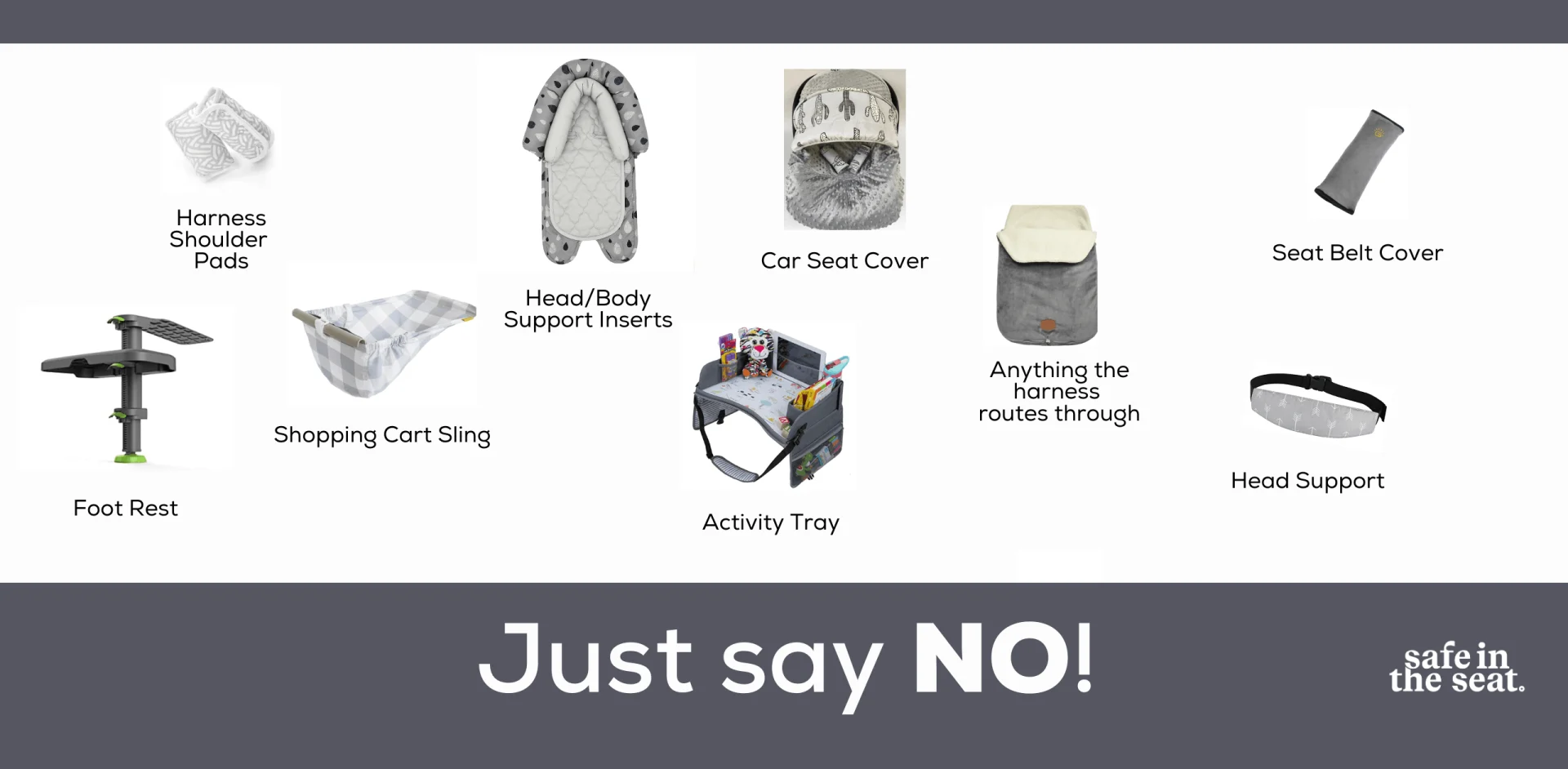
An aftermarket accessory is any product added to the car seat that did not originally come with it from the manufacturer. Common aftermarket accessories include:
- Car seat protectors
- Strap covers
- Infant inserts
- Head positioners
- Harness pads
- Tray tables
- Mirrors
- Toys attached to the seat
- Seat belt adjusters
- Head straps or “nap support” straps
- Cooling pads or liners
- Add-on cushions
Some accessories are marketed as “universal,” but car seats are not universal products. Every car seat is engineered and crash tested differently. That’s why compatibility matters.
Why Aftermarket Accessories Can Be Dangerous
Car seats are designed to work in a very specific way during a crash. Adding extra products can:
- Change harness positioning
- Alter how tightly the seat installs
- Affect crash performance
- Introduce compression during impact
- Create unsafe spacing
- Become projectiles in a crash
- Interfere with side impact protection
Even products that seem harmless can create problems. For example, thick seat protectors can make a car seat feel tightly installed when it actually isn’t. And add-on head straps marketed to keep sleeping children upright have been linked to strangulation and injury risks.
The General Rule Parents Should Follow
Here’s the easiest rule to remember: only use accessories that came with your car seat or are specifically approved by your car seat manufacturer. If you can’t find approval in the manual, manufacturer website, or directly from customer service, don’t use it.
Accessories Parents Should Avoid
Are Car Seat Protectors Safe?
This is one of the most common questions parents ask. And the answer is: sometimes. Parents understandably want to protect their vehicle upholstery from spills, crumbs, dents, muddy shoes, and car seat marks. Some car seat manufacturers allow protectors. Others prohibit them entirely. Some allow only their own brand’s protector. That’s because adding a layer between the vehicle seat and the car seat can impact installation and crash performance.
- AXKID: Can use only their brand car seat protector
- Babyark: allowed only if the seat is installed with seat belt, lower anchors, AND the load leg
- Baby Jogger: Can use car seat protectors or a thin towel
- Baby Trend: Can only use car seat protectors or a thin towel with convertible car seats and boosters
- Britax: Can’t use a car seat protector
- Bubble Bum: Can use car seat protectors or a thin towel
- Century: Can use car seat protectors or a thin towel
- Chicco: Can’t use a car seat protector
- Clek: Can use only their brand car seat protector
- Cosco: Can’t use a car seat protector but can use a thin towel
- Cybex: Can’t use a car seat protector
- Diono: Can use only their brand car seat protector
- Doona: Can use only their brand car seat protector
- Evenflo: Can use only their brand car seat protector or a thin towel
- Graco: Can use car seat protectors or a thin towel
- Joie: Can’t use a car seat protector but can use a thin towel
- KidsEmbrace: Can use car seat protectors or a thin towel
- Maxi-Cosi: Can use only their brand car seat protector or a thin towel
- Nuna: Car seat protectors are not recommended but not prohibited
- Orbit Baby: Can’t use a car seat protector
- PEG: Can’t use a car seat protector
- Romer: Can’t use a car seat protector
- Safety 1st: Can’t use a car seat protector, but can use a thin towel
- UPPA Baby: Can’t use a car seat protector
- Wayb: Can use only their brand car seat protector
This is exactly why you should never assume a protector is automatically safe just because it’s sold online or in stores. Always check your specific car seat manual before using a protector. You can also read the full Safe in the Seat breakdown here: Are Car Seat Protectors Safe?
How to Protect Your Vehicle Seats Safely
The safest option is always to follow manufacturer guidance exactly.
Can I add head support to a car seat?
Head Positioners and Nap Straps are not allowed. Products designed to hold a child’s head in place while sleeping can:
- change head positioning
- increase neck injury risk
- create strangulation hazards
- interfere with crash dynamics
Recent safety warnings have specifically advised parents not to use aftermarket head straps because of suffocation and strangulation concerns. If your child’s head falls forward while sleeping, it’s usually normal, and it’s safer than adding an unapproved product.
Can you use strap covers on car seats?
If the harness pads did not come with the seat, skip them. Extra padding can prevent a snug harness fit, introduce dangerous slack and affect crash performance. A properly tightened harness should pass the pinch test without aftermarket add-ons.
Are Infant Inserts Safe for Babies?
Aftermarket infant inserts are a huge issue. Parents often try to make babies look “cozier” with extra inserts or cushions, especially for newborns. But unless the insert came with the seat or is approved by the manufacturer, it should not be used. Extra padding changes how a baby fits in the seat and can create unsafe positioning.
Tray Tables and Large Attached Toys
Anything attached to the car seat can become a projectile during a crash. Heavy toys can cause injury at crash speeds. Keep toys soft, lightweight, and unattached to the seat. See our recommendations here. LINK
Are Car Seat Mirrors Safe?
Mirrors are one of the more debated accessories. One of the hardest parts of using a rear-facing car seat is not being able to easily see your child while you’re driving. For parents of infants who can’t yet communicate, that can feel especially stressful. A properly designed baby car seat mirror can help you keep an eye on your little one and give you added peace of mind on the road. But not all baby car seat mirrors are created equal, and there are important safety features parents should know before buying one. Be sure to use one that has a top tether attachment to make sure it does not become a projectile! Look for vertical and horizontal straps that allow you to attach it securely to the top tether. Keep in mind that you can not have 2 top tether connectors attached to the same anchor. If you have a seat that recommends using the top tether rear-facing, you won't be able to use the one on the mirror. Check out the Safe in the Seat approved mirror here. LINK If you choose to use one ensure it’s securely attached, it's shatter-resistant, and positioned safely.
Signs an Accessory Is Probably Not Safe
Be cautious if a product says universal fit or does not list approved brands/models. Also look out for anything that changes harness positioning, adds extra padding behind the child, installs between the child and harness, interferes with installation, or claims to “improve” safety without manufacturer approval. Marketing does not equal safety.
The Bottom Line on Aftermarket Car Seat Accessories
When it comes to car seat safety, simpler is usually safer. Most aftermarket accessories are created for convenience, comfort, or aesthetics, not crash performance. And because crash testing standards for aftermarket products are not federally regulated the same way car seats are, many products sold to parents have never actually been tested with their child’s seat. The safest approach is to use your car seat exactly as instructed by avoiding unapproved add-ons. When in doubt, check directly with your manufacturer or a CPST before using accessories. The goal isn’t a prettier setup; it’s making sure your child’s car seat performs exactly how it was designed to when it matters most.
Still Unsure What’s Safe to Use With Your Car Seat?
One of the hardest parts about car seat safety is that parents are constantly getting mixed messages. A product may be sold at a major retailer, have thousands of positive reviews, or even say it’s “crash tested”…but that still does not automatically mean it’s approved for your specific car seat. And trying to figure out what accessories are allowed, whether your seat protector is safe, if you can use extra inserts, or why your install suddenly feels loose can get overwhelming fast. That’s exactly why we created Talk to a Tech at Safe in the Seat.
With Talk to a Tech, a certified CPST (Child Passenger Safety Technician) reviews your specific setup and helps answer questions like:
- Is this accessory safe to use?
- Can I use this seat protector with my car seat?
- Is this insert approved?
- Why doesn’t my installation feel secure?
- Is my child fitting correctly in the harness?
- What should I remove from my setup?
Instead of guessing or relying on social media advice, you get expert guidance based on your child, your vehicle, and your exact car seat. Because when it comes to car seat safety, “probably okay” isn’t what parents are looking for. They want to know for sure.
Want Peace of Mind About Your Car Seat Setup?
Get personalized help from a certified CPST through Talk to a Tech.