
Going on road trips with your family is truly one of life’s greatest joys. You get to see new places, play fun car games, and sing along to all of your favorite songs. Not to mention that road tripping is much more convenient than air travel (although our Airplane Travel Course makes that pretty easy, too!). We have to be honest, though, adding a newborn to the mix can feel like a major roadblock.
The idea of a long road trip with a newborn can seem totally overwhelming. It may even feel impossible! But with the right strategy, preparation, and mindset, it is possible. In fact, road tripping with your infant can be the perfect bonding experience for the whole family.
To help you get the most joy out of your next trip, we’re sharing a practical, sanity-saving guide to traveling long distances with a newborn. Long-haul journey or short car ride, our goal is to give you all the tools to survive the ride. And, you might even enjoy it!
Traveling With a Newborn by Car: How to Stay Safe and Prepared
When planning a road trip with a newborn, one of the first questions that come to mind is: Is it even safe to travel long distances with a baby? It's a valid concern, and safety should always come first. So, before we dive into the how-tos, let’s start with when a doctor might clear a newborn for travel. Then we’ll discuss some things you can do to make that trip as safe and comfortable as possible.
Here’s what you need to know before you hit the road:
Is It Safe to Travel With a Newborn by Car?
Yes. In most circumstances, with the proper precautions, you can safely travel with a baby. However, it’s best to talk to your newborn’s pediatrician and get their recommendations. Birth complications, premature birth, and other factors may impact when it’s safe for your little one to join you on a family road trip.
How Soon Can You Travel With a Newborn by Car?
As long as your baby is healthy and born full-term, most pediatricians will clear you for a road trip within the first few weeks or even shortly after discharge. That said, it’s not ideal.
Traveling closer to the 6-week mark is generally safer. By then, your baby’s airways and neck muscles are more developed, they often sleep for longer stretches, and their immune system is stronger. And no, it doesn’t remove the exposure to illness, or the necessity to stop frequently.
We know this can all feel very overwhelming. You’ll quickly learn that there’s a lot happening in those new growing bodies! For more on what to expect and how to prepare, check out “When Does the Newborn Stage Get Easier?”
How to Travel With a Newborn by Car
Secure your baby in a properly fitted and installed infant or convertible car seat.
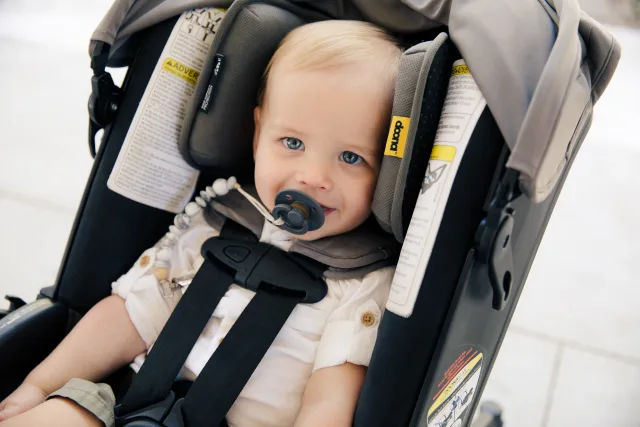
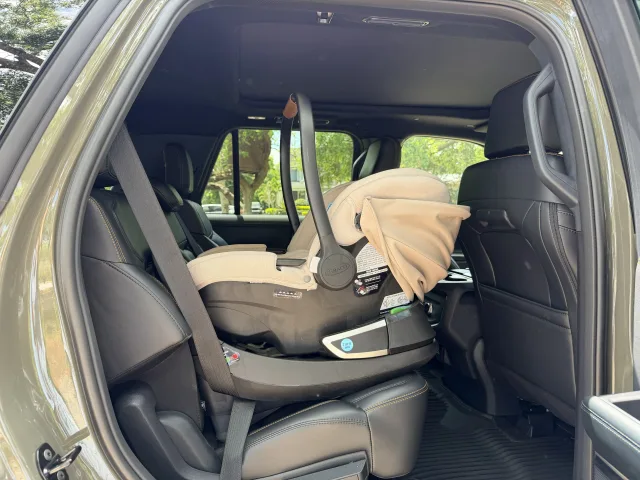
To safely travel with your infant, a properly fitting rear-facing car seat is a must. Depending on your preference, your newborn can ride in either an infant carrier or a convertible car seat. Just make sure it’s installed correctly and double-check to avoid common installation mistakes.
And here’s how to buckle a newborn into a car seat the right way:
- Place your baby so their back and bottom are flat against the seat, with no bulky clothing or blankets between baby and harness
- Make sure the straps are threaded at or just below the shoulders
- Tighten the harness until you cannot pinch any slack at the legs or shoulders
- Position the chest clip at armpit level
If you need help finding the right seat, here’s our guide for choosing a car seat for your newborn.
Don’t add aftermarket products to the car seat.
There are a lot of products out there that claim to make car rides better for newborns. Some promise better support, others aim to improve comfort, and a few are designed to keep them entertained. (Which you definitely don’t need after checking out “How to Keep Toddlers Entertained in the Car.”) Ultimately, these add-ons aren’t safe. They’re not crash-tested and not approved for use on any car seat. Unless it comes from the car seat manufacturer and is specified for use with your car seat, do not purchase anything “extra.”
Here are some aftermarket products you should avoid:
- Head and body supports
- Harness covers or strap pads
- Car seat covers or sleeping bags
- Clip-on toys, fans, or other accessories
- Seat protectors (unless your car seat manufacturer says they are allowed)
- Waterproof pads or liners

Keep the car cool, comfortable, and well-ventilated.
Keeping your baby comfy in the car is so important. It’s pretty easy to manage in cooler months, but keeping your little one comfortable in the heat can become tricky. This is because babies have underdeveloped sweat glands and nervous systems and car seats are hot as it is.
To help your baby stay cool in the car seat, try using cooling towels, car seat coolers, sunshades, and a Noggle. And don’t forget to dress them in light layers but not too many! More on that below.
Dress your baby in thin, weather-appropriate layers.
To keep your baby safe and comfortable on the road, dress them in thin, breathable layers. Babies can’t regulate their body temperature as well as adults, so layering makes it easier to adjust to changes in the car’s temperature.
In hot weather, thin layers let you remove clothing while you wait for the car to cool down, then add them back once it’s comfortable. In cold weather, layers help keep your baby warm without compromising car seat safety. This is important since bulky coats or snowsuits can create dangerous gaps between your baby and the harness. Once the car warms up, you can easily shed a layer or two to prevent overheating.
Never feed your baby while they are in the car seat.
Whether you’re bottle feeding, offering breast milk, or moving on to baby food, your infant should never be eating in a car seat. In fact, we don’t recommend feeding any child under two in their car seat! It’s a hazard for several reasons.
Feeding an infant in a car seat can cause tummy troubles that may be worsened by motion sickness. And if you’re breastfeeding by leaning over the car seat, you’re not buckled in/sitting properly. In a crash, anyone who isn’t strapped in/or sitting correctly can be thrown around the vehicle as a projectile. This is dangerous not just for you, but for everyone else in the car too. Save the feedings for your regular stops!
Travel during strategic times in your baby’s schedule.
When you’re driving with a newborn, you probably want them to be content or better yet, asleep. That makes the trip easier for everyone. To make that happen, it helps to be strategic about your timing.
If you’re working around your baby’s sleep schedule, there are some important things to keep in mind. Check out this guide on everything you need to know about sleeping safely in a car seat. It will help you make sure you are taking the right precautions!
Plan to stop every 2 hours to feed, change, or soothe your baby.
With newborns, it’s especially important to follow the “2-Hour Rule.” This guideline, supported by groups like the American Academy of Pediatrics (AAP) and the National Highway Traffic Safety Administration (NHTSA), recommends stopping every two hours to give your baby a break. It’s the perfect time to let them stretch, feed them, and change their diaper.
This rule helps protect your little one from risks linked to long car rides. Sitting in the car seat too long can cause issues like restricted airflow, poor circulation, neck strain, and even developmental concerns. It’s a crucial rule to stick to, even if your baby is sleeping. So before you hit the road, plan where you’ll stop along the way. This could be gas stations, rest stops, cafés, or parks. Any place where you can get out, stretch your legs, and care for your baby safely is a great choice!
Pack your diaper bag with plenty of essentials.
When planning your trip, don’t be afraid to overpack. Traveling with a newborn means expecting the unexpected. Blowouts, car trouble, sudden weather changes, road closures, sickness, and more can all throw a wrench in your plans. The last thing you want is to run out of diapers, wipes, formula, or other essentials. So pack extra of everything, even more than you think you’ll need.
Along with baby must-haves, make sure you have a well-stocked emergency kit in your car. If your vehicle breaks down, you’ll want supplies to keep everyone cool/warm, safely mark your car, and hopefully get back on the road. For a complete list of emergency items, check out this full list of things to keep in your car. Also, check out “How to Prepare Your Car for a Road Trip” to get one step ahead of any potential car problems!
Consider having an adult sit in the back seat with your baby.
Consider having an adult sit in the back seat with your baby. Even with a car seat mirror, you can’t watch your newborn closely all the time while you’re driving. Plus, being in the car seat away from familiar faces can make a baby fussy. This is true even if you do plan to travel when your baby is calm! Having someone in the back to check on your baby, meet their needs, and keep them company can make the trip much smoother for everyone.
You can safely travel with a newborn with the right strategy and planning!
Traveling with a newborn isn’t always easy, but it’s worth it. With thoughtful planning and a bit of patience, you can keep your baby safe and comfortable while making memories on the road. It won’t always go perfectly and that’s okay. What matters most is being present, flexible, and ready to handle whatever comes your way.
Ready to plan that vacation? Here’s how to prepare for a road trip. And, for more essential car seat safety information, check out the Safe in the Seat blog.
As an Amazon Associate, Safe in the Seat earns from qualifying purchases.