
When your kids reach first or second grade, you’ll be asking yourself, “How did they grow up so fast?” On a less sentimental note, you’ll probably also be asking yourself when and how to use a booster seat. In the early years, there’s a lot of talk about car seats from doctors, parenting guides, and even social media. But once kids are over six, you see less and less trusted info about child passenger safety.
Booster seats are an essential stage in the car seat journey. They bridge the gap between a harnessed seat and an adult seat belt—but knowing exactly when to start and when to stop using one isn’t always clear. Because of this, many parents assume it’s just about hitting a certain age or weight. In reality, it’s a combination of factors, and getting it right makes a big difference in how well your child is protected.
So, what actually matters when it comes to booster seat limits? In this guide, we’ll break down the key factors that determine when your child is ready for a booster. We’ll also discuss how long they should stay in a booster and how to know when they can safely transition to a seat belt alone.
What Is the Weight Limit for a Booster Seat? Transition Guide
As experts, we often get asked: “What is the safest car seat?” But the truth is, no one type, brand, or model of car seat earns the “top” spot. The safest car seat is one that fits your child, fits your vehicle, and is used correctly every time.
You could be using the priciest seat on the market, which includes all available safety features. But ultimately, if it’s too small or big for your child, it puts them at risk. This is true for all restraint systems, whether you’re looking at a rear-facing car seat or booster.
That’s why understanding booster seat requirements and limits matters. It’s not just about numbers, it’s about knowing when your child is ready, how a booster should fit, and when it’s time to move on. Below, we’ll walk you through exactly what to look for so you can make confident, safe decisions at every step.
To understand how to progress through all the phases, read our post on when to transition car seats next. Until then, here’s what you need to know about booster seats:
What Is a Booster Seat?
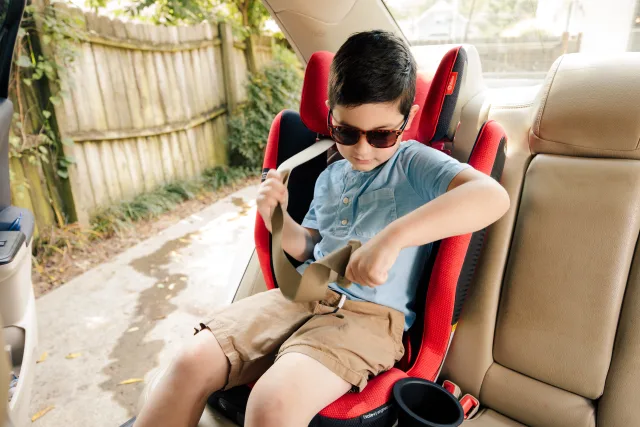
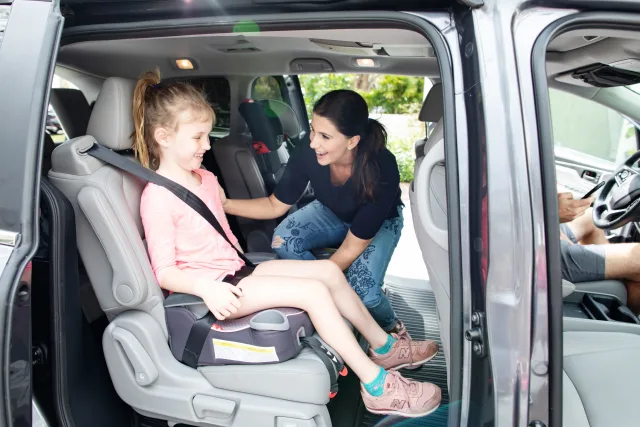
A booster seat is a type of child safety seat used to make an adult seat belt fit properly on a child who’s outgrown a five-point harness. It works by lifting and positioning a child on the vehicle seat so the lap belt and shoulder belt sit in a safe, secure position.
Without a belt-positioning booster seat, a vehicle’s seat belt usually sits too high on a child’s soft abdomen and cuts across their neck. This can lead to serious injury in a crash. That’s why boosters are an essential step in the car seat journey, bridging the gap between a 5-point harness and an adult seat belt.
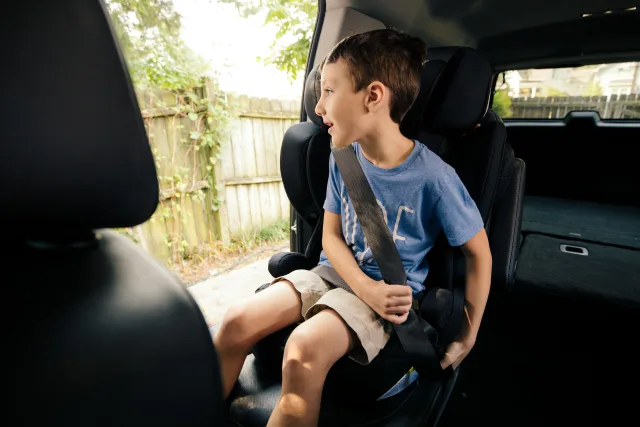
There are two types of booster seats: high-back and backless boosters. High-back boosters have a supportive back and often include head and side support. This helps guide kids into proper sitting habits as they adjust to riding without a harness. Backless boosters have no back and simply raise the child up, allowing them to sit against the vehicle seat while still improving seat belt fit.
To fully understand the difference, read our post discussing high-back boosters vs. backless boosters.
What Is the Weight Requirement for a Booster Seat?
There aren’t universal height and weight requirements for booster seats, but all have a minimum weight of at least 40 lbs. Nonetheless, check the instruction manual for your specific booster seat (or the one you plan to purchase) to confirm. And don’t forget that height and proportions matter too!
Though 40 lbs is often the minimum requirement, most kids are not ready for a booster seat at that weight. In fact, kids are often still rear-facing at 40 lbs! Ensure your child maxes out the rear-facing and front-facing modes on your car seat before transitioning to a booster seat.
Booster Seat Weight Limits by Type
Like the weight minimums, the weight maximums on booster seats vary. Always check the included manual from the car seat manufacturer for exact numbers. However, here’s the typical range of maximum weights by booster seat type:
Weight Limit For High-Back Booster Seat
The max weight for a high-back booster is usually between 80 and 100 pounds.
Weight Limit For Backless Booster Seat
That max weight for a backless or low-back booster is usually between 110 and 120 pounds.
Note: Remember, kids need to transition out of a car seat or booster once they’ve hit the max weight or height. Not both.
What Is the Height Requirement for a Booster Seat?
As with weight, there isn’t a universally accepted height requirement for all boosters; it varies from each seat. However, most have a minimum height requirement of somewhere between 43-44 inches tall. You can check the manual or online specs to determine if your child hits those minimums.
That said, only check whether your child is big enough for a booster once they’ve reached the height or weight limit of their front-facing car seat. There’s no good reason to move up early.
Booster Seat Height Limits by Type
The maximum height for each booster type varies by seat. As always, double-check the specifications before deciding your child is too tall to ride. But to help give you an idea, here are the height limits you can expect from most booster seats:
Height Limit For High-Back Booster Seat
Most high-back boosters will have a maximum height of between 57 and 63 inches.
Height Limit For Backless Booster Seat
Low-back or backless boosters typically have height limits between 57 and 63 inches.
What Are the Requirements to Stop Using a Booster Seat? The Five-Step Test
You know your child is ready to graduate from a booster seat when they pass the 5-Step Test. This confirms that the lap and shoulder belts fit correctly, and the child is developmentally ready to go without support.
Usually, this is around 10-12 years old. Yes, that means your kids will likely be in a booster seat until middle school! However, it’s extremely important that your child reaches the height or weight limits on their current booster seat. Confirm the following criteria before moving them up:
- Back against the seat: Your child can sit all the way back against the vehicle seat without slouching.
- Knees bend at the edge: Their knees bend naturally at the edge of the seat (not sticking straight out), and their feet touch the floor.
- Lap belt is properly positioned: The lap belt sits low across the upper thighs, not riding up on the stomach.
- Shoulder belt fits correctly: The shoulder belt crosses the middle of the chest and shoulder, not cutting into the neck or slipping off the shoulder.
- They can stay in position the whole ride: Your child can sit like this for the entire trip without leaning, slouching, or moving the seat belt out of place.
Note: Even once your kids graduate from their booster seat, always have them ride in the back seat. For more on this, read our post “What Is the Age and Weight for the Front Seat?”
Top High Back Boosters
Evenflo GoTime Sport
This is one of the least expensive high back boosters on the market. It is the cheapest that works with non-removable headrests, so it works in any vehicle! It's very lightweight, making it easy to move to different vehicles. The maximum limits are 120 pounds and 57." It turns into a backless booster with the same limits. It does not have lower anchors, so make sure to buckle it in when the child is not riding in it, to keep it from becoming a projectile!
Cybex Solution G2
This is a high back only booster with 120 pounds/60" maximums. This booster does not work well with non-removable headrests. But it has rigid lower anchors, and it folds up.
Axkid Up
This is a high back only booster with 120 pounds/60" maximums. It's very narrow, making it one of the best high back boosters for 3 across situations. It has a footrest for comfort. It's the first booster in the world that has a load leg. The load leg can only be used when the rigid lower anchors are also in use. This booster folds up for easy storage. This booster works with non-removable headrests.
Peg Viaggio Flex
This is another high back only booster. The maximum limits are 120 pounds and 63." This is another good option for 3 across situations. But it's also a good option for high percentile kids because it does not have armrests that limit the internal width of the seat. It has rigid lower anchors and folds as well.
Top Backless Boosters
Joie Basil Backless
The Joie Basil Backless booster is lightweight, narrow, and very padded. It has basic, hook-on lower anchors and 2 cup holders. The maximum limits are 120 pounds and 63." Keep in mind that this booster has a minimum weight limit of 50 pounds, which is unusual, as most start at 40 pounds.
Chicco GoFit Plus
The Chicco GoFit Plus is also lightweight and narrow. It has premium, push-on lower anchors and 2 cup holders. The maximum limits are 110 pounds and 57." This booster comes in a flame-retardant-free version called ClearTex as well.
Britax UpnGo Click
The Britax UpnGo Click is another lightweight and narrow option. But this booster has rigid lower anchors. Like the previous two boosters, it has two cup holders. The maximum limits are 120 pounds and 63." The fabric is flame-retardant-free.
Booster Seat FAQs
Do I have to install a booster seat?
It depends. Most booster seats just sit on the vehicle seat. However, some booster seats include LATCH connectors. These improve safety by ensuring the booster doesn’t become a dangerous projectile in a crash.
For more information, read "Booster Seat with LATCH System: Why They’re Safer for Your Whole Family.”
Do you have to use a high-back booster?
We recommend you transition from a front-facing car seat to a high-back booster seat before moving to a backless booster. The high-back stage is an essential step in the car seat journey. They help keep your child safe while they’re still learning to sit properly without the support of a 5-point harness.
What are the laws on booster seats?
Every state has laws on booster seats, but they vary. Here’s a breakdown of each state’s specific law on booster seat use. However, remember that these are minimum requirements, not best practices.
Can you use booster seats on planes?
No, the FAA doesn’t allow booster seats on airplanes. Airplane seat belts don’t work the same as vehicle seat belts. Kids in boosters can safely use airplane lap belts without any positioners.
What is the best booster seat?
The best booster seat is one that fits your child, fits your vehicle, and is used correctly every ride. That said, we have some favorites. Here are Safe in the Seat’s recommended booster seats. But the best way to find the booster that will work best for your child and your vehicle, is to use our free, Car Seat Finder Quiz!
Don’t rush the move to a booster seat.
Booster seat limits aren’t just about hitting a certain weight or height. They’re about making sure the seat belt fits your child correctly. The goal is to keep your child in each stage as long as possible, then move up only when they’ve truly outgrown it.
It might feel surprising to keep your “big kid” in a booster longer than expected, but this stage plays a key role in keeping them protected. When used properly, a booster positions the seat belt over the strongest parts of the body, reducing the risk of injury in a crash.
When in doubt, don’t rush the transition. Focus on fit, follow your seat’s limits, and wait until your child passes the 5-step test before moving to a seat belt alone.
As an Amazon Associate, Safe in the Seat earns from qualifying purchases.