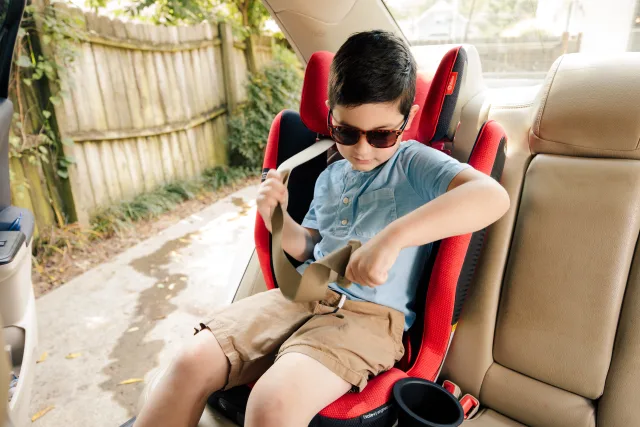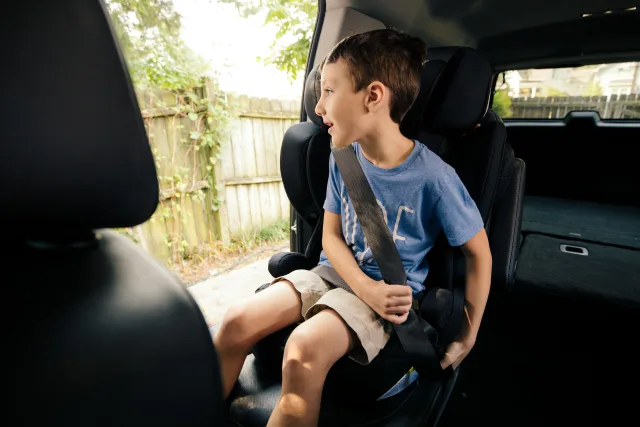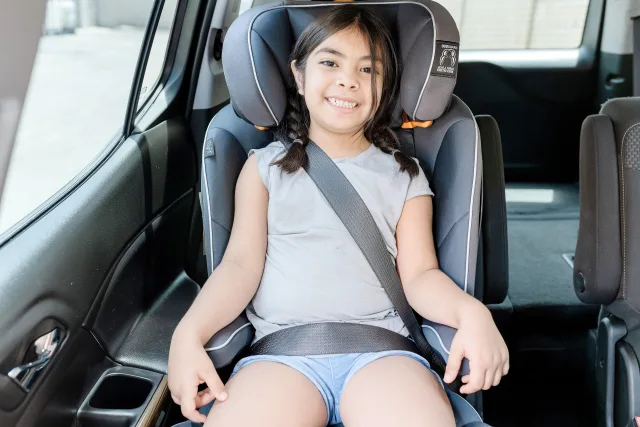
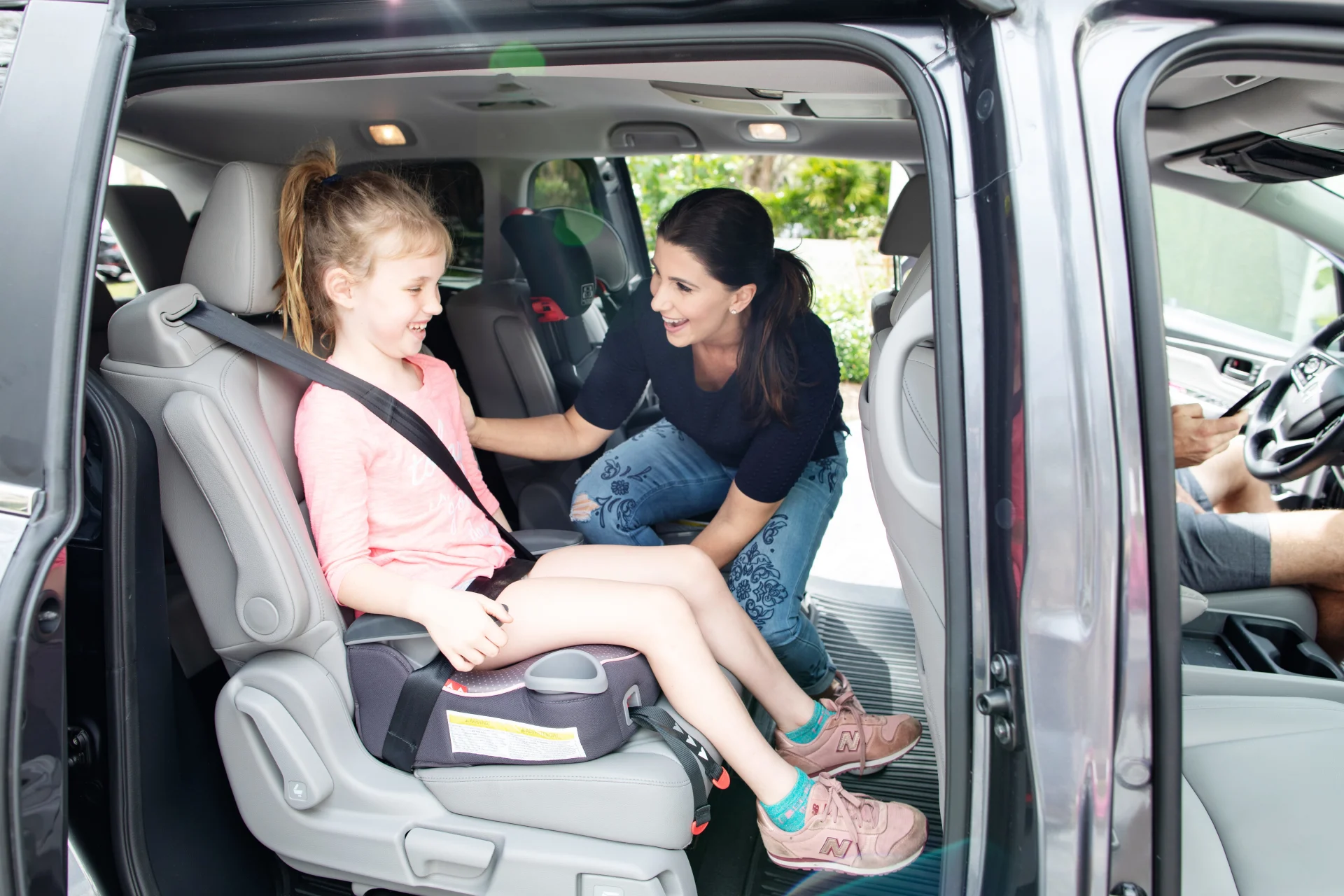
In the early stages of car seat use, parents are usually extremely careful. You double-check the installation, learn how to use every feature correctly, and stay on top of adjustments as your child grows. Many families even commit to keeping their child in a rear-facing car seat until age 5! However, as kids move through each phase, that attention to detail often fades. By the time a child transitions out of a 5-point harness and into a booster seat, it’s common for parents to feel less certain about the rules and recommendations.
Booster seat laws exist to bring clarity back to this phase and ensure kids stay properly protected until an adult seat belt truly fits. This step isn’t just a light suggestion; it’s essential for safety. Booster seats help align the seat belt across the strongest parts of a child’s body, reducing the risk of injury in a crash. In fact, the American Academy of Pediatrics (AAP) found that booster seats reduced the risk of serious injury in a crash by 45%.
They’re so critical to your big kid’s safety that every state and province has laws requiring children to use a booster seat. In this guide, we’re breaking down exactly what those booster seat laws require. We’ll also discuss how they vary from place to place and what you need to know to keep your child safe—not just compliant.
What's the Booster Seat Law in Each State and Province?
Booster seat, car seat, and seat belt laws set the standards for when a child can legally move from one seat to another. More importantly, each state and province varies slightly in its requirements. However, each one represents only the minimum standards rather than the best practice.
The safest choice at every car seat stage is the same: stay in your current phase until your child has met the height or weight requirements. (Here’s more on when to transition car seats.) Never move simply because the law allows it. No, you won’t get a ticket for transitioning your child to a booster seat early. But you will be significantly compromising their safety in a crash.
Here’s a helpful way to think about it: some states don’t require motorcycle helmets. That doesn’t make riding without one safe—it just means it’s legal. The same logic applies here. Booster seat laws are a baseline, not a recommendation. For the best protection, keep your child in their current seat until they’ve truly outgrown it.
Is a Booster Seat Required By Law in the U.S. and Canada?
Yes, and yes. In both the U.S. and Canada, the law requires children who have outgrown a forward-facing car seat to use a booster until a seat belt fits properly. Law enforcement is strict about these car seat laws in many areas. Failing to follow them can result in fines or other penalties.
Here are the laws on booster seats in your state or province:
What Are the Laws on Booster Seats in the United States?
What is the Booster Seat Law in Alabama?
- Children must use a booster seat until at least age 6.
What is the Booster Seat Law in Alaska?
- Children ages 4 to 8 who are under 57 inches tall and weigh 20 to 65 pounds must use a booster seat.
What is the Booster Seat Law in Arizona?
- Children younger than 8 and under 57 inches tall must use a car seat or booster seat.
What is the Booster Seat Law in Arkansas?
- Children younger than 6 and under 60 pounds must use a booster seat.
What is the Booster Seat Law in California?
- Children under age 8 or under 57 inches tall must use a child restraint.
What is the Booster Seat Law in Colorado?
- Children ages 4 to 9 and weighing more than 40 pounds must use a forward-facing car seat or booster seat.
What is the Booster Seat Law in Connecticut?
- Children ages 5 to 8 or weighing 40 to 60 pounds must use a car seat with a five-point harness.
- From 8 years old and 60 pounds, a child may use a booster.
What is the Booster Seat Law in Delaware?
- Children weighing 4 to 4 pounds must use a booster seat until they reach the manufacturer’s height or weight limit.
What is the Booster Seat Law in the District of Columbia?
- Children ages 4-7 must use a harnessed seat or a booster seat.
What is the Booster Seat Law in Florida?
- Children ages 4 and 5 must use a separate carrier, integrated car seat, or booster seat.
What is the Booster Seat Law in Georgia?
- Children under age 8 and 4'9" must use a car seat or booster seat.
What is the Booster Seat Law in Hawaii?
- Children ages 4 to 10 must use a car seat or booster seat unless they are over 57 inches tall.
What is the Booster Seat Law in Idaho?
- Children ages 6 or younger must use a car seat or booster seat.
What is the Booster Seat Law in Illinois?
- Children ages 8 or younger must use a car seat or booster seat.
What is the Booster Seat Law in Indiana?
- Children under age 8 must use a car seat or booster seat.
What is the Booster Seat Law in Iowa?
- Children ages 1 to 5 must use a car seat or booster seat.
What is the Booster Seat Law in Kansas?
- Children ages 4 to 8 who weigh less than 80 pounds or are under 57 inches tall must use a car seat or booster seat.
What is the Booster Seat Law in Kentucky?
- Children age 7 or younger and 40 to 57 inches tall must use a booster seat.
What is the Booster Seat Law in Louisiana?
- Children ages 4 to 8 who have outgrown a harnessed car seat must use a booster seat until age 9 or until the seat belt fits properly.
What is the Booster Seat Law in Maine?
- Children under age 8, under 80 pounds, or under 57 inches tall must use a booster seat or car seat.
What is the Booster Seat Law in Maryland?
- Children under age 8 must use a car seat or booster seat unless they are 57 inches or taller.
What is the Booster Seat Law in Massachusetts?
- Children age 7 or younger or under 57 inches tall must use a car seat or booster seat.
What is the Booster Seat Law in Michigan?
- Children ages 2 to 5 must use a rear- or forward-facing car seat.
- Children under 8 years or 57" must use a booster seat.
What is the Booster Seat Law in Minnesota?
- Children ages 4-9 who have outgrown a forward-facing car seat must use a booster seat.
What is the Booster Seat Law in Mississippi?
- Children ages 4 to 7 who are under 57 inches tall or weigh less than 65 pounds must use a booster seat.
What is the Booster Seat Law in Missouri?
- Children ages 4 to 8 who weigh 40-80 pounds and are less than 57" tall must use a car seat or booster seat.
What is the Booster Seat Law in Montana?
- Children under 6 years old and weighing 60 pounds or less must use a forward-facing car seat or booster seat.
What is the Booster Seat Law in Nebraska?
- Children up to age 8 must use a car seat or booster seat.
What is the Booster Seat Law in Nevada?
- Children under age 6 or less than 57" tall must use a car seat.
What is the Booster Seat Law in New Hampshire?
- Children ages 7 and under or who are 57 inches tall must use a booster seat.
What is the Booster Seat Law in New Jersey?
- Children ages 4+ must use a car seat or booster seat until at least age 8 or 57 inches tall.
What is the Booster Seat Law in New Mexico?
- Children ages 5 to 6 and weighing less than 60 pounds must use a car seat or booster seat.
What is the Booster Seat Law in New York?
- Children ages 4-8 who weigh more than 40 pounds may use a car seat or booster seat.
What is the Booster Seat Law in North Carolina?
- Children under age 8 and weighing less than 80 pounds must use a car seat or booster seat.
What is the Booster Seat Law in North Dakota?
- Children under age 8 must use a car seat or booster seat unless they are at least 57 inches tall.
What is the Booster Seat Law in Ohio?
- Children ages 4 to 8 who weigh 40 pounds or more and are under 57 inches tall must use a booster seat or car seat.
What is the Booster Seat Law in Oklahoma?
- Children ages 4 to 8 who are under 57 inches tall must use a car seat or booster seat.
What is the Booster Seat Law in Oregon?
- Children under 8 or under 57 inches tall must use a car seat or booster seat.
What is the Booster Seat Law in Pennsylvania?
- Children ages 4 to 8 must use a booster seat.
What is the Booster Seat Law in Rhode Island?
- Children under age 8, under 57 inches tall, and under 80 pounds must use a car seat or booster seat.
What is the Booster Seat Law in South Carolina?
- Children 4-8 years old, who have outgrown their harnessed seat, and are under 57", must use a booster seat.
What is the Booster Seat Law in South Dakota?
- Children under age 5 or weighing less than 40 pounds must use a car seat or booster seat.
What is the Booster Seat Law in Tennessee?
- Children ages 4 to 8 and under 57 inches tall must use a booster seat.
What is the Booster Seat Law in Texas?
- Children aged 7 or younger and under 57 inches tall must use a car seat or booster seat.
What is the Booster Seat Law in Utah?
- Children age 7 or younger and under 57 inches tall must use a car seat or booster seat.
What is the Booster Seat Law in Vermont?
- Children ages 5-7 must use a car seat or booster seat.
What is the Booster Seat Law in Virginia?
- Children age 7 or younger must use a car seat or booster seat.
What is the Booster Seat Law in Washington?
- Children ages 4+ must use a booster seat until they reach 57 inches tall.
What is the Booster Seat Law in West Virginia?
- Children age 7 or younger and under 57 inches tall must use a car seat or booster seat.
What is the Booster Seat Law in Wisconsin?
- Children ages 4 to 7, 40 to 80 pounds, and under 57 inches tall must use a car seat or booster seat.
What is the Booster Seat Law in Wyoming?
- Children age 8 or younger must use a car seat or booster seat.
What Are the Laws on Booster Seats in Canada?
What Is the Booster Seat Law in Alberta?
- No specific law about booster use.
What Is the Booster Seat Law in British Columbia?
- Children must use a booster seat until they are 9 years old or 4'9" (145 cm) tall.
What Is the Booster Seat Law in Manitoba?
- Children must use a booster seat until they are 9 years old, 4'9" (145 cm) tall, or 80 lbs (36 kg).
What Is the Booster Seat Law in New Brunswick?
- Children must use a booster seat until they are 9 years old, 4'9" (145 cm) tall, or 80 lbs (36 kg).
What Is the Booster Seat Law in Newfoundland and Labrador?
- Children must use a booster seat until they are 9 years old, 4'9" (145 cm) tall, or 81.5 lbs (37 kg).
What Is the Booster Seat Law in Nova Scotia?
- Children must use a booster seat until they are 9 years old or 4'9" (145 cm) tall.
What Is the Booster Seat Law in Ontario?
- Children must use a booster seat until they are 8 years old, 4'9" (145 cm) tall, or 80 lbs (36 kg).
What Is the Booster Seat Law in Prince Edward Island?
- Children must use a booster seat until they are 10 years old or 4'9" (145 cm) tall.
What Is the Booster Seat Law in Quebec?
- Children must use a booster seat until they are 9 years old or 4'9" (145 cm) tall.
What Is the Booster Seat Law in Saskatchewan?
- Children must use a booster seat until they are 7 years old, 4'9" (145 cm) tall, or 80 lbs (36 kg).
Why Laws Are Based on Height, Weight, and Seat Belt Fit
Booster seat laws focus on height, weight, and seat belt fit because manufacturers design adult seat belts for adult bodies—not children. Kids don’t yet have the height or skeletal development to allow a seat belt to sit across the strongest parts of their bodies. Instead, a booster seat raises and positions your child so the belt rests properly across the hips and chest. This allows their bodies to better handle crash forces, reducing the risk of serious injury.
Without a booster, the belt often sits too high on the abdomen or cuts across the neck. Of course, this can lead to much more severe injuries in a crash. That’s why it’s not just about hitting a certain age. Instead, it’s about how the seat belt actually fits your child in your specific vehicle. Always follow your car seat’s manufacturer guidelines and double-check belt fit every time your child rides to make sure they’re properly protected.
Common Misconceptions About Booster Seat Laws
- If your child meets the law, they’re safe: Legal requirements are minimum standards, not best practice. A child can meet the law and still have a poor seat belt fit, which reduces protection in a crash.
- A child can stop using a booster seat at age 8: Age alone doesn’t determine readiness. Many kids still don’t fit a seat belt properly at 8 and need a booster until they pass the 5-step test (usually closer to ages 10–13).
- Booster seat laws are the same everywhere: Laws vary widely by state, including differences in age, height, and weight requirements. So, what’s legal in one state may not be in another.
- Weight is the main factor for switching: Weight matters, but height, torso length, and belt positioning are just as important for safe progression.
- Kids can lean or move the seat belt to get comfortable: Slouching, leaning, or putting the belt behind the back or under the arm makes the seat belt unsafe and ineffective.
- Mature kids can skip the booster: Even if a child sits still, their body may not be developed enough for the seat belt to fit correctly without a booster.
How to Choose a Booster Seat
Step One: Get an updated height and weight for your child.
Not all booster seats have the same height and weight ranges. So, get updated measurements for your child prior to doing any booster seat research. This will ensure whatever seat you pick actually fits.
Step Two: Confirm your child should truly be in a booster seat.
Before you choose a booster seat, ensure that it’s the correct type of car seat for your child. The goal is to max out the limits for each car seat phase prior to transitioning. Read our guide on switching from a forward-facing car seat to a high-back booster to verify you’re in the right stage.
Step Three: Determine whether you need a backless or high-back booster.
High-back boosters and backless boosters are not interchangeable. High-back boosters provide more torso and head support for maturing kiddos. However, many often provide additional side-impact protection! Because they do more to keep your child safe, always ensure your kid meets the height and weight limits of a high-back booster before moving to a backless.
Step Four: Consider vehicle fit (especially if you have child passengers).
It’s true that booster seats don’t take up nearly as much space as a standard car seat. However, they can be just as wide. If you only have one or two kids in car seats, this may not be a big deal. However, if you have three or more car seats or boosters in your vehicle, you need to be mindful of width. To fit your booster between two other seats, look for options that are fewer than 17 inches wide.
Step Five: Learn about booster seats with LATCH.
Some boosters come equipped with LATCH connectors. You probably know how this mechanism can help streamline car seat installation—so what business do they have on a booster? In fact, the LATCH system has a simple, yet important job: preventing a booster from becoming a dangerous projectile.
If you were to get in an accident while that child wasn’t in the car, that free booster seat could ping-pong all over the vehicle’s interior. This could cause serious injury, since booster seats are hard and moderately heavy. To keep all passengers safe, booster seats with LATCH stay in place.
Step Six: Set your budget and must-have features.
It’s almost time for shopping! But first, list out all your must-have features. Think about things like cup holders, machine-washable padding, a slim profile, a 2-in-1 design, and, of course, the LATCH system. Once you have everything you want written down, set your budget.
Thankfully, booster seats aren’t usually as expensive as car seats. They’ll range anywhere from $17 to $120 for a backless booster and $50 to $300 for a high-back.
Step Seven: Use the Car Seat Finder Tool to find booster seats that fit your criteria.
Now it’s time to find your perfect booster seat. First, open the Car Seat Finder Tool. Then, simply select the type of booster seat, your must-have features, and your budget range. Dozens of options will pop up for you to compare!
Step Eight: Purchase and test your new booster seat.
Once you purchase your car seat, test it out before you rip off that tag. Start by setting it on the vehicle seat (attach it with LATCH if applicable). Then, have your child climb inside and check how the seat belt fits.
The lap belt should lie snugly across the upper thighs (not the stomach). And the shoulder belt should cross the center of their chest and rest comfortably on the shoulder—not the neck or arm. If anything looks off or feels awkward, it’s a sign the booster may not be the right fit for your child or your vehicle.
Step Nine: Get expert help from a CPST if necessary.
If you’re struggling to determine if the booster seat fits well or you have any other questions related to your child’s restraint system, contact a child passenger safety technician. You can book one virtually right here on Safe in the Seat!
Step Ten: Commit to using the booster until your child passes the 5-step test.
Once you enter the booster seat phase, stick with it through the end. Yes, that likely means your children will still be in a booster seat in middle school. And yes, that likely means you’ll have to deal with eye-rolling and groaning as they get older and have to climb into their booster “like a baby.” But, there’s nothing more important than your child’s safety! Commit right now to keeping them in the booster seat until they pass the 5-step test.
If you’re still questioning what to do, read our post “When Can Kids Stop Using a Booster Seat?” It’ll provide more clarity and guide you through the testing process!
These laws offer the bare minimum requirements for booster seat use.
Booster seat laws are a helpful reference point, but they don’t tell the full story. Focus on proper seat belt fit, follow your car seat’s manufacturer guidelines, and don’t rush the transition out of a booster. This stage may feel less involved than earlier ones, but getting it right still plays a critical role in your child’s overall safety.