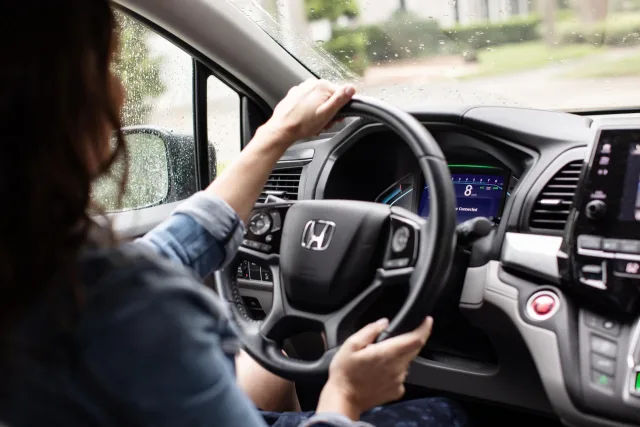

After a C-section, one of the first questions moms ask us is about the infant car seat. You just had major abdominal surgery, you're caring for a newborn, and that seat (with your baby buckled in) is heavy and awkward to carry.
Safe in the Seat is run by a team of Child Passenger Safety Technicians (CPSTs) and real moms, founded by Michelle Pratt, a Nationally Certified CPST. The recovery guidance below comes from trusted medical sources. The car seat advice is where our expertise comes in.
Our take is simple: don't carry the car seat at all during the first 6 to 8 weeks of your recovery. Below, we'll explain why and share how to get through those weeks with as little lifting as possible, even if you're home alone with your baby while your partner is back at work.
When Can You Lift a Car Seat After a C-Section?
Our recommendation: don't lift or carry the infant car seat at all until your healthcare provider clears you, which is usually around 6 to 8 weeks after your C-section. That holds even if you start feeling like yourself sooner.
Here's why. MedlinePlus advises not lifting anything heavier than your baby for the first 6 to 8 weeks. An infant car seat often weighs 6 to 11 pounds or more on its own. Buckle your baby in and you're carrying well over your baby's weight. For example, an 8-pound seat plus a 7-pound newborn comes to about 15 pounds.
Every recovery is different, too. As the Cleveland Clinic points out, each person's healing timeline varies, and complications can mean you need more time. Your provider's guidance always comes first.
The good news? You can still hold, feed, change and snuggle your baby all day long. It's the extra weight of the seat, plus the reaching and twisting that come with it, that we want you to skip while you heal.
Why Is a Car Seat So Hard to Carry After a C-Section?
A C-section is major abdominal surgery. Your incision may look healed on the outside long before the deeper layers underneath have finished healing. A car seat puts strain on exactly those muscles in three ways:
- The weight sits out in front of you. You hold the seat by its handle, away from your body, so your core has to work harder to steady it.
- You reach into the car at an awkward angle. Leaning across the back seat or bending into a door pulls on your abdomen.
- You twist. Clicking a seat into its base or squeezing it into a tight back seat almost always means rotating at the waist.
Now multiply that by every trip: house to car, car to store, store back to car. That's why our tips below focus on cutting trips and taking the seat out of the equation.
Stay Home as Much as You Can
The best thing you can do for your body in these early weeks is rest. Every outing means getting your baby in and out of the car, walking, and carrying, and all of that is work for a healing core. Your provider will also tell you when it's safe to drive again, so you may not be able to get yourself places for a while anyway.
We also know that for a lot of families, a partner heads back to work after a week or two (or sooner). If you'll be home alone with your baby for much of your recovery, these ideas can help you skip trips:
- Get groceries delivered or use curbside pickup, where someone loads the bags for you.
- Use pharmacy delivery or a drive-thru window.
- Stock up before your C-section if it's planned: diapers, wipes, pads, easy meals and pantry staples.
- Save your outings for appointments you can't skip, like your baby's first checkups, and line up a ride for those ahead of time if you can.
- Say yes to help when a friend, neighbor or family member offers to drop off a meal or run an errand.
If staying home feels isolating, that's normal too. A short walk around the house or out to the mailbox is usually encouraged for healing, so ask your provider what's right for you.
Leave the Car Seat in the Car and Lift Only Your Baby
When you do need to go somewhere, keep the infant seat clicked into its base in the car. Carry or wear your baby out to the car, then buckle them in right there. That way you only ever lift your baby, never your baby plus the seat.
When you arrive, unbuckle your baby and carry or wear them inside.
A few quick safety reminders:
- The car seat is for riding, not sleeping. If your baby dozes off in the car, that's okay! Once you're home, move them to a firm, flat surface like a crib or bassinet.
- Buckle the same way every ride. Your baby still needs a snug harness every time, even on a quick trip to the pediatrician.
Babywear Instead of Carrying the Seat
Wearing your baby in a carrier means you carry only your baby's weight, held close to your body instead of out at arm's length, with both hands free. It's our favorite way to get from the car to the door (or around the house) while you heal. Check with your provider before you start.
A few tips for babywearing after a C-section:
- Pick a carrier that stays off your incision. Soft wraps and ring slings have no waistband. If your carrier has one, wear it at your natural waist, above your incision.
- Wear your baby high on your chest, close enough to kiss the top of their head.
- Stand tall. Try not to lean back to balance your baby's weight. Keeping your ribs stacked over your hips takes pressure off your lower belly.
- Make sure you're ready. If standing, walking or light chores still hurt, wait a bit longer. Physical therapist Annie Linville suggests starting with sessions of 5 to 10 minutes and building up from there.
- Follow the TICKS rule every time: Tight, In view at all times, Close enough to kiss, Keep chin off chest, and Supported back.
One important note from your CPST friends: a carrier never replaces the car seat. Your baby always rides buckled into their car seat, every trip.
Planning a C-Section? Consider a Swivel Car Seat
If you know ahead of time that you'll be having a C-section, a swivel (rotating) car seat can make the weeks after a lot easier. The seat turns toward the open car door, so you can harness your baby facing you instead of leaning and twisting into the back seat. Our post on whether swivel car seats are safe covers how they are as safe as non-rotating car seats.
Before every drive, turn the seat back to its rear-facing travel position and make sure it's locked. Each seat has its own lock indicator, so check your manual for what to look for.
Swivel infant car seats worth a look:
- Evenflo Revolve180 LiteMax NXT (any version)
- Maxi-Cosi Peri 180
- Joie Rue LX Spin
- Graco SnugRide Turn & Slide
Since you won't be carrying the seat around anyway for a while, a swivel convertible car seat that fits newborns well is another great option. It stays in the car from day one and grows with your child:
There's no one-size-fits-all pick here. Every seat on this list has passed the same federal crash standards, so the right one is the one that fits your baby, your car and your budget. For reviews and side-by-side comparisons, see our roundup of the best swivel car seats. If you're not sure which one fits your car, Talk to a Tech for one-on-one help from a CPST.
Warning Signs to Watch For After a C-Section
Most moms recover without problems, but it helps to know which symptoms need care right away. This is even more important if you're home alone with your baby during the day. These signs come from the AWHONN POST-BIRTH warning signs, a checklist nurses use to teach new moms.
Call 911 if you have:
- Chest pain
- Trouble breathing or shortness of breath
- A seizure
- Thoughts of hurting yourself or your baby
Call your healthcare provider if you have (and call 911 or go to the ER if you can't reach them):
- Bleeding that soaks through a pad in an hour, or blood clots the size of an egg or bigger
- An incision that isn't healing, or one that's red, swollen or draining
- A red, swollen, warm or painful leg
- A temperature of 100.4°F (38°C) or higher
- A headache that doesn't get better with medicine, or a bad headache with vision changes
Whoever you call, tell them you recently had a baby and when. And if something just feels off, trust that instinct and make the call.
Your Next Step for Low-Lift Car Seat Days
Recovering from a C-section while caring for a newborn is a lot. The plan for these weeks is simple: stay home when you can, leave the car seat in the car, wear your baby and let your body heal. Once your provider clears you to lift the seat, keep it close to your body, bend your knees and turn with your feet instead of twisting.
Want help choosing the right seat for this season? Our Car Seat Finder Quiz walks you through picking a seat that fits your baby, your car and your life, with no overwhelm. And if you'd love our best car seat tips in your inbox, join the Safe in the Seat newsletter.
You've got this, and we've got you.
This post is for education, not medical advice. Always follow your own healthcare provider's instructions for your recovery, your lifting limits and when you're cleared to return to normal activity.