
Car seats aren't a one-time purchase. Most families will go through two to five different seats before their child is ready to ride without one, making them one of the biggest baby gear investments you'll make. That's simply part of raising a growing child. Babies become toddlers, toddlers become preschoolers, and before you know it, you're shopping for a car seat again!
As exciting as those milestones are, deciding when to move to the next car seat isn't always straightforward. Every seat has its own height and weight limits, and knowing how to read them is the key to making safe, confident transitions. In this guide, we'll explain what car seat weight limits mean, where to find them, and how to know when your child has truly outgrown their current seat.
Car Seat Weight Limit: Why It Matters and Where to Find It
Car seat weight limits aren't random numbers. Manufacturers spend countless hours engineering and crash testing every seat to determine the height and weight ranges it can safely protect. Those limits aren't just suggestions. They're an important part of making sure the seat performs as intended in a crash.
Here’s more on why it’s a big deal:
Why Do Car Seats Have Weight Limits?
Reason 1: Harnesses can only protect your child within a specific weight range.
Your child's harness does much more than just hold them in place. In a crash, the straps spread the force of the impact across the strongest parts of your child’s body. (Think shoulders and hips). But the harness can only protect your child safely when you use it within the seat's weight range. Once they exceed that limit, the harness may not protect them as effectively.
Reason 2: The car seat withstands crash forces up to a certain weight.
Manufacturers engineer every car seat and crash test it to protect children up to a specific weight. The heavier a child is, the more force the car seat has to manage during a collision. That's why brands set weight limits. They know the seat can perform as intended up to that maximum weight, but there’s no guarantee beyond it.
Reason 3: Your child's size affects how effectively the car seat fits them.
As your child grows, the way they fit in their car seat changes. Their shoulders get broader, their torso gets longer, and their whole body shape goes from a pudgy toddler to a lanky big kid. Weight limits help ensure the harness, headrest, and shell continue to fit your child the way they're supposed to. A properly fitting car seat is the most important thing to keeping your child protected on every ride.
Note: Remember, you also need to keep an eye on your child’s height. They outgrow their car seat when they reach the weight or height max. Not both. Here’s more on when to transition car seats.

What Are the Weight Limits for Car Seats?
Every car seat comes with its own height and weight limits, so don't rely on general ranges alone. The ranges below reflect what you'll find on most car seats, but always check the labels on your specific car seat and read the owner's instruction manual before deciding whether your child has outgrown it. Manufacturers design, engineer, and crash test every model differently, so the limits vary from one seat to the next.
Infant Car Seat Weight Limit: 22–30 lbs
Most infant car seats have maximum weight limits between 22 and 30 pounds. These seats keep babies rear-facing from birth until they outgrow the carrier. Your child may outgrow the seat because of their weight, height, or head heightso don't focus on the weight limit alone.
If you need help with the transition, read our post 4 Signs Your Baby is Too Big for an Infant Seat.
Rear-Facing Car Seat Weight Limit: 40–50 lbs
Most rear-facing convertible and all-in-one car seats have maximum weight limits between 40 and 50 pounds. Many seats max out at 40 pounds, but every year, more car seats offer extended rear-facing with 50-pound rear-facing limits. (And one specialty model even allows children to stay rear-facing up to 65 pounds!).
The American Academy of Pediatrics, NHTSA, and child passenger safety experts all recommend children ride in a rear-facing car seat for as long as they fit within the seat's height and weight limits. Thankfully, more car seats now offer higher rear-facing weight limits, making that recommendation easier for families to follow.
This transition is often the hardest for parents. Here’s our guide on when to switch to a forward-facing car seat, so you know for sure when it’s the right time!
Forward-Facing Car Seat Weight Limit: 50–65 lbs
Most forward-facing harnessed car seats have maximum weight limits between 50 and 65 pounds. The five-point harness keeps your child securely positioned and helps manage crash forces during a collision. Once your child reaches the forward-facing height or weight limit for their seat, it's time to transition to a booster.
Think your kids are ready for the next step? Read our booster seat readiness guide to make sure.
Booster Seat Weight Limit: 100–120 lbs
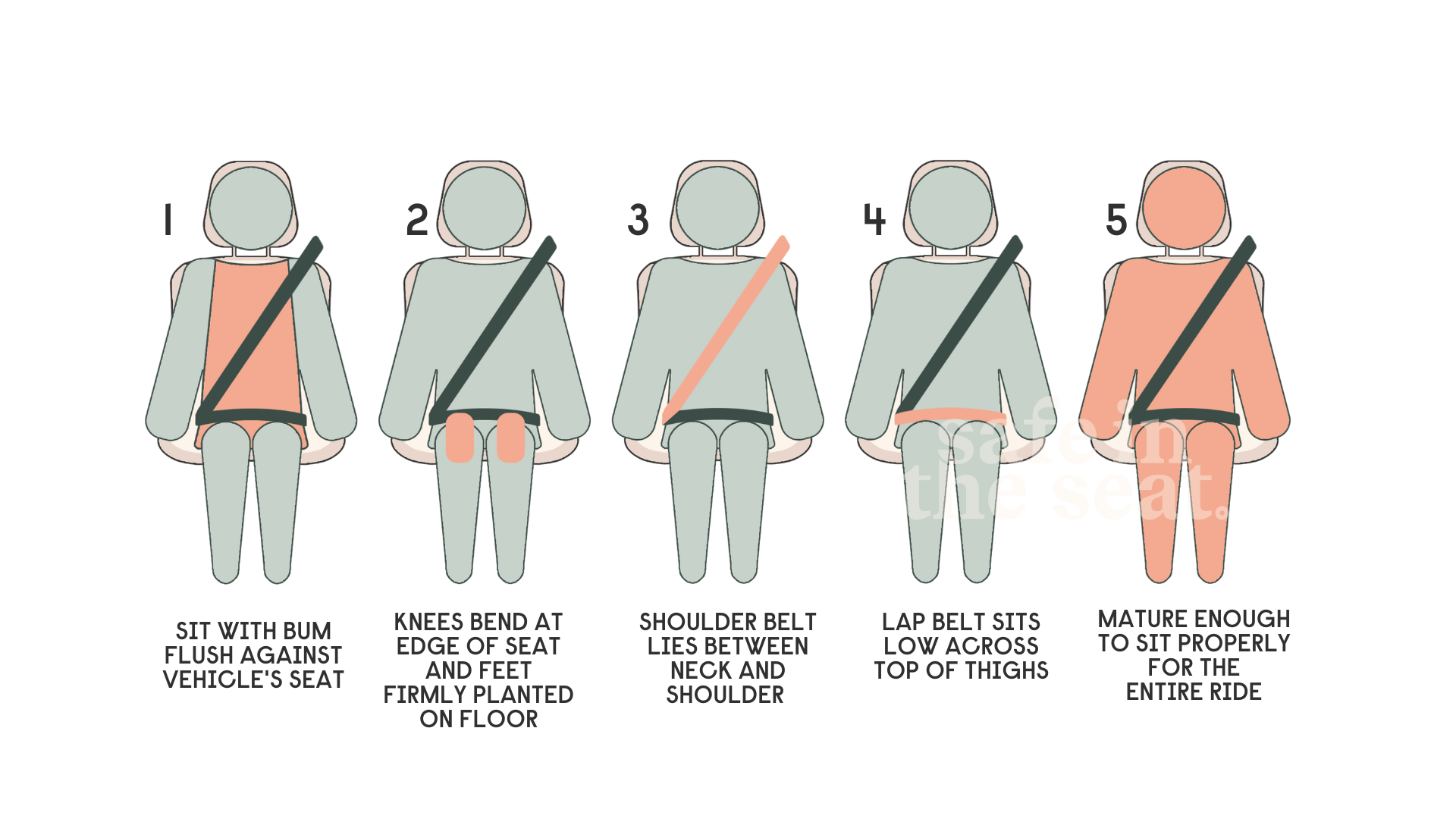
Most booster seats have maximum weight limits between 100 and 120 pounds. Instead of using a harness, a belt positioning booster raises your child up. This way, both the vehicle seat belt and the lap and shoulder belt fit correctly. The lap belt should lie low across the hips, while the shoulder belt should cross the middle of the chest and shoulder.
Whether your child uses a high-back or backless booster, they shouldn't move out of a booster just because they reach a certain birthday or weight. They need to pass the 5-step booster seat graduation test, which is more about proportions than height or weight. This will usually be around 10 to 12 years of age.
How to Tell Weight Limits on Car Seats
Check the labels on your car seat.
The easiest way to find your car seat's weight limit is to look at the labels attached to the seat itself. Manufacturers place this information on the side of the shell. Usually, height limits and other important safety information are there, too. If you can't find the label, the owner's manual will list the same details.
Read your owner's manual.
Every car seat is different, so don't rely on general weight ranges or even generic advice. Your owner's manual explains exactly when your child can use the seat, when they've outgrown it, and what other limits you need to watch for. If you've misplaced the manual, you can usually download a copy from the manufacturer's website.
Check both the weight and height limits.
Many parents focus on weight, but height matters just as much. In fact, some children outgrow their car seat by height before they get anywhere near that max height limit. So, when considering moving up, make sure your child still falls within both limits and meets any additional fit requirements listed by the manufacturer.
Recheck the limits as your child grows.
Your child outgrows their car seat as soon as they exceed either the height limit or the weight limit, whichever comes first. That's why it's important to check both before deciding whether it's time to move to the next stage.
But there's one more thing to keep in mind: fit. As your child grows, their proportions change, and every type of car seat has a few extra guidelines beyond height and weight. For example, most infant seats require at least one inch of shell above your baby's head, while forward-facing seats typically require your child's ears to stay below the top of the seat or headrest.
That means if your child has a long torso, they could reach one of these limits even if still below the height and weight limits. And yes, we understand this can sound a bit confusing, but reading your manual will give you the best clarity! Of course, you can also book a call with one of our expert CPSTs to check fit, answer questions, and give you much-needed peace of mind.
Don't use age alone to decide when to switch.
Age can give you a general idea of when children move from one stage to the next, but it should never make the decision for you. Two children of the same age can have very different heights and weights. Instead of watching the calendar, follow your car seat's height and weight limits to know when it's truly time to make the switch.
Tip: Turn every well-child visit into a car seat check! Since your child is already being weighed and measured, take those updated numbers home and compare them with your car seat's height and weight limits. It's a simple habit that helps ensure your child is still riding in the right seat for their size.
Download Our Free Safety Stickers Here
Car seat weight limits aren't suggestions; they're safety requirements.
Car seat weight limits may seem like a small detail, but they play a big role in your child's seat safety. By checking your child's height, weight, and overall fit regularly, you can feel confident they're riding in the right seat for every stage. And if you're ever unsure, remember Safe in the Seat is always here to help!
Think you might need a new car seat? Use our Car Seat Finder Tool to find the perfect fit for your child, your car, your budget, and your lifestyle. Additionally, our Convertible Buying Kit can help you narrow down your options and streamline the process. And in case you forgot, infant and forward-facing booster seat kits are launching soon! Join the Buying Kit Waitlist to be reminded of this release. Also, because car seat safety never stops, join the Safe in the Seat newsletter for helpful advice delivered right to your inbox!