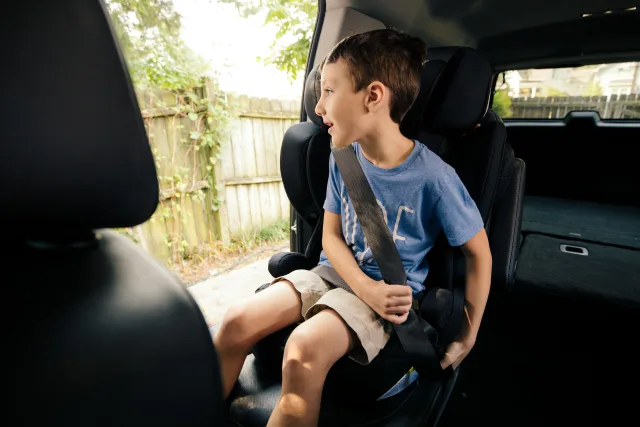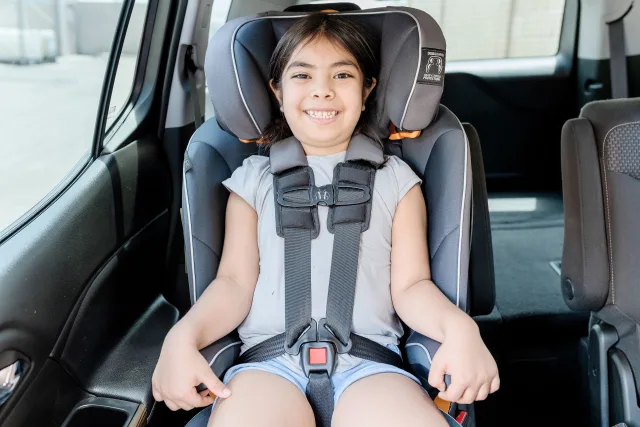

Every parent knows their child needs a car seat when riding in a vehicle. However, it’s not as simple as picking a seat, installing it, and driving off. For car seats to be effective, they must be used properly based on your child’s age, size, and build! Even your vehicle plays a role in car seat safety!
That may seem like a lot to digest, but all of this information is essential to protect your child all the way through their car seat years. This is why we created Safe in the Seat to be a trusted source of car seat safety information for parents!
The National Highway Traffic Safety Administration (NHTSA) and the American Academy of Pediatrics (AAP) recommend that you keep your child rear-facing for as long as possible.
All that being said, there is a safe time to turn front-facing, but when is it? The answer to that question isn’t defined by an age, but instead a few key factors. That’s what we’ll discuss today! Here’s when it’s time to make that move from a rear-facing position to a front-facing position!
When to Switch from Rear-Facing to Forward-Facing
When they reach the weight limits.
The car seat manufacturer has the maximum weight limitations right there in your manual. Read that to determine the highest weight your child can be before safely turning forward-facing. Usually, these limits are between 40-50 lbs! If your child hits this limit, it’s time to turn the seat around (even if they haven’t reached the height max yet.)
OR
When they reach the height limits.
The manual will also note the height limits, which are usually between 40-50 inches. Just like the weight maximums, if they reach the height limit, but not the weight limit, it’s still time to turn around.
OR
When their head is less than one inch from the top of the seat.
Proportions are a big deal when it comes to car seat fit. A child can be below the 40-50 inch height limit but still be too tall for rear-facing. How? They have a long torso and shorter legs. If your child has a lot of height in their torso and there is less than 1 inch of clearance from the top of the car seat, it’s time to switch to a front-facing position. Again, this is true even if they haven’t reached the height and weight limits in the manual! Not every seat has the one-inch rule, so double-check your manual, but this is the case with most rear-facing seats in the US and Canadian markets.
OR
When the child meets the minimum weight, height, and age limit for forward-facing in the seat you want to use. Make sure you are also following your state laws.
Statistically we know that a child who is harnessed correctly in a correctly installed car seat is very safe. Your child must meet the height and weight minimums to forward face and some seats also have a minimum age limit. In addition to the child meeting all of the minimums listed on the seat, they also must be within the minimums for the state law. Don't forget that top tether as it's a huge safety factor for forward-facing kids!
Keep in mind that safety is a spectrum. We often refer to it as the safe/safer/safest framework.
Safest would be keeping your child rear-facing in their convertible car seat until they reach one of the maximum limits (regardless of whether they are aged 2, 3, 4, 5, 6, etc).
Safer would be keeping them rear-facing longer than you have to.
Safe would be keeping the child rear-facing until they meet all of the forward-facing minimums for the seat you want to use (age, weight, and height) AND you are following your state's laws.
How to Transition to Forward-Facing
Step 1: Uninstall the car seat.
When you know it’s safe to turn the seat forward-facing, the first thing you need to do is uninstall the seat completely. (Unless you have a swivel seat that allows you to spin it around and make just a few adjustments.) This is a good time to safely clean your car seats and your vehicle seats, too!
Step 2: Check the fit with the headrests adjust if necessary.
If your vehicle has headrests that push the car seat forward, you may need to adjust them or remove them. If you can’t, you’ll need to move it to a different spot in your car or consider a different car seat if your car seat manual states that the vehicle headrest cannot push the car seat's headrest forward.
Step 3: Install using the seatbelt and the top tether.
Now, reinstall the car seat using the belt path. (If your child has reached the rear-facing car seat’s maximum height and weight limits, they’re probably big for the lower anchor system.) Make sure the seat belt is tight and locked.
Remember that you’ll also need to attach the top tether, which was likely not used during the rear-facing mode. It’s important for this position, so check your vehicle manual to find where the top tether anchors are in your vehicle and attach and tighten the tether accordingly.
Step 4: Determine the correct recline.
The recline of many car seats changes as your child grows. Check the manual and use the indicators on the car seat to determine the right recline based on your child’s weight and height. If you’re worried about installing your seat correctly on your own, book a car seat consultation, and one of our CPSTs will help you out!
Step 5: Fit your child and change the strap placement.
Once your seat is installed correctly, fit your child! Place them in the car seat and adjust the strap placement. When a child rides rear-facing, the shoulder straps are supposed to be at or just below the shoulders. Now, for front-facing, the straps should be at or just above the shoulders.
Best Car Seats for Extended Rear-Facing
Clek Foonf
- Max rear-facing weight: 50 lbs
- Max rear-facing height: 43 in
- Key feature: fits 3-across, flame-retardant-free options, anti-rebound bar, rear-facing tether option, infant-friendly
Clek Fllo
- Max rear-facing weight: 50 lbs
- Max rear-facing height: 43 in
- Key feature: fits 3-across, flame-retardant-free options, anti-rebound bar, rear-facing tether option, infant-friendly
Evenflo Revolve360 Extend
- Max rear-facing weight: 50 lbs
- Max rear-facing height: 48 in
- Key feature: 360 swivel, easy to install, flame-retardant free, anti-rebound bar
Britax One4Life
- Max rear-facing weight: 50 lbs
- Max rear-facing height: 49 in
- Key feature: easy to install, flame-retardant free, washable fabric, anti-rebound bar
Graco Extend2Fit 2-in-1 or Graco Extend2Fit 3-in-1
- Max rear-facing weight: 50 lbs
- Max rear-facing height: 49 in
- Key feature: leg panel for extended rear-facing, anti-rebound bar option
Nuna RAVA Next
- Max rear-facing weight: 50 lbs
- Max rear-facing height: 49 in
- Key feature: flame-retardant free, breathable fabric
Axkid One3
- Max rear-facing weight: 65 lbs
- Max rear-facing height: 49 in
- Key feature: rigid lower anchors, load leg, anti-rebound bar
Know when the time is right to move your child front-facing.
Safety is everything when your child is in a vehicle. It’s not enough to just have a car seat you need to know how to use it. For all the essential safety information, car seat recommendations, and traveling tips, head to the Safe in the Seat blog! We have the information you need to keep your family safe in their seats every ride.
Here are other posts you may find useful on this topic:
- When to Switch from an Infant Car Seat
- Common Car Seat Mistakes
- How to Choose the Best Car Seat for Your Child
As an Amazon Associate, Safe in the Seat earns from qualifying purchases.