You finally made it to the booster stage. No more threading harness straps, no more chest-clip battles, no more car seat installations when it’s 100 degrees outside. Just have your kid hop in and buckle up, right?
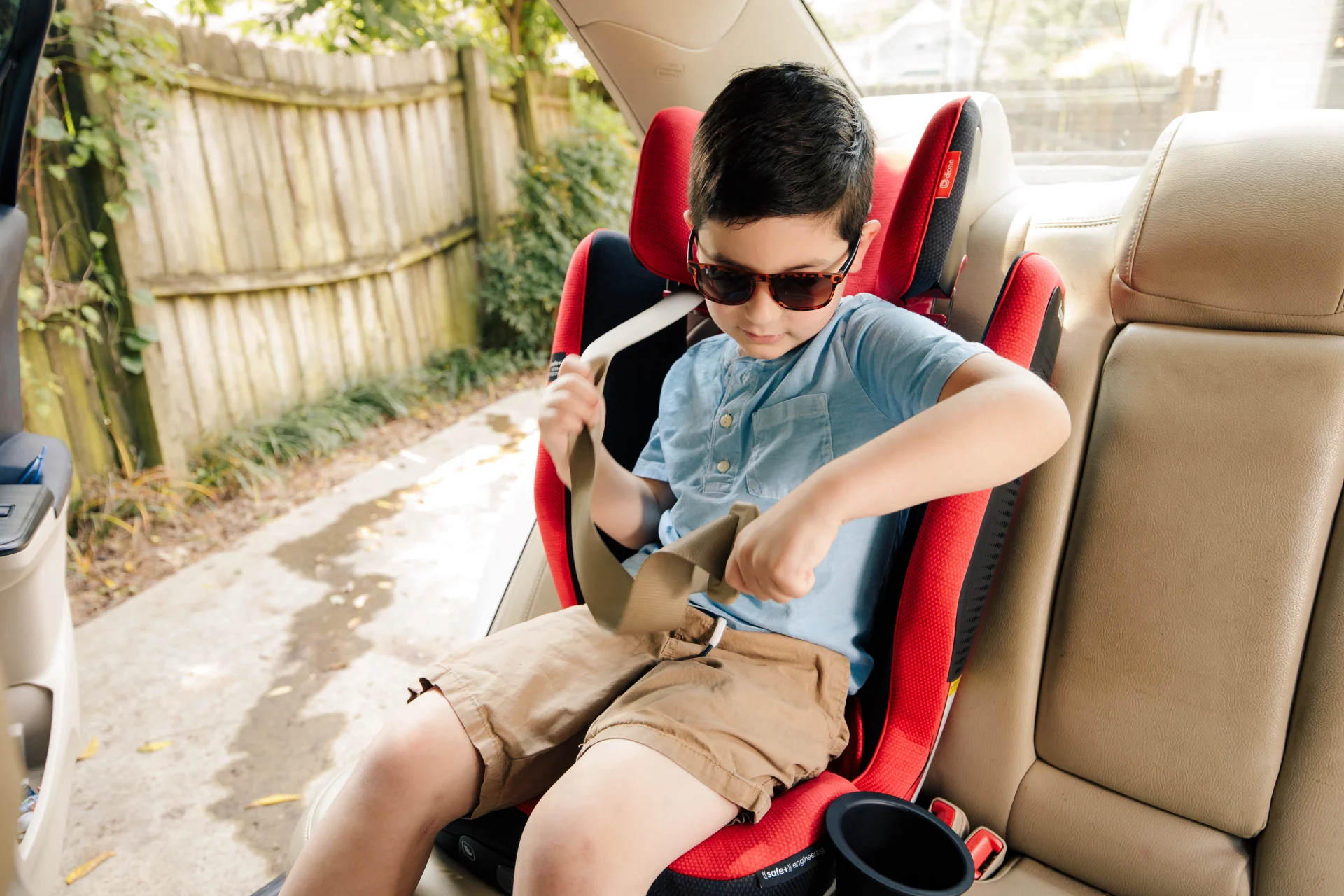
And then it happens. You're standing in a parking lot, everyone's buckled except the one kid you were sure was finally self-sufficient, and they're grunting and wrestling and stabbing the buckle tongue at a slot they can't even see. You reach over to help and realize you can barely find it either. The buckle has disappeared somewhere between the booster and the seat cushion, and you're both frustrated.
If your child can't buckle their booster seat and it's making you a little crazy, take a breath. You didn't do anything wrong. This is one of those car seat surprises nobody warns you about: the harness-to-booster transition can actually make buckling harder before it gets easier. So let's talk about why a booster seat is hard to buckle, what to look for, and the real fixes, because there are several, and no, a seat belt extender is not one of them.
Child Can't Buckle Their Booster Seat?
Why is buckling a booster seat suddenly so hard?
When your child was harnessed, the buckle was in the same spot every single time, built right into the seat between their legs. Muscle memory did most of the work.
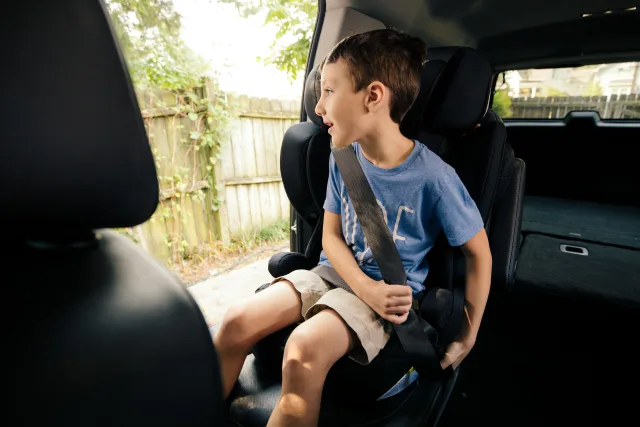
A booster flips the whole equation. Now your child is buckling with the vehicle's seat belt, which means they have to click the belt into the buckle, that stalk down in the crease of the vehicle seat, often half-swallowed by the booster itself. A few things tend to gang up on you here:
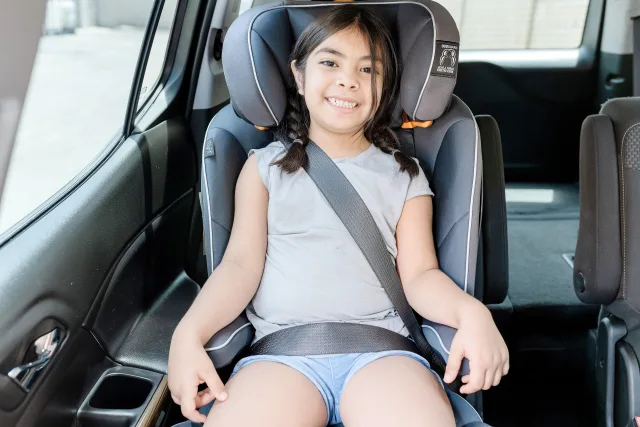
- Boosters take up space. Plenty of highback boosters are chunkier than the harnessed seat your child just graduated from, and all that bulk crowds the exact space they need to reach the buckle.
- Vehicle buckles are all over the map. Some cars have long, floppy buckle stalks that tip over sideways. Others have short, stiff buckles that sit low and rigid, right where a wide booster wants to plant itself.
- Little arms are still little. A kid who just moved up to a booster is often on the younger, shorter-armed side, and reaching down and around a bulky seat to a buried buckle can be challenging for a five- or six-year-old.
None of this means the booster is unsafe or that your kid isn't ready. It usually just means the fit between this booster, this buckle, and this child needs a little tuning. And that is fixable.
The one "fix" to skip: seat belt extenders
I have to start here, because a seat belt extender is the first thing the internet will tell you to buy for a booster. But it's the one solution I need you to walk right past.
Believe me, I wish extenders were the answer. It would make everything so simple. But an extender isn't a safe fix for a child in a booster. They are not tested with boosters, and they alter the seat belt’s geometry. The only appropriate use for an extender is an adult whose body doesn't fit the vehicle's belt, and even then it should come straight from the vehicle's manufacturer.
I know that's not the shortcut anyone wants to hear. But every idea below is safer and actually solves the buckling problem, so let's get into the ones that work.
How to fix a booster seat that's hard to buckle
1. Take a look at how wide your booster is
Before you buy a single thing, size up what you already own. Is your current booster on the wider, bulkier side? Sit your child in it and just watch them try to buckle. If the shell or the armrests are blocking their hand from getting down to the belt, width is very likely your culprit, especially paired with one of those short, unforgiving buckle stalks that won't budge.
2. Try a narrower booster seat
A narrow booster seat frees up the room your child needs to get a hand down to the buckle.
Choosing a booster without armrests can help too, since the armrest is often the thing standing between your kid's hand and the belt. A few slim, easy-to-buckle high-back boosters parents swear by: the Peg Perego Viaggio Flex, and the Axkid Up (which gets even slimmer once you pop the side wings off for kids around 49 inches and taller). The Baby Trend Koa is a more affordable slim high-back booster option.
If the child is still having a hard time buckling, you should consider a narrow backless booster like Diono Solana Lite or Bubblebum, or maybe even a Ride Safer Travel Vest.
3. Rethink where the booster sits in your car
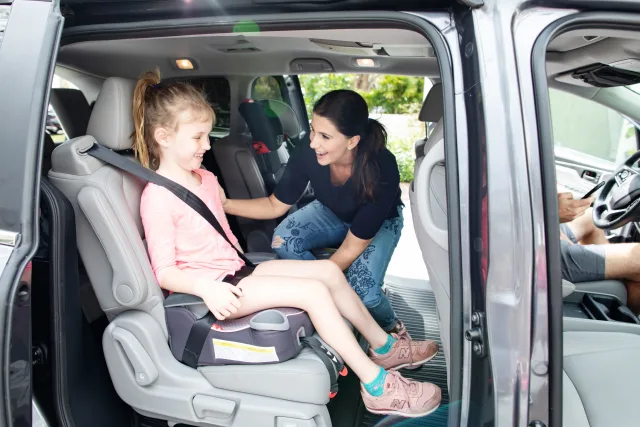
Belt angles and seat dimensions can shift from one row or seating spot to the next. Sometimes just relocating the booster (center to outboard, second row to third, or swapping which kid rides where) is the entire fix, and it doesn't cost you a dime. Before you buy anything new, test every seating position you've got.
4. Change the technique, not just the gear
A handful of small tricks solve this for a lot of families:
- Buckle it first, then load the kid. Can your child scoot in and out of a booster that's already buckled? For some kids, this works well. You click the belt once, and they just slide right in and out as needed.
- Buckle high, then tuck it down. Have your child fasten the belt up over the top of the armrest, then slide it down underneath into place. Sometimes easier than fishing for a buried buckle from below.
5. Check whether a neighboring seat is stealing the space
If you're running a 3-across setup or there's another car seat installed right next to the booster, that adjacent seat might be the real space hog. Swapping in a slimmer seat next door can open up just enough room for your booster rider to buckle themselves. Sometimes the seat you're fighting with isn't the problem at all.
6. Is a standalone booster better than an all-in-one’s booster mode?
If your child is riding in the booster mode of an all-in-one or combination car seat, keep in mind those seats tend to be bulkier than a dedicated, standalone booster. A leaner, purpose-built booster is often noticeably easier to buckle than the booster setting on a big convertible.
8. Would keeping them harnessed a little longer actually be easier?
Here's the twist a lot of parents don't see coming: if your child is on the younger or smaller side and still fits a harness, staying harnessed might genuinely be the easier path, not just the "safe for longer" one. In a cramped 3-across especially, plenty of kids can work a harness buckle on their own more independently than they can wrangle a vehicle seat belt around a bulky booster.
There's no gold star for rushing into a booster. A harnessed seat with generous height and weight limits, like the Chicco MyFit, which lasts a good long while, can make daily life easier.
The bottom line
The move from harness to booster is supposed to make your life easier, and it will. But if you're stuck in that awkward in-between where buckling somehow got harder, it's not a sign you chose wrong or that your kid is behind. Nine times out of ten it comes down to the specific combination of booster, buckle, and body in your particular car. Adjust one of those three and the whole thing tends to fall into place.
So before you order an extender out of pure exhaustion (I see you), work down this list first: check the width, move to a slimmer or reclining seat, try a different seating position, tweak the technique, or keep a younger kiddo harnessed a bit longer. One of these is almost certainly your answer.
And you don't have to figure out which one on your own. If you want help matching the right seat to your exact car and your exact kid instead of guessing, googling, and getting five conflicting answers, that's exactly what we do inside Safe in the Seat: stage-by-stage guidance, real answers, zero judgment. You've got this, mama. And if you don't quite feel like you do yet, let us help you get there.
As an Amazon Associate, Safe in the Seat earns from qualifying purchases.