Transitioning from a harnessed seat to a booster seat is a big milestone in any child’s and parent’s life. Not only does this change represent a new stage in the car seat journey, but it also marks an important step toward greater independence and responsibility. Unlike a harnessed seat that does much of the work for them, a booster seat requires children to sit correctly, leave the seat belt untouched, and resist the urge to slouch throughout the ride.
Unfortunately, many parents underestimate how important accurate booster seat use really is. Because booster seats look simple compared to traditional car seats, it's easy to assume there's less that can go wrong. In reality, however, proper booster seat readiness, fit, and everyday use are essential for keeping children protected in a crash. A booster seat can only do its job when both the seat and the child are ready.
In this guide, we'll walk you through exactly how to fit a booster seat correctly so your child stays as safe as possible on every trip. Before we get into the fitting process, let's cover a few important booster seat basics:
How to Fit a Booster Seat: A Parent's Safety Guide
Proper booster seat use reduces the risk of serious injury by 45% for kids ages 4-8 compared to a seat belt alone. Yet many parents transition their children too early, don’t ensure they sit correctly, or skip the booster phase altogether. These common mistakes can put kids at risk for injuries that are often preventable with the right safety seat.
So, if you're here looking for booster seat guidance, thank you. You're already doing what great parents do: taking the time to learn before making the switch. Having the right information not only helps keep your child safe but also gives you confidence that you're making the best decisions for every ride.
What Is a Booster Seat?
A booster seat is a child restraint system that raises children up so the vehicle's seat belt fits correctly. Unlike the 5-point harnessed car seats you're used to, a booster seat doesn't restrain a child on its own. Instead, it uses the lap and shoulder belts already in a vehicle, positioning them across the strongest parts of a child's body: the hips and shoulder. This ensures proper distribution of crash forces and reduces the risk of injury if you were ever in a crash.
There are two types of booster seats:
- High-Back Booster Seat: A high-back booster seat has back and head support to keep the child and belts in position.
- Backless Booster Seat: A backless booster seat doesn’t have a back and simply raises a child to the seat belt’s level. It doesn’t have any additional support for a child’s head or body to keep them in place.
Though many think these are an either-or situation, they really represent two distinct stages of the car seat journey. First, your child should ride in a high-back booster seat since it provides the support younger children need to stay safe when transitioning out of a harnessed seat.
Then, once your child has reached the height or weight limits of their high-back booster, it's time to move to a backless booster seat. By that point, they should be mature enough to sit correctly throughout the trip.
For more details, here’s our breakdown of a high-back booster vs. backless booster.
When to Switch to Booster Seat
It’s time to switch to a high-back booster once your child has completely maxed out the height or weight limits on your front-facing car seat. This is usually around 5-12 years old, 40 lbs, and 43.3 inches tall. However, your child must also be mature enough to handle the responsibility that comes with a high-back booster. If they’re not, it may be time to look for a forward-facing seat with higher limits, like the Chicco MyFit. Beyond this, you can also meet with a CPST for personalized guidance.
Here are the requirements for transitioning to a high-back booster:
- Reached at least 5–6 years old, when possible
- Maxed out the height or weight limits of their forward-facing car seat
- Can sit upright for the entire trip without slouching or leaning
- Can keep their back against the vehicle seat and their bottom all the way back in the booster seat
- Keeps the seat belt properly positioned at all times
- Does not place the shoulder belt behind their back or under their arm
- Does not unbuckle without permission
- Can remain seated correctly even when sleeping (or rarely sleeps in the car)
Note: The points above are safety recommendations, not laws. Legal requirements are not the same as best practices, so we should always follow what the research says. The general consensus is to keep children in each car seat phase for as long as possible, waiting until they reach the height, weight, or fit limits before moving to the next stage. The laws on booster seats represent the bare minimums, not the safest practices.
How to Fit Booster Seat
Step One: Place the booster seat flat on the vehicle seat.
Start by placing the booster seat in your desired back seat. It doesn’t matter where you put it as long as it’s not in the front seat and not bracing against any other car seat.
Step Two: Adjust or remove the vehicle headrest if needed.
If you’re in a high-back booster, you’ll likely need to remove the headrests or adjust them in a way that allows the booster to sit flat across the back of the seat. With this in mind, some vehicles don’t allow you to remove or adjust the headrests. In this case, you’ll have to put the booster somewhere else or grab a booster that’s compatible with non-removable headrests.
All that said, backless boosters actually need the headrests. So, if you're using a backless booster, make sure the vehicle headrest extends at least to the top of your child's ears. This helps protect their head and neck in a crash.
Step Three: Attach the LATCH connectors to the lower anchors (if applicable).
Some car seats come with LATCH, which connects a booster directly to the vehicle seat. This prevents the booster from flying around the car as a dangerous projectile during a collision. It’s a small feature, but it can make a big difference when it comes to safety.
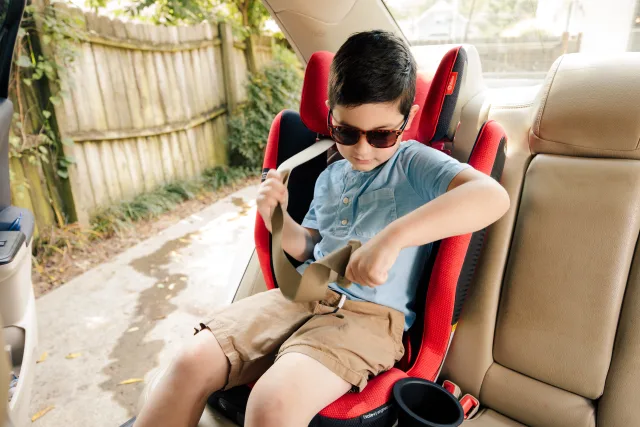
Step Four: Position your child fully in the booster seat.
Finally, have your child get into the seat. When they do this, make sure their bottom is all the way to the back of the seat. Additionally, check that the headrest reaches the top of their ears (if in a backless seat).
Step Five: Buckle the lap and shoulder belt.
Next, route the seat belt across your child and buckle it as normal. Make sure the belt isn't twisted and that both the lap and shoulder portions are lying flat against your child's body.
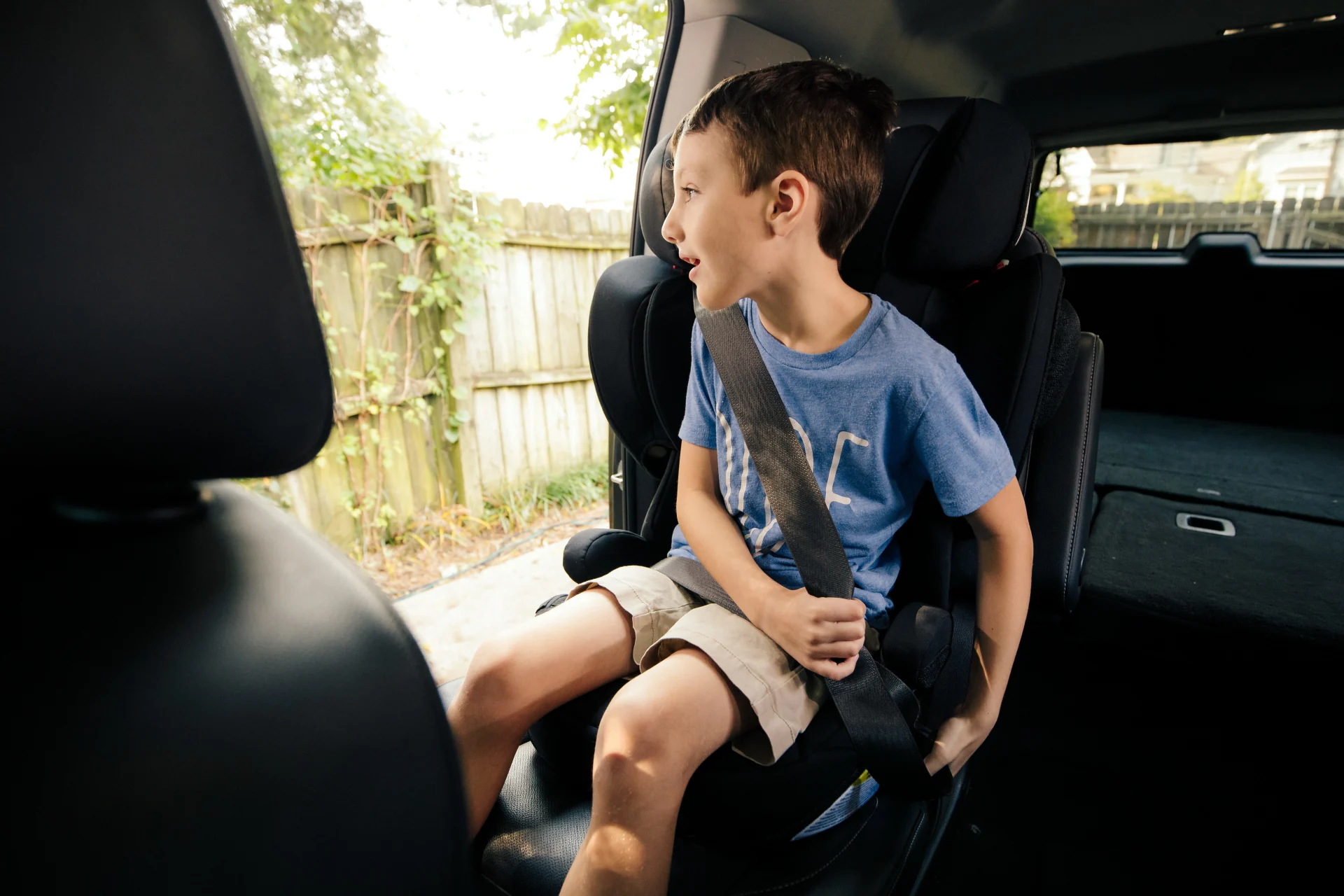
Step Six: Position the lap belt low across the hips and upper thighs.
The lap belt should rest low and snug across the tops of your child's thighs, touching the hips. It should never ride up onto the stomach. That can increase the risk of abdominal injuries in a crash.
Step Seven: Position the shoulder belt across the center of the chest and shoulder.
The shoulder belt should cross the middle of your child's chest and rest comfortably between the neck and the edge of the shoulder. It should never sit against the neck, behind the back, or under the arm.
Step Eight: Adjust the belt guide if you’re using a high-back booster.
All high-back boosters (and many backless options) include a shoulder belt guide that helps position the seat belt correctly. Adjust the guide until the shoulder belt sits centered across your child's shoulder and chest.
Step Nine: Check the fit before every trip.
You’re all set! Just remember to confirm that your child buckles and positions correctly every ride. Of course, also watch out for slouching, sleeping, or anything else that could impact seat belt fit while you drive.
A booster seat is simple, but proper use is essential for safety.
A properly fitted booster seat is one of the simplest ways to protect your child as they grow. While the transition out of a harnessed car seat is exciting, don’t rush it. Taking the time to ensure your child is truly ready and that their booster seat fits properly helps set them up for years of safe travel. Here's to more independence, more confidence, and plenty of safe miles ahead.