There’s a lot of planning that goes into flying with kids. You can’t just take off with a backpack and a boarding pass and figure it out as you go! Family travel takes a lot of preparation, packing, and thinking ahead. And naturally, the most challenging part of the trip is often just getting there, especially if you’re flying.
One of the biggest decisions you'll need to make is whether to bring a car seat onto the airplane for your child. While many families choose to hold young children on their laps, that's actually not the safest (or even the most convenient) way to travel. Yes, dragging a car seat through the airport, carrying it onto the plane, and installing it at your seat may sound like a hassle. But it's actually much easier than most parents think.
The key is knowing what to expect before you board, and that’s what we’re covering below. In this guide, we’re explaining what you need to know about flying with kids. We’ll discuss whether you can travel with a car seat, installation methods, and the best car seats for travel. With the right guidance, you can enjoy greater peace of mind from takeoff to landing.
Flying with Kids: Car Seat Guide for Safe and Stress-Free Travel
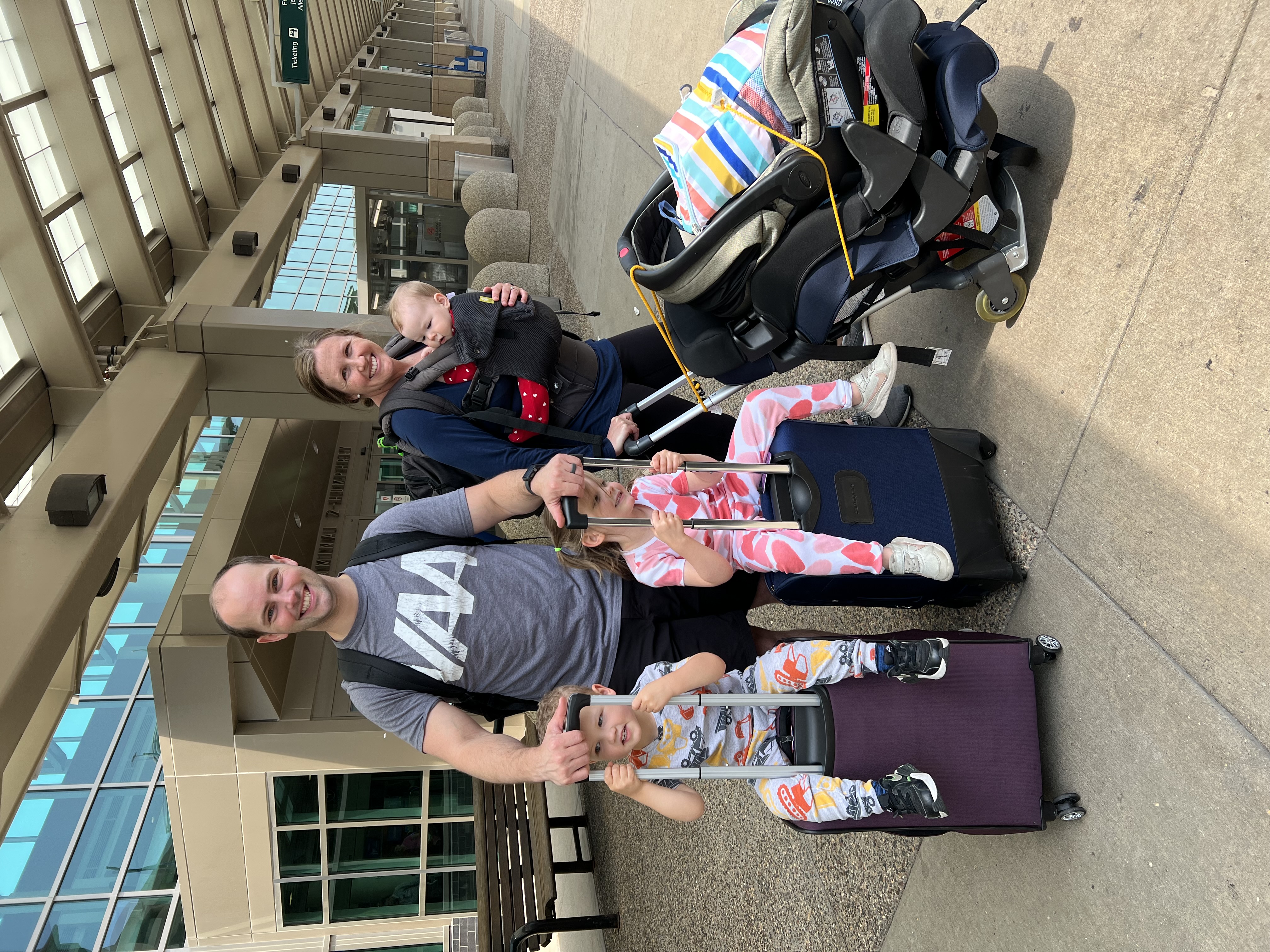
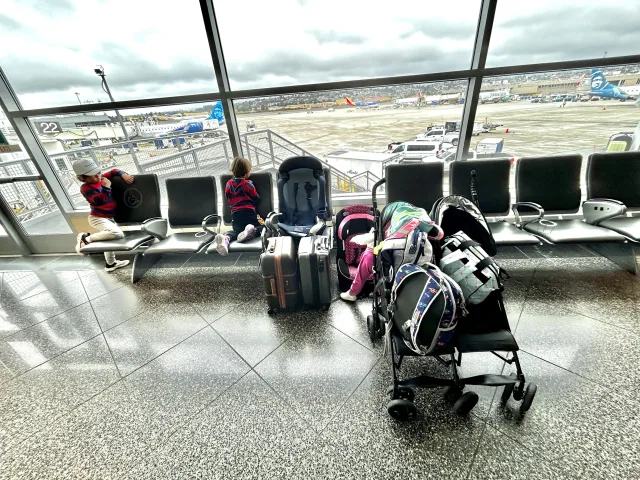
It’s not uncommon to feel like it’s easier to leave the car seat at home and sit your child in your lap during flights. However, you’ll still need a car seat once you arrive. In most cases, many families still prefer to travel with their own because they know its history and how to use it.
The challenge is that if you bring your own but don’t use it on the plane, you’ll likely need to gate check it. Or, if you decide not to bring it, you’re left with one option: renting a car seat at your destination. Though both of these options may sound more convenient, they come with risks.
Airlines don't always handle luggage gently. Baggage handlers may toss your car seat onto conveyor belts, load it into cargo holds, or stack heavy luggage on top of it. It can be broken or even lost.
Renting a car seat isn't a good solution either. Rental companies often have limited inventory, making it difficult to find a seat that's appropriate for your child's age and size. Plus, they're rarely cleaned, stored, or inspected properly. This means car seats may have damage that could compromise the restraint’s performance in a collision.
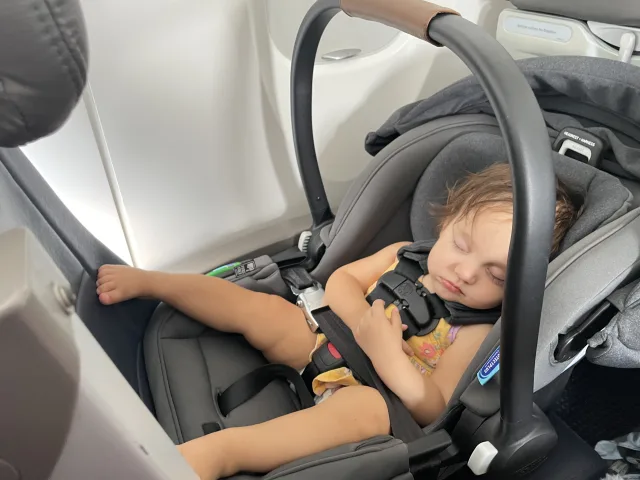
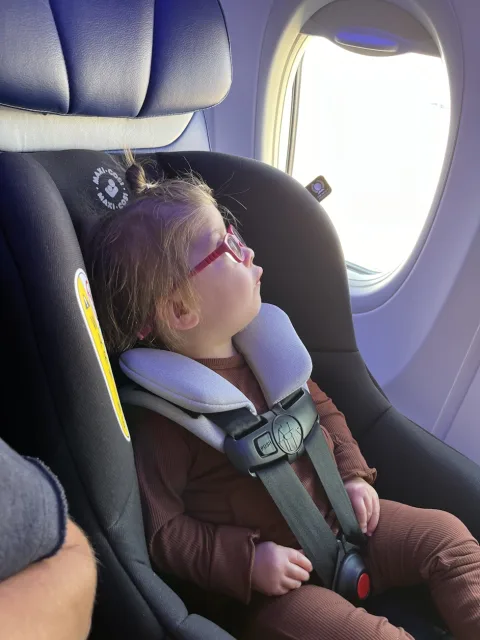
And perhaps most importantly, your child is simply safer and more comfortable in their own familiar car seat! Unexpected turbulence and rough landings can happen on any flight, and a properly installed, FAA-approved car seat helps keep young children securely restrained.
So, let's walk through everything you need to know about bringing a car seat on a plane, including why it matters and exactly how to install one:
Do Kids Need a Car Seat to Fly?
Technically, no, there isn't a rule requiring children under a certain age to use a car seat on an airplane. However, the Federal Aviation Administration (FAA) recommends using a child's safety seat for children whenever possible. They're not the only ones, either. Certified Child Passenger Safety Technicians (CPSTs) and every major pediatric safety organization recommend it too. It’s just safer in every way!
There's also a practical benefit. Most parents find their children ride better (and sleep more) in their familiar car seat. And honestly, which sounds easier: trying to entertain a squirmy one-year-old on your lap for a three-hour flight or having them safely harnessed in a seat they already know?
For most families, bringing the car seat is the clear winner for convenient and safe airplane travel.
Can You Take a Car Seat on a Plane?
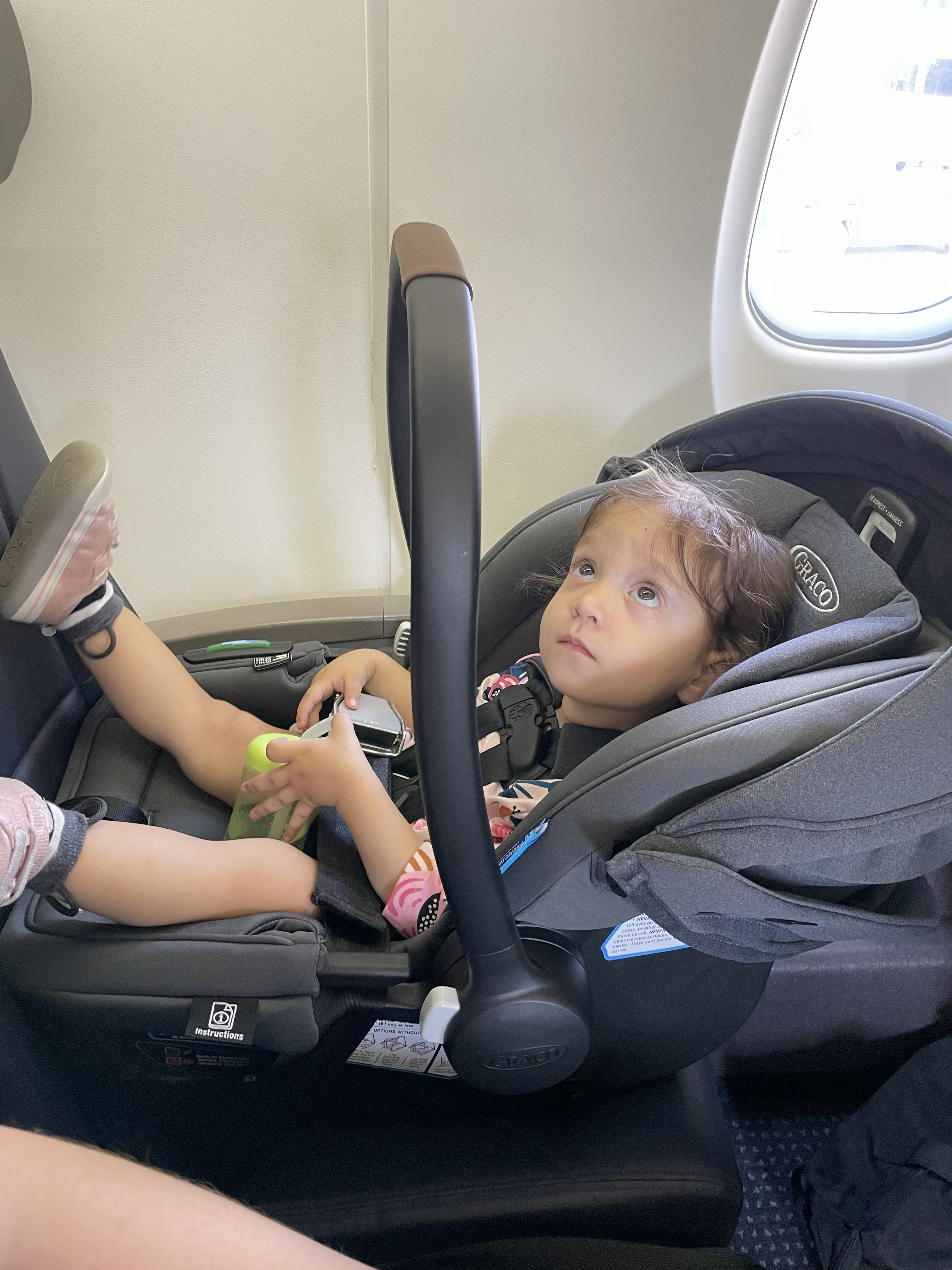
Yes! You can bring and install any FAA-approved car seat on an airplane. While most infant car seats, convertible car seats, and forward-facing car seats meet FAA requirements, a few don't. So, always check before you travel. Look for the FAA certification label on the side or bottom of your car seat.
That said, booster seats are not FAA-approved. Booster seats function differently than a car seat, and they have no added safety benefit for kids. However, we still don’t recommend you gate check your booster due to the risk of damage. Instead, store it in the overhead bin or pack a foldable booster seat or inflatable booster seat in your carry-on.
How to Install Car Seat on a Plane
Step One: Consider buying a dedicated travel car seat.
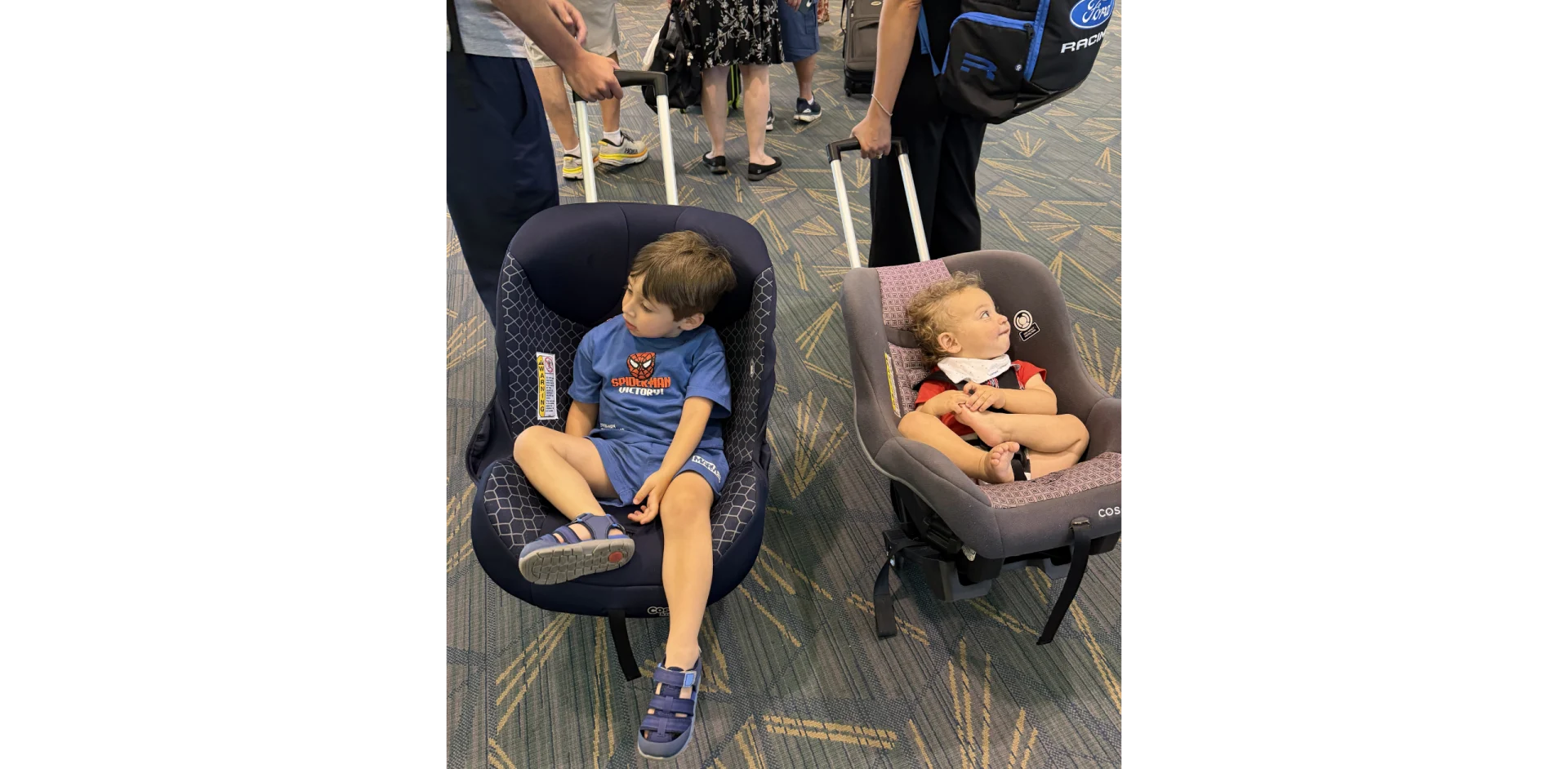
If you fly often, a lightweight travel car seat can make the entire process much easier. These models are typically easier to carry through the airport, maneuver down the airplane aisle, and transport once you reach your destination. Of course, just make sure the seat is FAA-approved before you travel. Here are some of the best car seats for airplane travel.
Step Two: Try booking a window seat (and never choose the aisle).
Book a window seat. This gives your child more room and keeps the car seat out of the way of other passengers. Additionally, it’s important to know airlines don't allow car seats to block the aisle. So, you can't install one in an aisle seat (or an exit row, of course). A middle seat may also work if you have another child by the window.
Step Three: Take a car seat air travel course.
Flying with a car seat doesn't have to feel overwhelming. Before your trip, consider taking Safe in the Sky, our comprehensive air travel course for families. You'll learn how to choose the best seat on the plane, navigate TSA with a car seat, install your child's seat correctly, avoid common travel mistakes, and confidently handle everything from boarding to baggage claim. A little preparation before your flight can make travel day significantly smoother.
Step Four: Position the car seat at the correct angle.
Position the car seat correctly for your child. Keep rear-facing seats rear-facing and forward-facing seats forward-facing. Airplane seats are more upright than vehicle seats, so you may not get the perfect recline angle. Do your best, but it’s okay if that bubble indicator is a little off. For young infants, just make sure their head doesn't slump forward in a way that could restrict their airway.
Step Five: Locate the correct belt path.
Find the belt path that matches the direction your car seat is facing. Infant carriers use the built-in belt guides, while convertible seats typically have separate rear-facing and forward-facing belt paths. Check the labels on your car seat if you're unsure which one to use, and pull back the seat cover if you need better access. Using the correct belt path is essential for a secure installation.
Step Six: Route and buckle the airplane lap belt.
Thread the airplane lap belt through the correct belt path, making sure it lies flat and isn't twisted. Feed the belt all the way through until it comes out the other side of the car seat, then buckle it securely. Double-check that the buckle is fully engaged before moving on to tightening the belt.
Step Seven: Cushion the buckle (if you have an open belt path).
Most car seats have an open belt path, which can leave the airplane buckle resting against your child's back or bottom. If needed, wrap a thin receiving blanket or dish towel around the airplane seat belt before tightening it to make the buckle more comfortable. (Only do this on an airplane, never in a vehicle).
Step Eight: Tighten the belt until the car seat is snug.
Pull the airplane lap belt tight until the car seat sits securely against the airplane seat. Check for excessive movement at the belt path. If the seat moves more than about an inch from side to side or front to back, continue tightening.
Step Nine: Perform a final safety check.
Confirm that the belt follows the correct belt path, you’ve fully latched the buckle, and the car seat feels secure. If you moved the seat cover to access the belt path, replace it before putting your child in the seat.
Step Ten: Buckle your child into the car seat as usual.
Before buckling your child in, give the harness a quick safety check. Carrying the seat through the airport and installing it on the plane can sometimes leave the straps twisted or shift a no-rethread harness out of position. Make sure the harness height is still appropriate for your child, remove any twists, tighten the harness until it's snug, and position the chest clip at armpit level. After one final check, you're ready for takeoff.
What Car Seats Can You Bring on a Plane?
You can bring any FAA-approved car seat on a plane. Most importantly, look for the certification label on your car seat with red lettering stating that it can be used on aircraft. If it states that the child restraint is certified for use in motor vehicles and aircraft, you can use that seat on the plane. You'll typically find this label on the side or bottom of the car seat. Remember, booster seats are not FAA-approved.
Need help choosing a dedicated travel car seat for your child? Here are some of our favorites:
Best Car Seats for Travel
Graco GoMax
If you're looking for convenience, the Graco GoMax is hard to beat. Its lightweight, compact design makes it much easier to carry through the airport. Additionally, the baseless design with rigid lower anchors allows you to quickly install it in Ubers, taxis, and rental cars without a lot of hassle. Perfect for the plane and your destination!
Maxi Cosi Romi
The Maxi-Cosi Romi is one of the lightest convertible car seats available, so it’s easy to carry all day. Premium lower anchors make installation faster and easier than traditional hook-style connectors, especially when you're hopping between rental cars, rideshares, or taxis. Plus, because it fits most children from birth until about 2.5 to 3 years old, you won't outgrow it after just a few trips.
Safety 1st Ellaris
The Safety 1st Ellaris is a great travel car seat because it's lightweight, easy to adjust, and built to last. Its design makes it easier to carry through airports, while the no-rethread harness lets you quickly adjust the straps with every growth spurt. Since it fits most children until at least age 4, you can get plenty of use out of it too!
Graco Contender Slim
The Graco Contender Slim works especially well for air travel because its closed forward-facing belt path keeps the airplane seat belt from resting against your child's back. It's also relatively lightweight and simple to adjust with its no-rethread straps, making it a practical choice for flying families.
Safety 1st Comfort Ride
The Safety 1st Comfort Ride is another excellent option if you want a simple, lightweight travel car seat. Its lighter design makes it easier to carry through airports and between destinations. At the same time, the no-rethread harness lets you quickly adjust the straps as your child grows without reinstalling the seat. It's an affordable, no-fuss choice for families who travel a few times a year.
Wayb Pico
If your biggest priority is portability, the Wayb Pico stands out from almost every other car seat. It folds into a compact package that's easy to carry through the airport and store during your trip, making it a favorite among families who fly often.
For safe air travel, bring your child’s car seat on the plane!
Traveling with a car seat takes a little more planning, but the added safety, comfort, and peace of mind are well worth it. Once you know what to expect and prepare ahead of time, you'll be ready to navigate the airport, board the plane, and reach your destination with confidence.
For those shopping for their next seat, our Convertible Buying Kit helps you narrow down the process. More specifically, it walks you through choosing a seat that fits your child and your car! Join the Buying Kit Waitlist if you want to be reminded of Infant and Forward-Facing & Booster. And because car seat safety never stops, join our newsletter for tips delivered right to your inbox. Safe travels!