There are a lot of factors to consider when buying a new family vehicle. You have to think about seating capacity, cargo space, car seat compatibility, drivetrain, and much more. But the most important consideration when purchasing a car? Safety.
Organizations like the Insurance Institute for Highway Safety (IIHS) perform rigorous third-party crash testing on nearly every major vehicle that enters the market. Because safety features and crash performance can vary significantly from one model to the next, these evaluations provide valuable, unbiased information to help families like yours make informed purchasing decisions.
If you’ve been with us for a while, you already did the hard work of learning how to protect your child with proper car seat safety. The next step is choosing a vehicle that takes crash protection as seriously as you do. In this guide, we'll look at the safest car brands based on trusted third-party crash testing, so you can feel more confident when it's time to shop for your next family vehicle.
What Is the Safest Car Brand According to Crash Tests?
When we talk about the safest car brands, we're talking about much more than reputation or marketing. True vehicle safety comes from consistently earning top crash test scores, offering effective driver assistance features, and prioritizing occupant protection before, during, and after a collision. The safest manufacturers consistently earn top safety ratings year after year. They also invest in technologies that help prevent crashes and reduce injuries when collisions can't be avoided.
Here’s what makes a car truly safe:
What Makes a Car Safe in a Crash According to Testing?
When organizations like the Insurance Institute for Highway Safety (IIHS) and the National Highway Traffic Safety Administration (NHTSA) evaluate a vehicle, they consider far more than just the outcome of a crash. They assess how well a vehicle protects drivers and passengers in different types of collisions. They’ll also evaluate how effectively its crash-prevention technology can help prevent accidents in the first place.
These independent evaluations examine everything from structural strength and airbag performance to roof integrity and advanced driver assistance systems. And, no, bigger cars aren’t safer than smaller cars. You’ll find many compact vehicles that test well with IIHS and NHTSA!
Let’s get into some of the key features that help vehicles earn top safety ratings.
Strong Frame and Crumple Zones
How a manufacturer constructs a vehicle's frame plays a major role in crash safety. Vehicles that perform well in crash tests typically use high-strength steel and other advanced materials to create a strong safety cage. But it's not just about the materials.
Engineers also design vehicles with crumple zones that absorb and redirect crash forces away from the occupants. A well-designed frame can make a significant difference in reducing the risk of serious injury or death during a collision.
Roof Strength and Side-Impact Protection
While many people think about front-end crashes, side impacts and rollovers can be just as dangerous. That's why manufacturers reinforce the roof, doors, pillars, and side structures to better withstand these types of collisions.
More specifically, a stronger roof is less likely to collapse during a rollover. At the same time, reinforced side-impact beams help absorb crash energy and reduce intrusion into the passenger compartment. These design elements play a major role in protecting occupants from serious injuries.
Airbag Systems and Placement
All passenger vehicles manufactured after 1998 are required to have airbags. However, not all airbag systems are created equal. Vehicles with top safety ratings often include front, side, curtain, and knee airbags to protect different areas of the body.
They're also carefully engineered for placement, timing, and deployment to work with the seat belt. This, of course, helps reduce the force of impact on the head, chest, and torso. More comprehensive airbag coverage usually means better protection for your whole family.
Seatbelt Design and Pretensioners
Seatbblts are another safety feature you're probably familiar with, but modern systems include several technologies that provide even greater protection. Pretensioners tighten the seat belt when a crash starts to reduce excess movement.
Simultaneously, load limiters allow a small amount of controlled movement to help reduce pressure on the chest. Manufacturers also carefully design the seat belt geometry (the angle and position of the belt across your body) to keep occupants secured throughout the collision. Together, these features help seatbelts do their job as effectively as possible.
Head Restraints and Whiplash Protection
Head restraints do much more than provide a comfortable place to rest your head. When properly designed and adjusted, they help limit the backward movement of the head during a rear-end collision. This reduces the risk of whiplash and other neck injuries.
Many newer vehicles also feature seats with built-in whiplash protection systems that work together with the head restraints to better support the head and neck during a crash. Small design improvements like these can make a big difference in occupant safety.
What Are the Safety Features of a Car?
Modern vehicles include a wide range of safety features designed to help prevent crashes and protect occupants if a collision occurs. Some of these features are required by law on new vehicles, while others are optional or available only on higher trim levels and luxury models. Below, we'll break down the most common active, passive, and advanced safety features. This way, you know exactly what they do and why they matter for your family's safety.
If you want to know more about mandated systems and equipment, read our post “What Car Safety Features Are Required by Law?”
Common Active Safety Features
Automatic Emergency Braking (AEB)
Using cameras and sensors, automatic emergency braking monitors the road ahead for potential collisions. If you don't react in time, it can automatically apply the brakes to reduce the severity of a crash or prevent one altogether.
Forward Collision Warning
Forward collision warning detects when you're approaching another vehicle or obstacle too quickly. It delivers an audible or visual alert, giving you more time to respond and helping with front-crash prevention.
Lane Departure Warning
If your vehicle starts drifting out of its lane without signaling, lane departure warning notifies you. This can help prevent unintentional lane departures caused by distraction or fatigue.
Lane Keeping Assist
This one is similar to lane departure warning. However, lane keeping assist gently steers the vehicle back toward the center of the lane. It provides small steering corrections rather than taking full control.
Blind Spot Monitoring
Sensors located around the vehicle watch for cars that may be hidden in your blind spots. When the system detects another vehicle, it will warn you before you change lanes. The vehicle often notifies you with either a sound or a light on your side mirror.
Rear Cross-Traffic Alert
Backing out of a parking space can be difficult when your view is blocked. Rear cross-traffic alert detects approaching vehicles from either side and warns you before you continue reversing.
Adaptive Cruise Control
Unlike traditional cruise control, this system automatically speeds up or slows down to maintain a safe following distance. It makes highway driving both safer and more convenient.
Electronic Stability Control (ESC)
Electronic stability control helps prevent skids by selectively applying the brakes to individual wheels. This improves stability when taking sharp turns or driving on slippery roads.
Anti-Lock Braking System (ABS)
During hard braking, ABS prevents the wheels from locking up. This allows you to continue steering while bringing the vehicle to a stop.
Traction Control System (TCS)
Traction control automatically adjusts engine power or braking to improve grip when it detects wheel spin. It's especially helpful on wet, snowy, or icy roads. Learn more about safe driving in these conditions in our post, “How to Drive in the Rain and Avoid Hydroplaning.”
Tire Pressure Monitoring System (TPMS)
A tire pressure monitoring system alerts you whenever one or more tires become underinflated. Keeping your tires properly inflated improves handling, braking, and tire life.
Backup Camera
Engaging reverse activates the backup camera, giving you a clear view of the area behind your vehicle. This makes it easier to spot obstacles, pedestrians, or children that may otherwise be difficult to see.
Common Passive Safety Features
Seat belts and Pretensioners
Seat belts keep occupants securely restrained during a crash, while pretensioners automatically tighten the belt at the moment of impact. Together, they help reduce movement and lower the risk of injury.
Airbags
Airbags deploy within milliseconds of a collision to cushion occupants from striking hard surfaces inside the vehicle. They are designed to work alongside seatbelts for maximum protection.
Crumple Zones
Rather than completely resisting impact, crumple zones are engineered to absorb crash energy in a controlled manner. This helps reduce the amount of force transferred to occupants.
Reinforced Safety Cage
High-strength materials surround the passenger compartment to help maintain its shape during a collision. This protective structure helps preserve the occupants' survival space.
Side-Impact Protection Beams
Built into the doors, these reinforced beams absorb energy during side-impact crashes. They also help reduce intrusion into the passenger compartment.
Roof Strength
Manufacturers design reinforced roofs to resist crushing during a rollover. Maintaining the integrity of the passenger compartment can significantly improve occupant protection.
Head Restraints
Properly adjusted head restraints support the head and neck during rear-end collisions. This helps reduce the risk of whiplash injuries.
LATCH Anchors
LATCH anchors provide dedicated attachment points for compatible child car seats. They help simplify installation and ensure you can properly secure your car seat.
Energy-Absorbing Steering Column
An energy-absorbing steering column collapses in a controlled manner during a crash, rather than remaining rigid. This helps reduce chest and upper-body injuries.
Laminated Windshield and Safety Glass
Unlike ordinary glass, manufacturers design automotive safety glass to reduce shattering during a crash. Laminated windshields also help keep occupants inside the vehicle and minimize injuries from broken glass.
Advanced Safety Features
- Driver Attention Monitoring: Detects signs of drowsiness or inattentive driving
- Traffic Sign Recognition: Identifies speed limits and road signs
- Intelligent Speed Assist: Helps drivers stay within the speed limit
- Intersection Collision Avoidance Assist: Detects cross traffic and can automatically brake
- Evasive Steering Assist: Helps steer around obstacles during emergencies
- Automatic High Beams: Switches between high and low beams automatically
- Adaptive Headlights: Turn with the steering wheel to improve visibility
- Pedestrian Detection: Detects pedestrians and can apply the brakes
- Cyclist Detection: Identifies cyclists and helps avoid collisions
- Junction Assist: Monitors oncoming traffic when making turns
- Highway Driving Assist: Combines steering, braking, and cruise control assistance
- Traffic Jam Assist: Helps with steering and braking in slow-moving traffic
- Hands-Free Highway Driving: Allows hands-free driving on approved roads
- Surround-View (360-Degree) Camera System: Provides a bird's-eye view around the vehicle
- Parking Sensors: Detect nearby obstacles while parking
- Automatic Parking Assist: Steers the vehicle into parking spaces
- Night Vision Assist: Detects people or animals in low-light conditions
- Crosswind Assist: Helps stabilize the vehicle during strong crosswinds
- Rear Occupant Alert: Reminds drivers to check the back seat before exiting
- Safe Exit Assist: Warns occupants of approaching traffic before opening a door
- Occupant Detection Sensors: Detect occupants to optimize airbag deployment
- Vehicle-to-Vehicle (V2V) Communication: Shares safety information with nearby vehicles
- Vehicle-to-Infrastructure (V2I) Communication: Communicates with traffic signals and road systems
Which Car Brand Is the Most Safe According to Crash Tests?
Volvo
Volvo has a long-standing reputation for putting safety above everything else. Its vehicles consistently earn high crash test ratings from both the IIHS and NHTSA thanks to their exceptionally strong safety cages, comprehensive airbag systems, and advanced crash prevention technology. Volvo also continues to invest heavily in safety research, developing innovative features designed to both prevent collisions and better protect occupants when a crash is unavoidable.
Our Favorites for Families: Volvo XC90, Volvo XC60
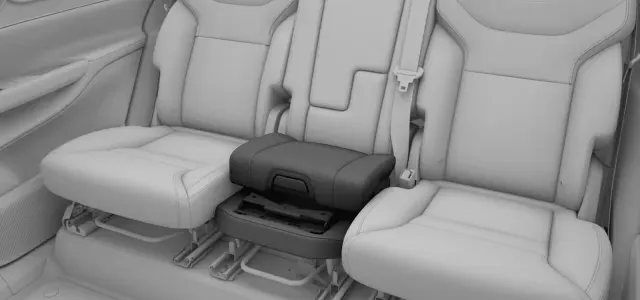
These Volvo models also have built-in booster seats.
Subaru
Subaru also ranks well in multiple types of crash tests, including moderate-overlap front, small-overlap front, side-impact, and roof-strength evaluations. There are lots of reasons for its strong performance, but one of the biggest is its symmetrical all-wheel-drive system. This improves vehicle stability and traction in poor driving conditions like snow, ice, or rain.
Subaru vehicles also come equipped with advanced driver assistance features like automatic emergency braking, adaptive cruise control, lane centering, and pedestrian detection to help reduce the risk of collisions. Combined with their strong structural design, these features help Subaru consistently earn top safety ratings.
Our Favorites for Families: Subaru Ascent, Subaru Outback
Mazda
Consumer Reports recently named Mazda one of its top automotive brands, thanks in part to its excellent safety performance. Its rigid body construction does an outstanding job of absorbing crash forces during frontal, side, and rollover collisions while protecting the passenger compartment. Many Mazda models also earn IIHS Top Safety Pick+ awards and offer advanced driver assistance features such as automatic emergency braking, blind-spot monitoring, and lane-keeping assist.
Our Favorites for Families: Mazda CX-90, Mazda CX-50
Honda
Honda consistently earns high marks in independent crash testing across much of its lineup. A big reason for this is its body structure, which they designed to distribute crash forces and protect occupants during a collision. Most newer Honda models also include advanced driver assistance features like automatic emergency braking, lane-keeping assist, and adaptive cruise control to help reduce the risk of accidents.
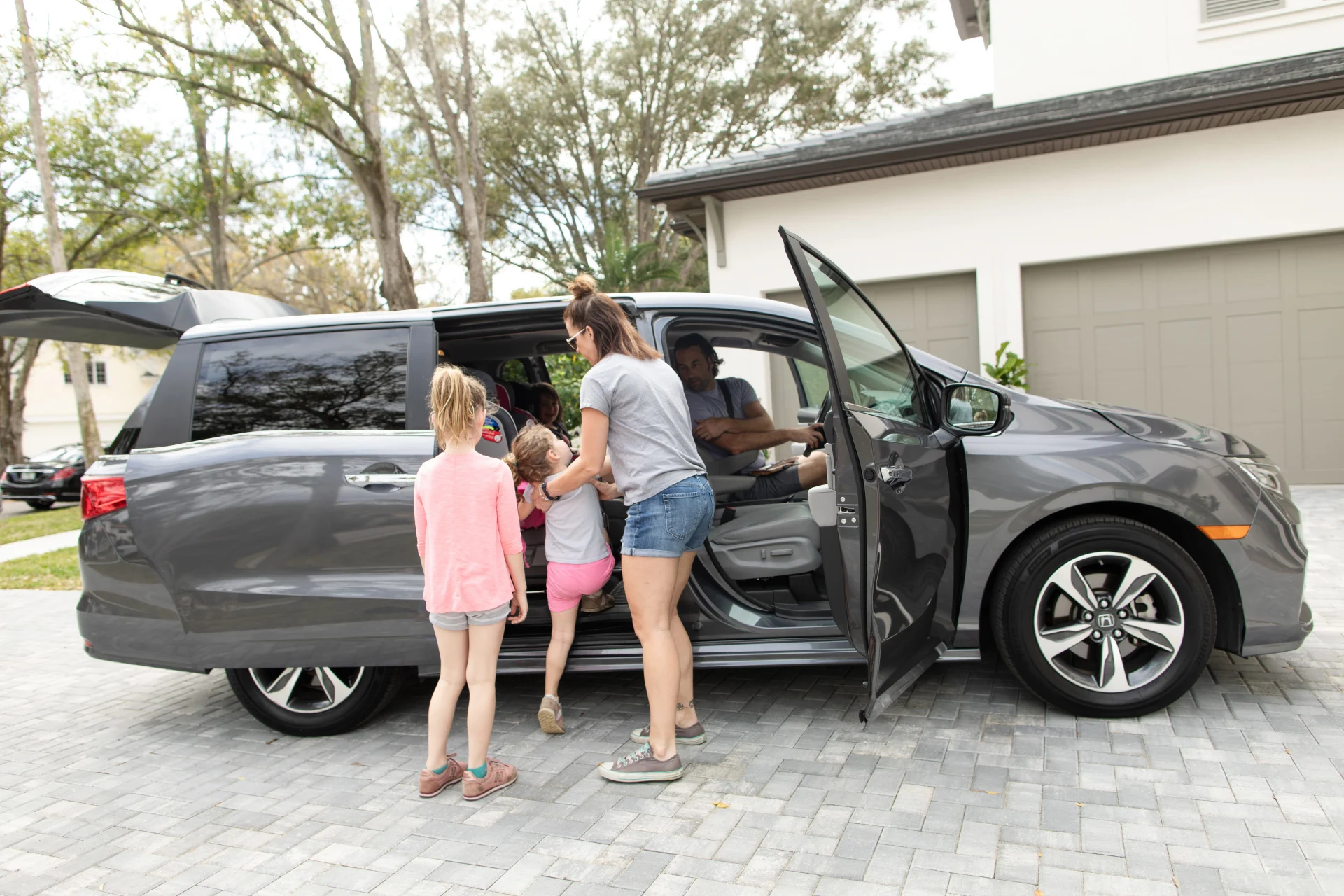
Our Favorites for Families: Honda Pilot, Honda Passport, Honda Odyssey, Honda Accord
Many of these SUVs are great for 3-across car seat configurations. You’ll also find a few in our list of top family vehicles for kids.
Toyota
Toyota is another manufacturer that consistently performs well in third-party crash testing. More specifically, Toyota constructs its vehicles with strong frames, effective crumple zones, and comprehensive airbag systems that help protect occupants in a variety of crash scenarios. Most newer Toyota models also come equipped with advanced safety features like automatic emergency braking, lane departure warning, adaptive cruise control, and road sign recognition.
Our Favorites for Families: Toyota Camry, Toyota Highlander, Toyota Sienna
Hyundai
Hyundai has made tremendous improvements in vehicle safety over the past decade and now regularly earns top crash test ratings. Its vehicles feature reinforced body structures, comprehensive airbag systems, and a wide range of driver assistance technologies. (Including forward collision warning, automatic emergency braking, blind spot monitoring, and lane keeping assist.) These improvements have helped Hyundai become one of the strongest-performing brands in independent safety evaluations.
Our Favorites for Families: Hyundai Palisade, Hyundai Santa Fe, Hyundai Tucson
How to Make a Car Safe
Keep your tires properly inflated and replace them when needed.
An easy way to ensure your car is performing at its best is to keep your tires properly inflated. This improves traction and grip on the road in a variety of conditions, shortens stopping distances, and helps keep your vehicle stable during sudden maneuvers. It's also important to replace tires once the tread becomes too worn, as bald tires are much more likely to lose traction, hydroplane, or blow out.
Review our guide, "What to Do When You Have a Flat Tire,” to learn more in the case of emergencies.
Maintain your brakes regularly.
There are few components on your vehicle more important to safety than your brakes. Have them inspected during routine maintenance and replace worn brake pads, rotors, or brake fluid as recommended by your vehicle's manufacturer. Keeping your brakes in good condition helps ensure you can stop as quickly and safely as possible in any situation.
Get your vehicle's safety systems checked regularly.
Many modern vehicles rely on cameras, sensors, and radar to power advanced safety features. These include automatic emergency braking, lane-keeping assist, and blind-spot monitoring. Have these systems inspected if they stop working properly or after a collision, windshield replacement, or other repair that could affect their calibration. Safety technology can only protect you if it's functioning correctly.
Keep your headlights, taillights, and turn signals working.
A burned-out bulb may not seem like a big deal, but it can significantly reduce your visibility. Remember: your vehicle's lights aren't just there to help you see, they also help other drivers see you. Check your lights regularly and replace burned-out bulbs promptly to reduce the risk of preventable collisions.
Replace worn windshield wipers.
Windshield wipers may be small, simple, and inexpensive, but they're essential for safe driving. When you're driving through rain, snow, or road spray, quality wiper blades help keep your view clear. This allows you to spot hazards sooner and drive more safely in poor weather.
Check your suspension and steering components.
Your suspension and steering systems help keep your tires firmly planted on the road and allow you to maintain control of your vehicle. If you notice unusual vibrations, uneven tire wear, pulling to one side, or difficulty steering, have the system inspected by a mechanic. Catching problems early can improve handling and prevent more expensive repairs in the future.
Keep your battery and electrical system in good condition.
A healthy battery does more than just start your vehicle. It also powers many of your car's safety features, lights, sensors, and electronics. Have your battery tested during routine maintenance and replace it when it's nearing the end of its lifespan to help prevent unexpected breakdowns.
Repair warning lights promptly.
You should never ignore your check engine light or other warning indicators on your dashboard. They're not just there to warn you about potentially expensive repairs, they also help prevent accidents, breakdowns, or other serious roadside emergencies. Address warning lights as soon as possible so small issues don't become bigger safety concerns.
Follow your vehicle's recommended maintenance schedule.
Your owner's manual includes a maintenance schedule for a reason. Staying on top of routine services like oil changes, fluid replacements, tire rotations, and inspections helps keep every part of your vehicle operating safely. Regular maintenance can also catch potential problems before they affect your vehicle's performance or put you at greater risk on the road.
Check a vehicle’s safety rating before purchasing it for your family.
Choosing a safe family vehicle is one of the best investments you can make in your family's well-being. While no car can completely eliminate the risk of a crash, choosing a vehicle with excellent safety ratings, maintaining it properly, and using your car seats correctly can dramatically improve your child's protection. When all three work together, you can hit the road with greater confidence every time you buckle up.