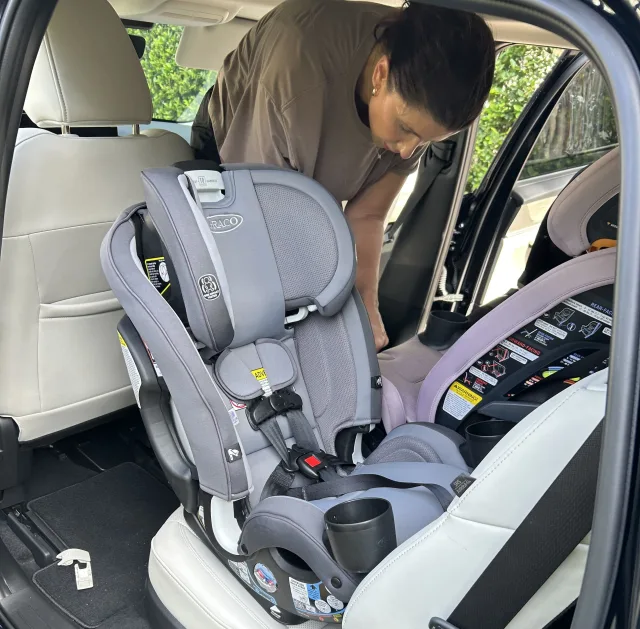
Whether you only have one child or you’re on your third or fourth, we often get a common question here at Safe in the Seat: “Can a car seat go in the middle seat?” And the truth is: yes! In fact, the center of your back seat is often the safest spot in the whole vehicle.
There's one important catch worth understanding before you commit to it, though. The middle only earns its "safest position" title when you can get a rock-solid install there. A tightly installed seat in an outboard position beats a loose one in the middle every single time.
We're the team at Safe in the Seat, founded by Michelle Pratt, a Nationally Certified Child Passenger Safety Technician. We spend our days bridging the gap between confusing manufacturer manuals and the parent standing in the driveway, sweating through a car seat install. So when the middle-seat question comes up, (and it comes up constantly), we want to give you the real answer. Not the oversimplified one.
That’s why this guide explains where to put a car seat in the car, why the middle seat is often the best choice, and how to install it properly and safely. By the end, our hope is that you feel calmer, clearer, and more confident throughout the process.
Can a Car Seat Go in the Middle Seat? The Direct Answer
Yes, a car seat can absolutely go in the middle seat, and in most vehicles, that center rear position is statistically the safest spot for your child. The reason is distance. The middle sits farthest from the doors and windows, which are the areas that take the brunt of a side impact.
One study published in the American Academy of Pediatrics found that kids seated in the center had a 43% lower risk of injury than children seated in either of the rear outboard positions.
Here's the catch, though. That safety advantage only holds when you can achieve a secure installation in the middle. If your car seat cannot be installed correctly in that spot, it would not be a safe position at all.
Another interesting note is that this study was done with older vehicles. Newer vehicles have side airbags that increase the safety in the outboard seats, so it's quite possible that the risk of injury difference between the center and outboard seats has changed significantly.
Why the Middle Seat Is Considered the Safest
The logic is refreshingly simple once you picture it. In a side-impact crash, the point of contact is a door or a window. The middle seat puts the most possible space between your child and that impact zone. Put simply: more crumple room means more protection for your little one.
But if you have more than one kid, rest assured that a child who is properly restrained is very safe in any of the seating positions.
When the Middle Seat Is NOT the Best Choice
This is the nuance that most articles skip, and it's the part that actually helps you make a decision. The middle is only the safest position when you can install your car seat tightly there. When you can't, the middle stops being the winner.
Here are the most common reasons the center may not work in your vehicle:
- An uneven or contoured seat. Some center seats are narrower, raised, or oddly shaped for the middle passenger, which makes a level, tight install tough.
- Not enough width. If the center seat is too narrow, your car seat simply may not fit.
It's important to note that a tightly installed outboard seat is safer than a loose middle install. Always. If you wrestle with the center for twenty minutes and still get wiggle, move to a side position where you can lock it down. You aren't failing your child by choosing the door-side seat; you're choosing the install you can actually trust. That's controlling the controllable.
How to Install a Car Seat in the Middle Seat
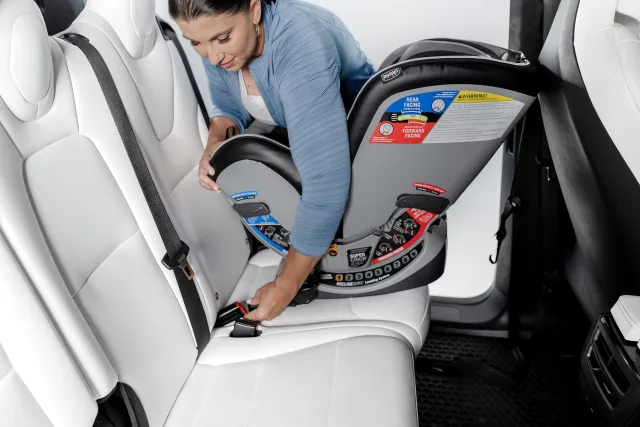
Ready to try the center? Walk through it methodically. A secure installation in the middle seat comes down to a few careful steps.
Step One: Check Your Vehicle Manual
Start with your vehicle manual before you touch a single strap. It will tell you whether your car has dedicated center lower anchors, whether the manual permits any alternate anchor use, and the correct seat belt locking method for the center position. Your vehicle manual and your car seat manual together are the final authority on what your specific setup allows.
Step Two: Choose Seat Belt or LATCH
Decide on your installation method based on what your vehicle offers. If your car has dedicated center LATCH anchors, you can use them. If it doesn't, the seat belt is a completely safe and correct choice. Neither method is "better," and one isn't a downgrade from the other; use whichever gives you the tightest result in your vehicle.
Step Three: Thread the Correct Belt Path
Use the correct belt path for your child's direction of travel. A rear-facing seat and a forward-facing seat typically use different belt paths, which are clearly labeled and often color-coded on the car seat. Route your seat belt or lower anchor strap through the right one, and make sure the belt or connectors aren't twisted.
Step Four: Get Less Than One Inch of Movement
Test your install at the belt path. A tight installation is essential; there should be less than an inch of movement at the belt path of the seat. Not sure how to test this properly? Grab the car seat near the belt path and tug side to side and front to back. If it moves less than an inch in any direction, you've got a secure installation. If it moves more, reinstall and pull tighter.
Remember, car seat safety doesn't stop the moment your install passes the movement test. Every ride, double-check that the harness is snug and positioned properly.
Can You Use LATCH in the Middle Seat?
Only under specific conditions. You can use LATCH in the middle seat if your vehicle has dedicated center lower anchors, or if your vehicle AND car seat manuals explicitly allow borrowing lower anchors from the outboard positions.
Never borrow anchors from the side positions unless your manuals specifically permit it. Anchor spacing is engineered for crash performance, and using anchors that are spaced too far apart, when the manufacturer hasn't approved it, can compromise the install. When in doubt, the seat belt is always a safe fallback.
One more thing worth knowing: LATCH lower anchors have a weight limit. Once your child plus the car seat exceeds that limit, you switch from LATCH to the seat belt for installation. This is normal and expected as kids grow, and the seat belt install is just as safe.
Does It Matter for Rear-Facing vs Forward-Facing?
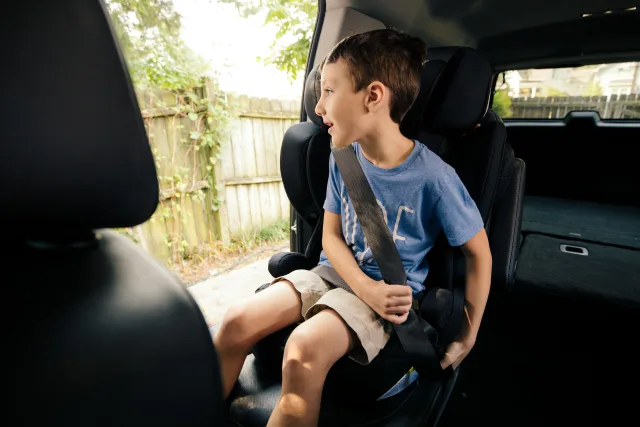
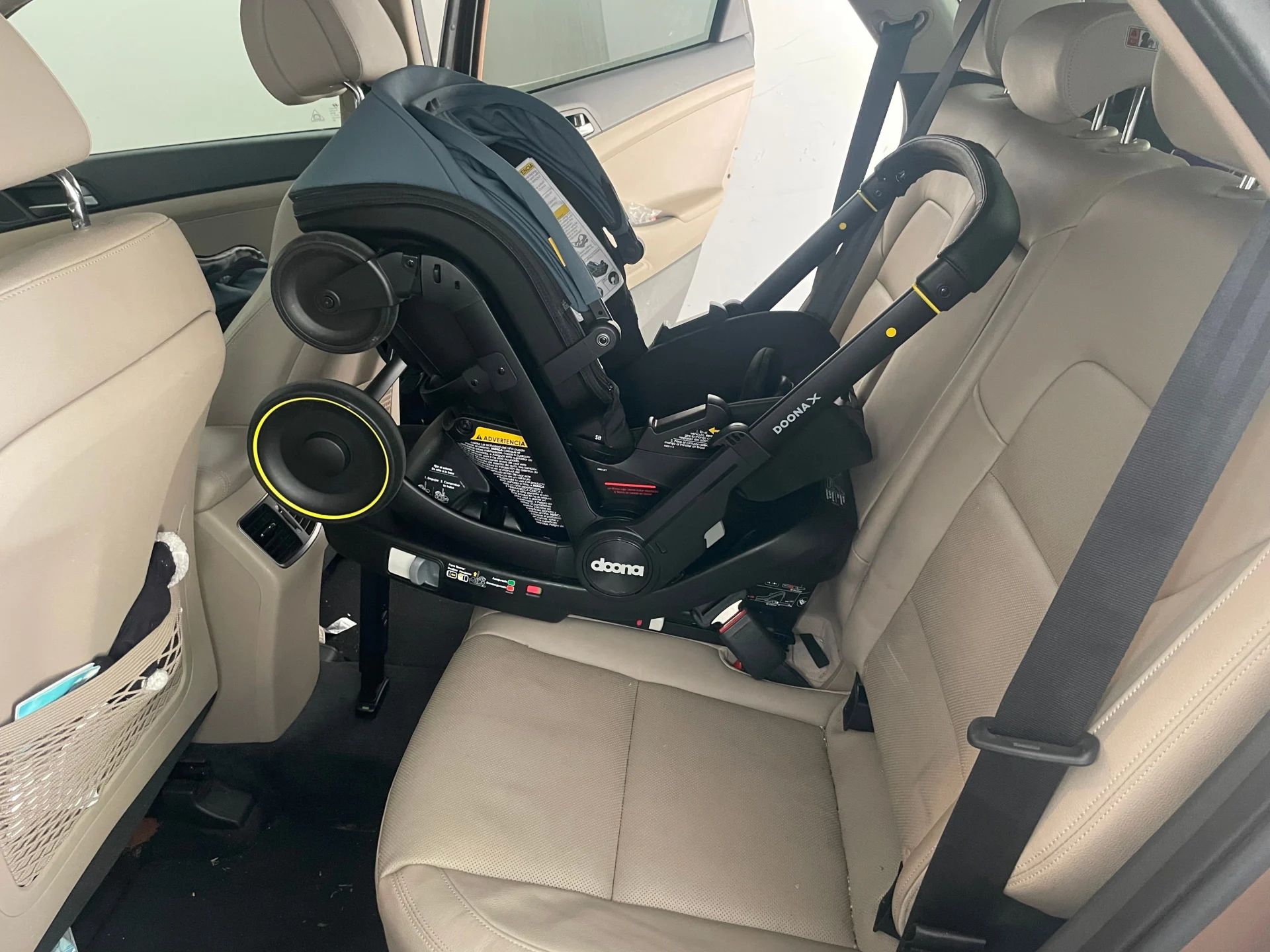
The good news is that the middle seat works for both rear-facing and forward-facing car seats, and for infant car seats and boosters too. Placement in the center doesn't change based on which direction your child rides.
What does matter is that your install is secure and, for a rear-facing seat, that your recline angle is correct. Rear-facing seats rely on the proper angle to protect a young child's head, neck, and spine, so check the seat's built-in recline indicator after you install it.
Making the Right Middle Seat Call for Your Family
The honest takeaway is this: aim for the middle seat if you can install your car seat tightly there. If your vehicle won't cooperate, a secure outboard install is a great choice, and you should feel good about it. What matters most is a tight, correct installation.
For a deeper look at how every position stacks up, read our full guide on the safest spot for a car seat. And if you're weighing your options across the whole back seat, our breakdown of where to install your car seat walks you through it.
Still staring at your car seat wondering if the seat is installed correctly? You don't have to guess. Our Talk to a Tech service lets you ask a question, send a photo or video, and get expert eyes from a certified tech on your child's seat. When you're shopping for a seat that fits your center position, you can also check out our free Car Seat Finder Quiz or explore our Buying Kits.
Want clarity like this landing in your inbox instead of scrolling for it? Join our newsletter for practical, judgment-free car seat guidance you can actually use.
Affiliate disclosure: This post contains affiliate links, which means Safe in the Seat may earn a small commission if you make a purchase, at no extra cost to you. We only recommend products we trust.
Medical disclaimer: This content is for educational purposes only and is not a substitute for professional or medical advice. Always follow your car seat and vehicle manufacturer instructions, and consult a certified child passenger safety technician or your pediatrician with specific concerns.